
 E-Paper



Delhiwale: The return of yellow
The Nizamuddin Auliya shrine in Delhi celebrates Basant Panchmi with yellow flowers, marking spring's arrival amidst the usual red roses.

 Prefer HTon Google


Red roses everywhere; including on the marble floor. The Sufi shrine of Hazrat Nizamuddin Auliya in central Delhi feels like a sanctuary to this flower, as it is to its 14th century patron saint. Indeed, the lanes to the dargah lie crammed with rose stalls. Pilgrims buy these roses as they walk towards the shrine, carrying the flowers as offerings. By day’s end, Hazrat Nizamuddin’s grave gets buried beneath mounds of red roses. The roses reign in the shrine throughout the year—except for one day, when the red gives way to yellow. That special day is today.
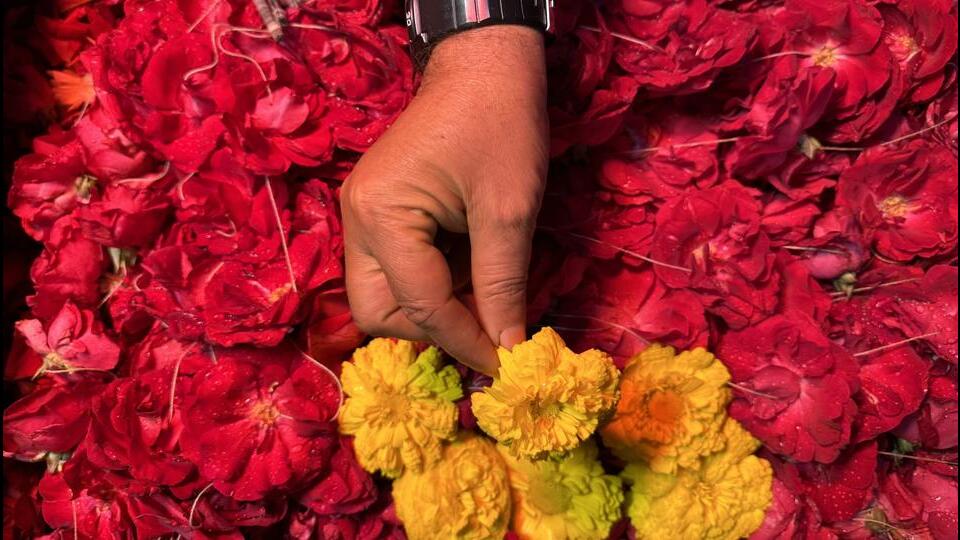
This evening, the dargah will receive visitors in yellow caps, turbans and scarves. They will be welcoming Basant Panchmi, the arrival of brief spring in our increasingly polluted Delhi.
The tradition of celebrating Basant at the historic shrine began seven centuries ago, as told by shrine caretaker Peerzada Altamash Nizami. In the beginning, there was no dargah of Hazrat Nizamuddin. It was built following his death, as a mausoleum to house his grave. The Sufi mystic actually lived some distance away from his future shrine, beside the Yamuna river—that site today lies wedged between upscale Nizamuddin East and the monumental Humayun’s Tomb. Once, his days of prayer and meditation were tragically interrupted by the untimely death of his young nephew. Consequently, Hazrat Nizamuddin retreated into silence. His devotees made attempts to lift him from his sorrow, but failed. One day, poet Amir Khusro, Hazrat Nizamuddin’s foremost discipline, met a group of yellow-clad women, walking and dancing in the fields. They were heading to the Kalkaji temple to celebrate Basant. Khusro too donned yellow, and appeared before Hazrat Nizamuddin in that garb. The saint’s sad face instantly changed into a smile. This incident gave birth to medieval-era Delhi’s Basant tradition, which continues to this day.
With Khusro being a primary character in the story, it is apt that Nizamuddin dargah’s contemporary qawwal singers, who happen to sing Khusro’s poetry each day in the shrine’s courtyard, play a central role in the Basant celebrations. This evening, these illustrious singers will walk through the lanes of Nizamuddin Basti—the centuries-old village that surrounds the dargah—chanting a Khusro verse: “Aaj Basant mana ley suhagan.” They will carry yellow mustard flowers with them. The singing procession will begin at the grave of the nephew whose death had plunged Hazrat Nizamuddin into grief. The singers will end the walk at the dargah, at around four o’clock, when they will assemble in the courtyard to sing Khusro’s verses. As in the previous years, yellow flowers will be theatrically tossed into the air—beautiful scenes that will, inevitably, be transformed into social media content. The marble floor will get carpeted in yellow.
The morning after, the red roses will return. Weeks later, the pleasant Basant season will give way to Delhi’s summertime heatwaves. But worry not, it will then be the stunning season of yellow Amaltas flowers.
PS: Photo is from last year’s Basant celebrations, showing a dargah florist stall


Stay updated with all top Cities including, Bengaluru, Delhi, Mumbai and more across India. Stay informed on the latest happenings in World News along with Delhi Election 2025 and Delhi Election Result 2025 Live, New Delhi Election Result Live, Kalkaji Election Result Live at Hindustan Times.


