E-Paper



Delhi floods: A trail of destruction left behind at Garhi Mandu
HT did not spot any worker from the administration in the village to help with rehabilitation and clean-up

 Prefer HTon Google


Last Wednesday, Garhi Mandu village, located in the low-lying 2km floodplain of the Yamuna in northeast Delhi, was one of the first localities to be submerged with the river crossing the danger level.
It soon led to a rescue operation being launched to save 750 people and 250 cattle even as shops, dairy farms, and godowns were under water.
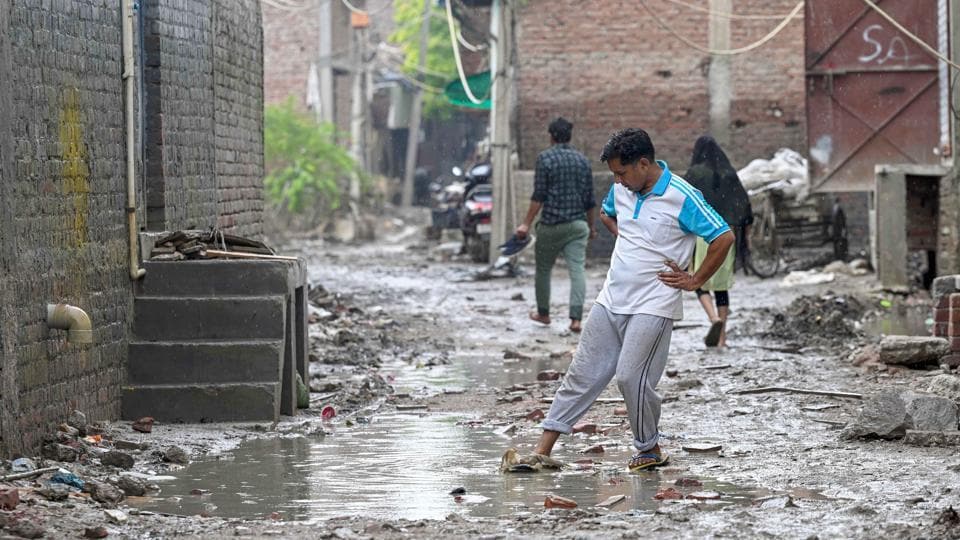
On Tuesday, with the water receding, the village with over 400 households lay devastated — silt everywhere, moisture-laden furniture, damaged walls, local park in shambles and muck overflowing in lanes with dung-waste from dairies.
When HT visited the spot, locals were engaged in large-scale clean-up operations with members of every second household washing the silt away and putting out the nearly damaged furniture to dry, as some members of the family remained stationed in relief camps.
HT did not spot any worker from the administration in the village to help with rehabilitation and clean-up.
Deepak Bainsla, a local, said that he was out for the Kanwar Yatra when the flood hit. “My mother was rescued through a boat; we rushed back only to find that all the furniture and belongings were beyond recovery,” he said.
Several villagers were also trying to dump construction waste and debris to make the roads motorable. While some wedding tent service providers managed to save the horses, the decorative carriages, playing equipment for kids and instruments used by their band were ruined.
Among a series of smaller industrial units in the area, people reported heavy economic losses. Mohammad Javed, who ran a small mattress unit, said that he has lost his life savings.
“We were about to deliver a large consignment but everything is now full of muck. It is being thrown in garbage. My machines are also non-operational. I have shifted my sister and wife back to Hazaribagh in Jharkhand and now I will have to start my 15-year old business back from scratch,” he lamented.
While the water has since receded, many continue to remain stationed in the rescue camps near Signature bridge, waiting for normalcy to return.