The Delhi High Court on Thursday held that the Delhi government’s Directorate of Education’s (DoE) does not have “unlimited authority” to regulate fees charged by unaided recognised schools, but is empowered to step in when schools are found indulging in profiteering, commercialisation, or charging of capitation fees.
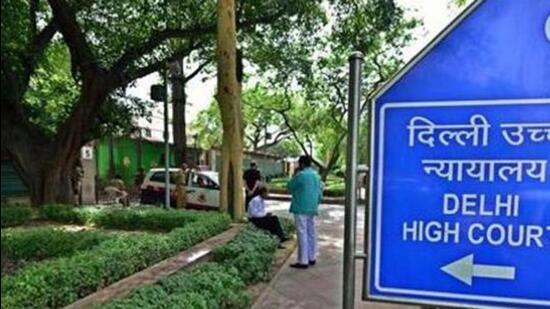
A bench of chief justice DK Upadhyay and justice Tushar Rao Gedela made the observation while dismissing DoE’s petitions challenging a February 7, 2024 ruling by a single judge. That judgment had quashed two DoE orders issued in 2018 and 2019 that restrained Bluebells School International and Lilawati Vidya Mandir from increasing fees.
The single judge had held that the DoE could intervene only in cases where schools were found indulging in profiteering or collecting capitation fees, and directed the department to conduct a fresh inquiry in accordance with law after giving the schools an opportunity to be heard.
Upholding that view, the division bench said the DoE’s authority to regulate school fees must operate within clearly defined statutory limits under sections 17, 18 and 24 of the Delhi School Education Act (DSEA), 1973.
“It is not that the fees to be charged by the schools cannot be regulated by the government; however, regulation is permitted only to ensure that such schools do not indulge in profiteering, commercialisation of education or in charging capitation fees,” the court observed.
{{/usCountry}}“It is not that the fees to be charged by the schools cannot be regulated by the government; however, regulation is permitted only to ensure that such schools do not indulge in profiteering, commercialisation of education or in charging capitation fees,” the court observed.
{{/usCountry}}The bench further noted that any exercise of fee regulation must be guided by the objective of ensuring that money collected from parents is used only for educational purposes.
“If we accede to the prayer made by learned counsel for the respondent schools of not remitting the matter back to the DoE, we will be curtailing the authority of the DoE which is otherwise statutorily available,” the court added, while remanding the matter back to the department for fresh consideration.
The DoE, represented by standing counsel Sameer Vashisht, had argued that it possesses “unbridled authority” under DSEA to regulate school fees. The schools, represented by advocate Kamal Gupta, opposed this interpretation, arguing that reopening fee structures fixed 8-10 years ago would be unjustified and legally untenable.
While rejecting the DoE’s appeal, the high court maintained that the department’s powers cannot “travel beyond the measures to curb commercialisation, profiteering and indulgence in charging capitation fee.” The court thus reaffirmed that the state may intervene only when schools cross the line from autonomy into exploitation.
The verdict comes weeks after the Delhi government passed the Delhi School Education (Transparency in Fixation and Regulation of Fees) Bill, 2025, aimed at curbing arbitrary fee hikes by private unaided schools. The legislation covers 1,677 such schools, introduces a three-tier grievance redressal system, mandates parental participation in fee determination, and prescribes penalties of up to ₹10 lakh for violations.
The issue of steep fee hikes has sparked widespread protests this year, with parents’ associations across Delhi urging stricter government oversight.
Stay updated with all top Cities including, Bengaluru, Delhi, Mumbai and more across India. Stay informed on the latest happenings in World News along with Delhi Election 2025 and Delhi Election Result 2025 Live, New Delhi Election Result Live, Kalkaji Election Result Live at Hindustan Times.
Stay updated with all top Cities including, Bengaluru, Delhi, Mumbai and more across India. Stay informed on the latest happenings in World News along with Delhi Election 2025 and Delhi Election Result 2025 Live, New Delhi Election Result Live, Kalkaji Election Result Live at Hindustan Times.