
 E-Paper



Dwarka WTP: Groundwater, diversions could supply new plant
Delhi's new 50 MGD water treatment plant in Dwarka is ready but awaits NGT approval for groundwater extraction to start operations.

 Prefer HTon Google


The new 50 MGD (million gallons per day) water treatment plant (WTP) in south-west Delhi’s Dwarka is now ready, and the Delhi Jal Board (DJB) is planning a series of diversions, coupled with groundwater extraction through tube wells, to source raw water for the facility, officials said.
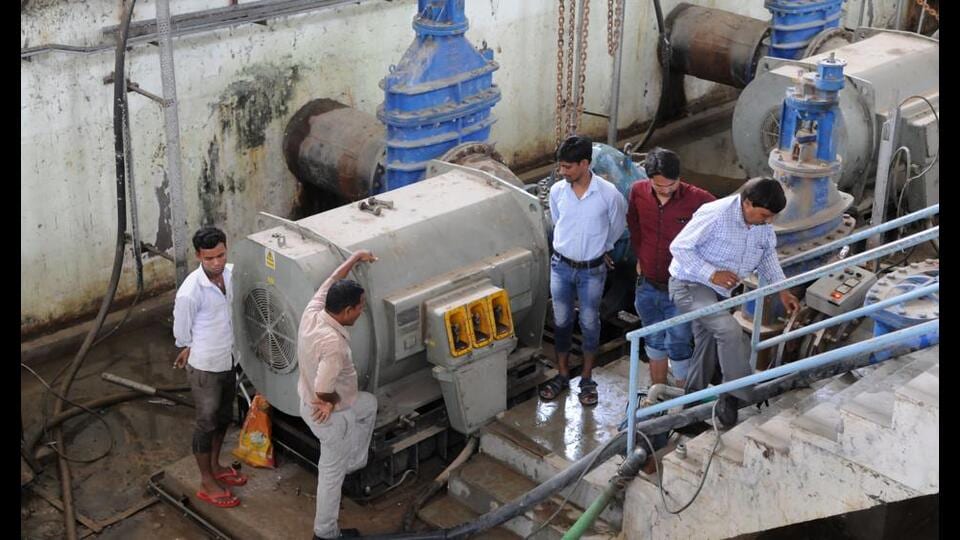
However, they added, the plant’s operationalisation now hinges on a nod from the NGT panel for extracting ground water against the objections raised by Haryana.
A senior DJB official said the plant in Sector 16 will benefit Dwarka sub-city and surrounding areas.
“Our raw water supply from Haryana and Uttar Pradesh is limited. To secure additional water to run the second unit at Dwarka, around 30MGD of raw water — sourced from the Haiderpur-Munak Canal and currently supplied to three other treatment plants — will be partially diverted to the new plant,” the official said.
“The deficit resulting from this reduction in supply to the three existing plants will be compensated by using groundwater from tube wells and Ranney wells,” the official added, noting that Haryana may still object to the diversion and that necessary approvals would be required to implement the strategy.
A senior DJB official added that the board will decide the operationalisation question by end of May. “Meanwhile, we are also trying to get extra share of water from Haryana. If that is made available, plant could start sooner but the timeline will depend on NGT committee approvals.”
“Water will be diverted from Munak to the Dwarka plan and it this diversion will be compensated by tube wells especially in flood plains. Firstly, Haryana has objected to the tubewells in floodplain inside Delhi but we have countered their arguments that it will not impact flow in the river. Secondly, the flood plain tubewells matter was referred to principal committee of NGT which comprises of professors from IITs. The committee has carried out the site visit and the final report will come in April,” the official said
Meanwhile, Delhi water minister Parvesh Verma said: “Dwarka WTP, once operational, will significantly improve water supply in Dwarka, Najafgarh, Palam, Dabri and surrounding areas. These regions have long faced shortages due to peak-hour demand pressure. The new plant will also reduce dependency on external water sources and bring much-needed stability to west and southwest Delhi’s network.
DJB operates nine water treatment plants and an array of tube wells, which cumulatively supply 1,000MGD of water. The city’s water demand, however, is estimated at around 1,250MGD (based on the “50 gallons per capita per day” formula), indicating a current shortfall of 250MGD.
When the new Dwarka WTP becomes fully operational, this gap is expected to reduce to 200 MGD, officials said.
Built at a cost of approximately ₹280 crore, the Dwarka plant was originally scheduled to commence operations this month; however, water production has not yet begun due to the unavailability of raw water.
The plant has the capacity to treat around 50MGD of water for potable supply. Officials said that initially, half the capacity (25–30 MGD) will be commissioned, with output gradually increased in proportion to raw water availability.
Under the action plan, any shortfall in supply from the Munak Canal to the Wazirabad, Chandrawal and Okhla treatment plants — owing to diversion to the new plant — will be compensated by drawing groundwater through tube well clusters in Okhla, Wazirabad, Nilothi and Dwarka, as well as new clusters on the Yamuna floodplains.
According to DJB estimates, 228 tube wells will collectively provide 22.8 MGD of raw water for the Dwarka WTP. “At some of the tube well sites, we are facing problems of high TDS (total dissolved solids) in water, while some locations along the Yamuna have high ammonia levels. To address these issues, we will need additional treatment facilities,” the official said.
The existing nine WTPs are located in Chandrawal, Wazirabad, Haiderpur, Nangloi, Okhla, Dwarka, Bawana, Bhagirathi and Sonia Vihar.
The DJB’s short-term plans for increasing water availability rely on extracting groundwater from high water table areas. In the long term, Delhi is expected to receive around 275 MGD of water from the Renukaji dam on the Giri river, the Kishau dam on the Tons river, and the Lakhwar-Vyasi dam.


Stay updated with all top Cities including, Bengaluru, Delhi, Mumbai and more across India. Stay informed on the latest happenings in World News along with Delhi Election 2025 and Delhi Election Result 2025 Live, New Delhi Election Result Live, Kalkaji Election Result Live at Hindustan Times.


