
 E-Paper



All Chinar saplings along Delhi’s SP Marg failed to survive
The saplings were planted by lieutenant governor VK Saxena last month to beautify the stretch ahead of the G20 summit to be held in Delhi in September


The 10 chinar (Platanus orientalis) saplings planted along the Sardar Patel Marg near the Central Ridge have failed to survive, according to officials of the forest department, which now plans to abandon planting more of the species that is not native to the Capital, but to a mountain region like Kashmir.
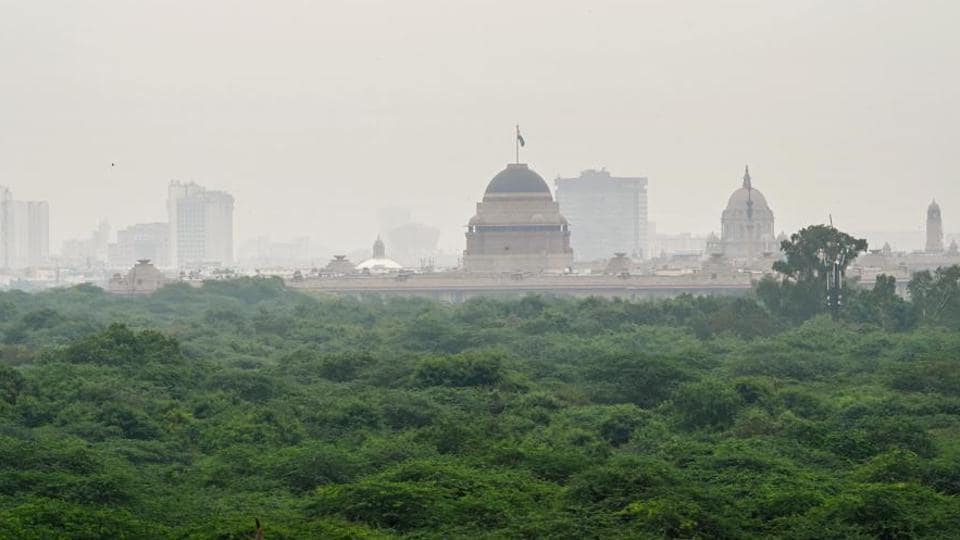
The saplings were planted by lieutenant governor VK Saxena last month to beautify the stretch ahead of the G20 summit to be held in Delhi in September. The forest and wildlife department said it had procured over 100 such saplings but will not plant any more as they were unlikely to survive.
Tree experts have stressed for long that only native species are suited to the ecology of Delhi — a point the Delhi high court emphasised in July when it directed more native trees be planted in the city.
The Central Ridge is part of the Aravallis — characterised by thin top soil and rocky terrain — where even only select native species can thrive, experts said, and the six species planted as part of the vanity project do not feature on the list.
A senior forest department official said the chinar saplings began withering within weeks after being planted last month, despite being adequately watered.
“Over 100 chinar saplings were procured by us, but after the initial 10 or so saplings that were planted, we have not planted any more as they all failed to survive. Cherry blossom, on the other hand, is doing well and we will continue to monitor them,” said a forest official, who oversaw the plantation, requesting anonymity.
Alongside chinar, flowering species such as gulmohar (Delonix regia), jacaranda (Jacaranda mimosifolia), cherry blossom (Prunus serrulata), amaltas (Cassia fistula) and bougainvillea have been planted in the Central Ridge. Only amaltas, also known as the Indian laburnum, is a native to Delhi and grows well in the city.
The above quoted official added that these species were only planted along the boundary of the ridge, adjacent to Sardar Patel Marg. “This is being done just on the edge of the forest and not deep inside it. The idea is to give a more aesthetic look during and beyond the G20 summit, as the species will bear differently coloured flowers,” said the official.
HT visited a small stretch of the Central Ridge on Friday where some saplings were planted. A few ready for plantation were also seen wrapped in black plastic bags. However, almost all of the chinar saplings in the plastic bags had dried up.
Next to them were 8-12 feet tall gulmohar and jacaranda saplings, which experts said were also unlikely to survive.
The LG house, when contacted, did not comment on the withering chinars.
Pradip Krishen, environmentalist and author of the book Trees of Delhi, said that only two of the six species planted — amaltas and bougainvillea — were likely to survive in the long-run.
“Jacaranda requires a much cooler climate and is native to South America. Even though it grows in Delhi’s parks, it struggles a bit as it requires extensive watering. The trouble is the same with gulmohar, that it requires a lot of water. But it is also allelopathic, meaning it secretes chemicals that prevent other native species from growing around it,” Krishen said.
Owing to its rocky terrain and a thin layer of the top soil, the Central Ridge does not allow all native species to thrive on it. “Species that can grow well here include papdi (Holoptelea integrifolia), chamror (Ehretia laevis), hingot (Balanites aegyptiaca), phulai (Acacia modesta), ronjh (Acacia leucophloea) and bistendu (Diospyros montana), all of which are native to the ridge,” he added.
LG Saxena, in the first week of June, asked for a five-layered plantation of six species of flowering trees at the ridge, setting a timeline of August 15 for completion. The plantation drive focuses on the side facing SP Marg as it will be the main road used by visitors and dignitaries commuting between central Delhi and the Indira Gandhi International (IGI) airport during the G20 summit in September.
Earlier in May, the LG carried out the plantation of cherry blossoms and chinars across the three islands in Yamuna, located between Qudsia Ghat and the ITO barrage to deck up Delhi’s landscape. This was the first time that the two species were introduced in the national capital.
Vijay Dhasmana, an ecologist and curator of the Aravalli Biodiversity Park in Gurugram, said that even if extensive care was given to these species, they still remain exotic and do not belong in the ridge or the northern Aravallis.
“The vilayati kikar too has survived, despite not being native. However, it has done more harm than good. We have beautifully flowering native trees like chamror, ronjh, kaimb and salai which could all have been chosen instead,” said Dhasmana.


Stay updated with all top Cities including, Bengaluru, Delhi, Mumbai and more across India. Stay informed on the latest happenings in World News along with Delhi Election 2025 and Delhi Election Result 2025 Live, New Delhi Election Result Live, Kalkaji Election Result Live at Hindustan Times.


