
 E-Paper



Forest dept completes biodiversity assessment of Najafgarh lake
Najafgarh Jheel has been identified as one of Delhi’s 20 water bodies that will soon be classified as a ‘wetland’, thereby getting additional investments from the Centre for protection

 Prefer HTon Google


While several agencies have begun executing the environment management plan (EMP) for Najafgarh lake, the forest department has completed a year-long biodiversity assessment of the lake, which will help officials in making strategies to protect the flora, wildlife and ecology of the area.
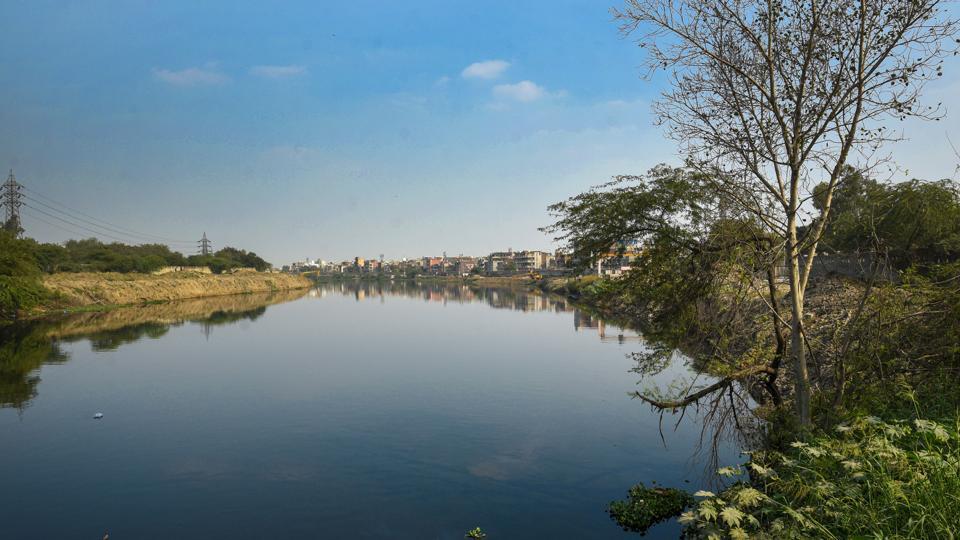
A senior forest official said the department, which had begun its biodiversity assessment at Najafgarh jheel last year, completed it this month. “A species inventory has been prepared and this will be submitted to the State Wetland Authority (SWA). This will not only help in comparing the change in species count each year, but also allow planning specifically for certain birds, too. We were collecting the data since last year, but work was expedited once the EMP was finalised,” said the official.
The EMP, which seeks to remove all obstructions – which include a power sub-station – to the flow of the lake and drain in an effort to rejuvenate and beautify the area, also seeks to protect and preserve the jheel and its natural flora. The public works department (PWD), the SWA, the irrigation department and power discoms have carried out assessments to execute the EMP.
A senior SWA official, on condition of anonymity, said, “Immediate action has begun and rejuvenation will commence after the biodiversity assessment. However, efforts are also needed in Haryana as a large part of the lake falls in the state,” the official said.
Long-term measures such as the construction of a regulator at Jhatikra – located downstream of the lake, along with the construction of sluices or ducts in the embankments for the control of water flow, will take 2-3 years to complete, the official added.
Meanwhile, the PWD has been asked to provide alternate road connectivity to all villages located in the vicinity of Najafgarh lake, so that traffic in the area is reduced and migratory birds arriving at the jheel every year are not disturbed.
According to the forest department, a tender was issued at the end of November to install paintings of 30 different birds and signs on either side of the 57km-long drain. “The signs will inform visitors more about the drain and is part of the eco-tourism push, allowing visitors to learn more about the flora and fauna,” said a forest department official.
The rejuvenation of Najafgarh drain was taken up when Delhi lieutenant governor (LG) VK Saxena visited it in June 2022 and said it could be developed into an eco-tourism hub with a navigable waterway for boat rides and water sports.
However, experts had said that while this can be done for the drain, the Najafgarh jheel itself needs to be preserved and no commercial or eco-tourism activities can be allowed in its periphery.
“The EMP makes it clear that the jheel and its natural flora needs to be protected and preserved with more natural plants being added, which will attract birds and other wildlife. There can be no eco-tourism at the jheel,” said Manu Bhatnagar, principal director at the Indian National Trust for Art and Cultural Heritage (Intach).
Neha Sinha from the Bombay Natural History Society (BNHS), who was part of the expert committee that framed the EMP, said, “Once cleaned, the drain can certainly facilitate boating and eco-tourism activities, but the initial focus is to trap all industries that are releasing effluents into drains that end up in the Najafgarh drain or the jheel. Sewage, too, needs to be trapped through sewage treatment plants, and only when that is done can other eco-tourism activities be looked at.”
She added, “The location is such that you have other important wetlands nearby, too, such as Basai and Sultanpur. Birds move around these locations and the surrounding villages also act as roosting grounds for them, including a sizeable flamingo population. It is important that there is minimal interference and that the area is revived with grasses and reeds native to the region.”
Faiyaz Khudsar, scientist in charge at the Yamuna Biodiversity Park (YBP) in north Delhi, said the first step in reviving the lake involves trapping sewage and industrial waste entering it, while the next step will be to plant vegetation that can support birds. “The area is quite marshy and so a weedy vegetation needs to be planted naturally, like hydrilla, vallisneria and potamogeton, among others. Once the species of birds in the area have been assessed, a food source has to be created for them through these plants. Only then will more birds follow,” he said.
For the Najafgarh drain, so far, a 2km stretch between Timarpur and Basai Darapur has been de-silted, with 10 kms left in the first phase, according to the irrigation and flood control department. The LG is personally overseeing de-silting of the drain. The 57km-long Najafgarh drain connects Najafgarh jheel to the Yamuna River and has as many as 121 smaller drains discharging sewage into it. The annual silt and sewage deposit in the drain is estimated at 3 to 4 lakh metric tonnes (MT). At present, approximately 85 lakh MT of solid waste is lying in the drain, officials said.



