E-Paper



Vigilantism of any kind only erodes the State
When the process of social regulation is unofficially delegated to vigilantes the State cedes ground to them. Once ceded it becomes almost impossible to reclaim

 Prefer HTon Google


In India, the world’s largest democracy, vigilantism has variously been co-opted by the State for the establishment of order that may or may not have emerged out of consensus. From the cow protection movements in the northern states (first institutionalised by the Arya Samaj in the 19th century), the Khap Panchayats in Haryana, the Salwa Judum militia to counter Naxalite violence in Chhattisgarh (struck down by the Supreme Court in 2011), to the counter-protestors in Delhi allegedly helping the police by attacking protestors seeking the chief election commissioner’s resignation, vigilantism has worked as an untrained, unchecked, and unaccountable wing for different governments.
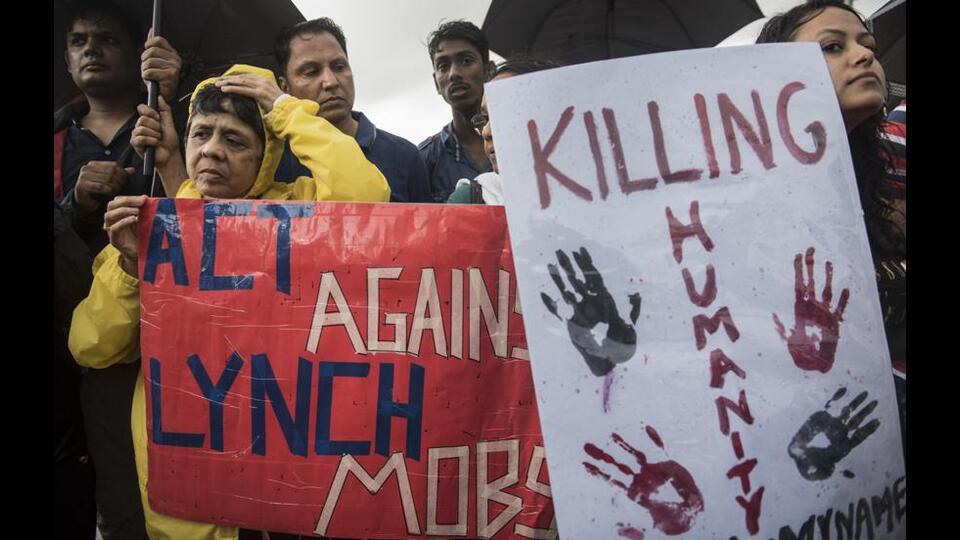
Governments often find themselves in a difficult spot when unauthorised individuals or groups are caught unleashing unauthorised violence, of varying degrees, against fellow citizens. And this happens in the name of establishing the authorised rule of order. These individuals and groups follow a predictable pattern: Pursuing alleged criminals, righting a perceived wrong through violence or coercion, and issuing warnings to others. Whether the State-sanctioned order and the definition of criminality, by themselves, are just and judicious is another matter, but an imposition of the same at the hands of individuals or groups identifying with this order, paradoxically, threatens the State.
While governments may be tempted to delegate a part of sociopolitical coercion to such individuals and groups — an informal arrangement gives the former the immensely useful tactical tool of deniability — a violation of formal boundaries erodes the authority of the State. Perhaps a little slower than in the case of disproportionate violence by the establishment — acts carried out by the State agencies — this erosion is more difficult to check and reverse as social changes are slower and more difficult to effect than institutional.
Vigilantes, therefore, cannot be the true friends of any established order, no matter how useful they may appear.
It is par for the course for governments to assert deniability when vigilante action is called out by civil society. Sometimes, however, they defend it as citizen participation. While denials do not act as assurances or guarantees that vigilantes will get investigated or brought to justice, it is the latter attitude that is more damaging for a democracy. When the fundamental principle of democracy — participation of citizens — gets vitiated by unauthorised agents working on behalf of the State, the ramifications can be far-reaching and even irreversible in some cases.
Different groups in a society have latent or manifest interest in changing the status quo. Some use reform; others choose violence. The political usefulness of violence forces governments to look away.
While governments may feel good about these extra hands establishing order and delivering “justice”, they actually end up weakening the very systems they intend to support. Mob justice over alleged cow slaughter, for example, creates a chain of law-and-order implications for the police. When the Khaps operate as extra-constitutional entities to deny adults the choice of partners, they enforce archaic, community-based moral codes that violate laws on equality through parallel justice systems.
One of the biggest harms caused by vigilantism, apart from the loss of life and livelihoods, is at the conceptual level: A State tolerant towards vigilantism loses the ability to differentiate between the legitimate and the illegitimate.
When the process of social regulation is unofficially delegated to vigilantes, the State cedes significant ground to them. Once ceded, it becomes almost impossible to reclaim it. Vigilantism is the hungrier iteration of Frankenstein’s monster, using usefulness as a veil.
Of course, not all vigilante groups receive the State’s overt or tacit support. Groups such as the Gulabi Gang, comprising women demanding equality and redressal for caste- and gender-based violence, do not further any majoritarian agendas of socio-political systems. Instead, they threaten the systemic status quo. They are, therefore, not seen as politically useful. Such vigilantism falls under the category of dissidence, and dissidents often clash with status-quoist vigilantes. Nevertheless, even they operate outside due process.
The popularity of vigilante groups, sometimes bolstered by positive gestures of the State and its representatives, prepares the ground for increased arming of a society that does not trust the State to protect it. Nearly 83 million gun-owning Americans represent a society armed out of that distrust, a huge informal vigilante force. This in a country with the strongest military in the world and where the police are armed like the army. Can India, with its struggling law-and-order situation and a mass of unemployed youth, afford to be in a similar situation?
The will of the people is manifest in the establishment of a democratically elected government. It doesn’t need vigilantes to strengthen it further. Vigilantism may offer some limited comfort to communities that nurse a feeling of deprivation and being wronged. For the State, however, it only spells bad news.
The views expressed are personal