
 E-Paper



Crimes against women, control, and the railways
The navigation of public spaces by women has never been delinked from questions of power and control, not in 1868 and certainly not today

 Prefer HTon Google


On October 7, 2026, the body of 20-year-old Himashree Bora was found near railway tracks in the Srikakulam district of Andhra Pradesh. Bora was returning home alone from Visakhapatnam aboard the Dibrugarh-bound Vivek Express on October 5. The case has allegedly turned up evidence of Bora being accosted by a man before boarding the train, phone calls with her family where she reported feeling unsafe, and accounts of overcrowding and drunk men in the compartment. Her death is among the hundreds of documented cases of violent crimes against women on India’s railways in the last couple of years alone. It is also inextricably linked to a long history of attempts to control the ambulatory woman and a concurrent erasure of the early participation of women in policing.
Reports of violence, ranging from harassment and molestation to murder, dotted newspapers in the early days of train travel. One such case involved the death of a woman travelling on the East India Railway in 1868 — assaulted by a European named Samuel Horn, she jumped out of the train and died. Ritika Prasad, writing about colonial railway travel and women in India, notes that the incident led to wider discussions about “segregation” on the basis of race and gender on trains, and inquiries into establishing female-only compartments. Provincial newspapers debated issues of female vulnerability when unprotected by male relatives, protests about European high-handedness, as well as fears of inter-caste contact.
The discussions partly had to do with perceived ruptures in female seclusion or purdah and threats of intermingling between different classes of women. Underlying both was a deeper anxiety about the loosening hold of patriarchal control over women’s movement. Growing nationalist sentiments over the course of the 20th century witnessed a greater investment in the figure of the domestic goddess, the twinning of the Hindu wife and the Hindu nation, as historian Tanika Sarkar has observed. Railway compartments, both public and private at the same time, raised the spectre of a similar blurring in gender norms. If the ghar (home) and the bahir (outside) could commingle, how might the rigid separations between the two be upheld? What would be the concomitant impact on the fabled separation of spheres, where men and women supposedly occupied designated and static spaces?
Ironically, government moves to safeguard women led to a further weakening of gender-separated sociality. The 19th-century workplace grew to gradually include women within its ranks. Crimes against and by women created a nascent class of female sentries and police personnel. Along with the introduction of women-only carriages, proposals for female guards were regularly mooted in the legislature and in the public sphere. A new class of female police and guards was deployed to check smuggling, protect women, and ensure safe conduct. By 1920, “native” female railway police were conducting drug raids on trains, and female constables and detectives were referenced in news articles across the provinces, albeit in passing and anonymously.
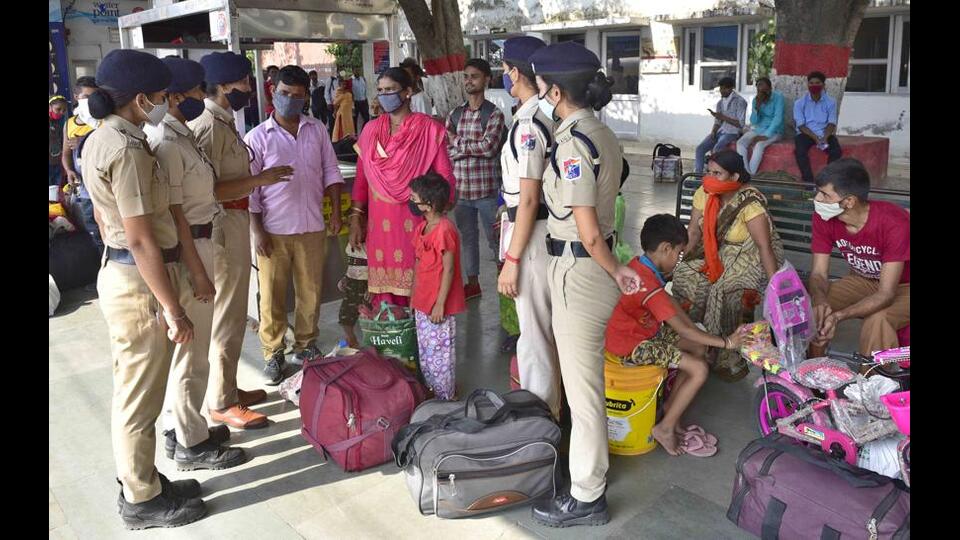
More recently, during the Covid-19 pandemic, the Railway Protection Force launched “Meri Saheli,” aimed at deploying female personnel at stations and in trains to ensure the safety of women passengers. In 2025 alone, South Western Railway RPF forces posted 250 agents across 4,869 trains, interacting with over 200,000 women. That this initiative is rooted in measures and issues that are over a century old has been forgotten, a quirk of the archive that demonstrates its racial and gender biases. The navigation of public spaces by women has never been delinked from questions of power and control, not in 1868 and certainly not today.
Maitrayee Roychoudhury teaches at ARSD College, Delhi University. The views expressed are personal


