
 E-Paper



GRAP stage-3 curbs to wait as Delhi’s AQI nears 400 mark
Officials said review will follow only after AQI exceeds 400, though Delhi’s pollution rose to 351—just below the ‘severe’ threshold.

 Prefer HTon Google


A review meeting to invoke the next category of measures under the Graded Response Action Plan (Grap) will only take place after the air quality index (AQI) crosses 400, officials aware of the matter have said, even Delhi’s air quality deteriorated to the higher end of the ‘very poor’ category on Tuesday – crossing 350.
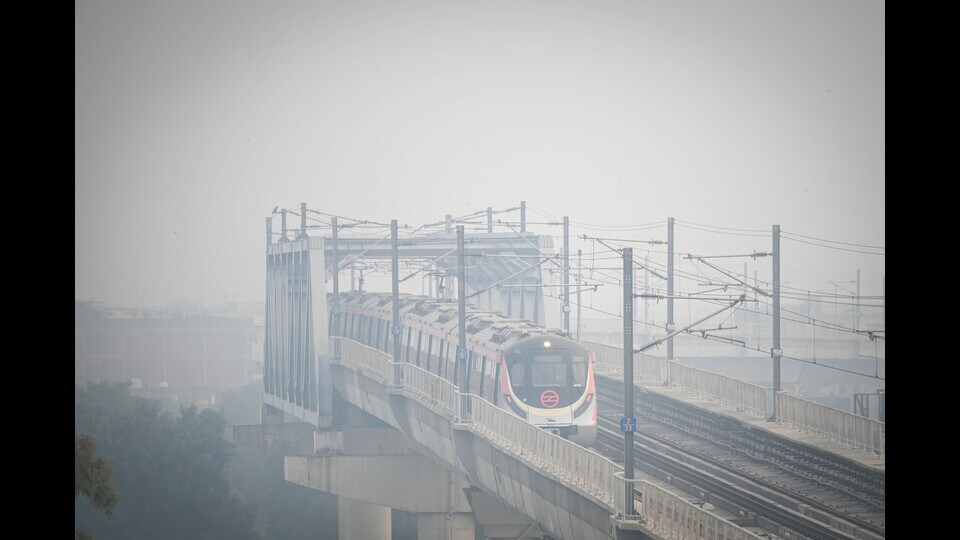
Grap stage 1 was implemented on October 14, followed by stage 2 on October 19. Stage-1 of GRAP is generally invoked when the AQI crosses 200; stage-2 (very poor) when the AQI crosses 300; stage-3 (severe) when AQI is 400; and stage 4 (severe plus) AQI above 450.
Last year, the Supreme Court had revised the thresholds for the stages 3 and 4, directing that they be imposed at AQI thresholds of 350 and 400 respectively. It had also hit out at CAQM for lax implementation of Grap.
While that direction was implemented for last year to make Grap more stringent and effective, it would not apply this year, an official said.
“Following that, stage 3 and 4 measures will be invoked as per the original thresholds of 400 and 450 now,” the official said, adding CAQM was closely monitoring Delhi’s situation.
The 24-hour average AQI was recorded at 351 (very poor) at 4 pm on Tuesday. It was 345 (very poor) at the same time on Monday.
Grap’s stage 3 brings with it a ban on BS-3 petrol and BS-4 diesel four-wheelers in Delhi, Gurugram, Faridabad, Ghaziabad, and Gautam Budh Nagar; blanket curbs on private construction and demolitions; and restrictions on the use of stone crushers, mining and associated activities. Across Delhi and its neighbouring districts, schools up to Class 5 would also be required to shift to “hybrid” lessons under it.
In December last year, CAQM issued a revised plan for invoking actions under Grap. States were asked to implement stricter rules to tackle air pollution during the peak pollution season, including measures like hybrid classes for schools and revised parking fees to discourage use of private transportation. The revised plan prohibits entry of interstate buses from NCR states, except electric vehicles and those running on CNG or BS-VI diesel, under stage two of GRAP. This came under stage three previously.
Under stage two, Resident Welfare Associations (RWA) have been asked to mandatorily provide electric heaters to staff engaged in security, sanitation, horticulture and other miscellaneous services to avoid open burning of biomass during winters, which was earlier mandated only for security staff.
Furthermore, under stage three of Grap, the Delhi government has been directed to ban diesel medium goods vehicles (MGVs) with BS-IV or older standards, except those carrying essential goods or services. Similarly, non-essential diesel light commercial vehicles (LCVs) of BS-IV or older standards, registered outside Delhi, will not be allowed to enter the city. Previously, such restrictions applied only to BS-III or older vehicles.

Stay updated with all top Cities including, Bengaluru, Delhi, Mumbai and more across India. Stay informed on the latest happenings in World News along with Delhi Election 2025 and Delhi Election Result 2025 Live, New Delhi Election Result Live, Kalkaji Election Result Live at Hindustan Times.


