
 E-Paper



In Delhi's waters, rescue arrives without support
Gota khors, informal divers from Yamuna, respond to drowning incidents with limited resources. They lack training, safety equipment, yet handle emergency calls


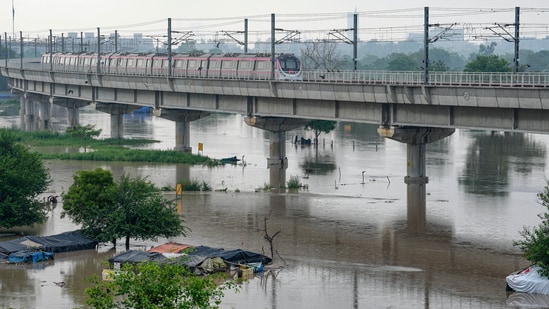
Braving the tainted waters and scattered hazards of the Yamuna with limited equipment and manpower, the “gota khors” are a unique brand of riverside-dwelling divers, who are usually the first responders to instances of drowning in the river, drains that flow into it or deep canals. They work on contracts with the Delhi Boat Club in Civil Lines and act as the city’s primary aquatic response team.
For years, these divers have responded to drowning calls without a formal SOP, modern rescue equipment or regular training. At present, the club employs 18 contractual divers.
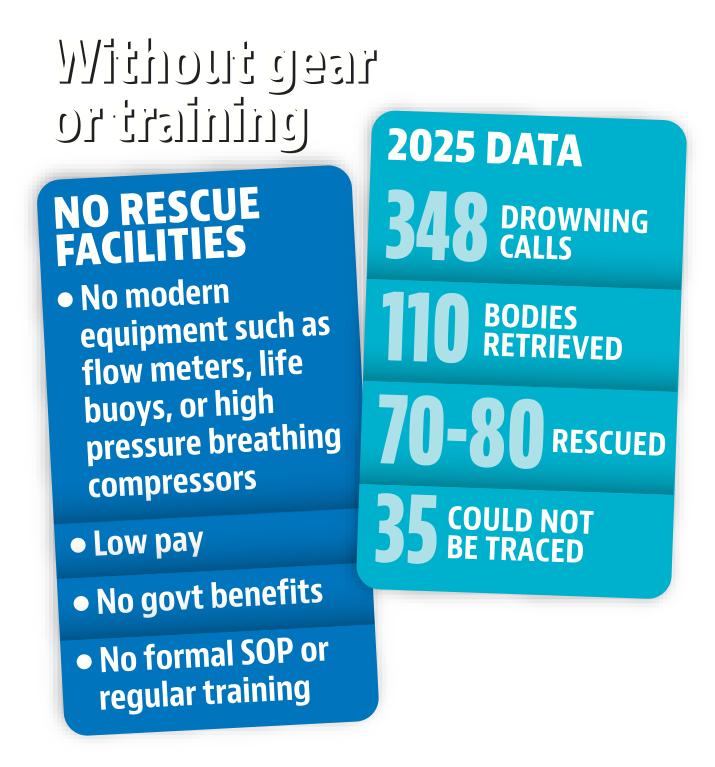
These divers are mostly self-trained swimmers who traverse the waters in only their shorts for “better mobility”. Most of them have grown up in Jagatpur, Wazirabad and Burari, all localities which fall on the riverbanks. They lack equipment, such as flow meters, life buoys or high-pressure breathing compressors,which professional teams, such as the National Disaster Response Force (NDRF), are mandated to have, but claim to be the only ones who can deal with late-night rescue missions and deep pits.
Club in-charge Harish Kumar said that most divers have been acquainted with each other for years and that they have been swimming in the Yamuna Ghat since their childhood.
He said, “I have been swimming here since I was a seven or eight years old. We would learn by picking coins from the riverbed for tourists. When you swim every day, you learn how to navigate underwater, even in the dark. That’s what we have been doing. This one time, a fisherman was looking for his bag and we helped him. We had to be under the water for almost an hour. It was chilly, but we managed to recover his bag.”
While they are divers of the Delhi Boat Club in name, they also respond to emergencies in neighbouring Noida, where the Yamuna continues its trajectory.
A diver, who has been working on rescues for 10 years, said on condition of anonymity, “We help with calls from Noida as it does not have a boat club. Also, no other rescue teams, even those having equipment, can deal with late-night rescue missions and deep pits. We get calls to rescue people even from the Hindon area. Our team is very efficient. We risk our lives almost every day.”
Data shared by the government for 2025 shows that the boat club divers attended to more than 348 drowning calls. They recovered around 110 bodies—many are suicide and accident victims—rescued 70-80 people and are unable to retrieve bodies or trace people in almost 30-35 instances. Monsoon months, from July to September, remain their busiest period.
In-charge Kumar said that they receive over 100 prank calls, which leads to confusion and diverts the responders from actual cases. Another diver, said that they were called when a software engineer in Noida fell into a water-filled pit in Sector 150 on January 16. However, the diver said it was a high-risk situation, while bemoaning the lack of safety equipment, low pay and benefits from the job.
The diver said, “At night, we only have torches that someone holds from a boat, with no mask or oxygen cylinder. We literally operate with no equipment. I’ve suffered cuts because of stones and glass. Many have had infections due to dirty water or garbage. There’s also risk of snakes. I see private divers with helmets, masks, underwater control devices etc. Even in the Noida case, we had received information. I’m sure we could have saved him but there’s so much risk and we only get ₹20,000 for a month without any benefit.”
In contrast, NDRF’s 16th battalion shared that their equipment comprises flow meters, helmets, boats, high pressure breathing air compressor, motor boats, life buoy, portable compressors, diving kit, throw bags, ropes, underwater cameras and communication sets.
The staff is also professionally trained to swim, search, dig and weld, among other skills, but they acknowledged the efficiency of these divers.
A senior NDRF officer said, “The Delhi Boat Club does have trained divers who can respond better to aquatic disasters. Also, our teams are intimated about the emergencies at the same time and reach the scene on time. We also help with collapse, fire and other emergencies.”
He said that the Coast Guard, which comes under the defence ministry, too has high-tech compressors, regulators, control devices and drones, among other equipment. The divers, however, bemoaned that despite their importance, only Kumar has a permanent job and gets benefits of government service.
Delhi government officials said that there’s no official post of a rescue diver in their ranks and when cases of drowning emergencies increase, especially during the rainy season, they hire private divers.


Stay updated with all top Cities including, Bengaluru, Delhi, Mumbai and more across India. Stay informed on the latest happenings in World News along with Delhi Election 2025 and Delhi Election Result 2025 Live, New Delhi Election Result Live, Kalkaji Election Result Live at Hindustan Times.


