
 E-Paper



Increasing the share of direct taxes upholds equity principle, says Sitharaman
The minister appreciated CBDT’s decision to publish tax collection data on the ninth day of every month like GST collection data that comes every first day of the month.


Union finance minister Nirmala Sitharaman on Tuesday said the growth in tax collections -- one of the key signs of the country’s economic health -- is “sustaining” and the increasing share of direct taxes in the kitty upholds the principle of equity that people having income are paying taxes.
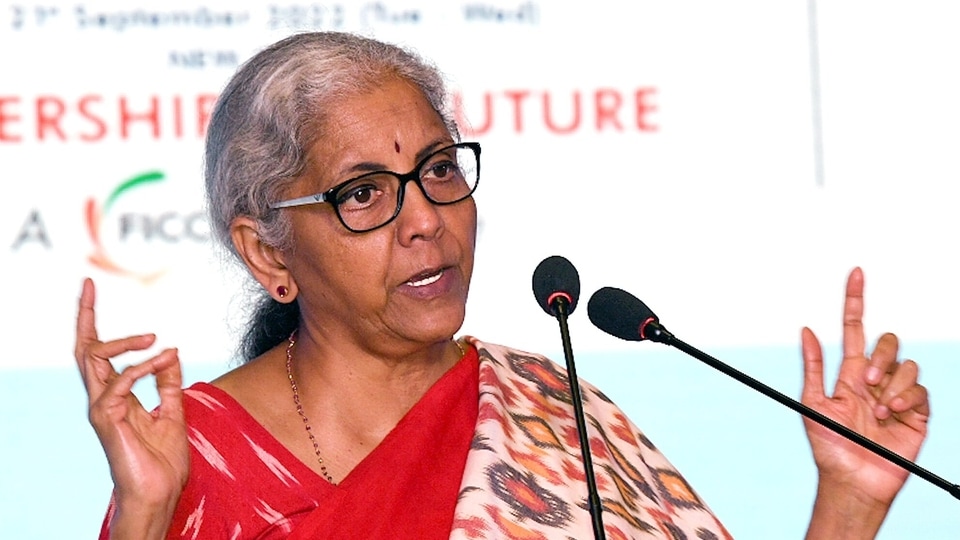
Referring to the pandemic period of 2020 and early 2021, she said “lot of observers” then questioned the “principles of taxation” when indirect taxes were contributing “a lot more than direct taxes” because burden of indirect taxes fall on everybody, while the direct tax or the income-tax is levied on people who earn and can pay.
“But, that was only for a few months. But after that the easy, smooth way in which direct taxation, and revenue collected from direct tax improved -- and improved substantially that it’s today probably at par or even one better than the indirect tax collection. That’s brought in the principle of equity,” she said while addressing income-tax officials at an award ceremony. In an equitable taxation regimen, contributions of indirect taxes must not be disproportionately more than direct taxes.
There has been a robust growth in both direct and indirect tax revenues. While Goods and Services Tax (GST) collections, one of the indirect taxes, have surpassed ₹1.40 lakh crore for six consecutive months, gross direct tax revenues saw a 30% year-on-year jump at over ₹ 8.36 lakh crore till September 17 of the current financial year on better compliance and efficient tax administration, according to the Central Board of Direct Taxes (CBDT).
The minister appreciated CBDT’s decision to publish tax collection data on the ninth day of every month like GST collection data that comes every first day of the month. This will be the “litmus test” for the economy, she said. Tax revenues, based on income and consumption, reflect economic health of an economy.
In order to make the system more efficient and provide ease to taxpayers Sitharaman suggested taxmen to go back to basics. She asked them to follow three “ ₹– Returns, Refunds and Redressal” ; faster processing of income-tax returns, followed by refunding excess tax paid by the assesses; and resolving grievances of taxpayers expeditiously.
Experts said the digitisation, pre-filled forms and faceless assessment systems have made compliance easy and processing of tax returns quicker. Chartered Accountant Tarun Kumar, Direct tax head at Coherent Advisors, said: “The Income-Tax Department has now improved their system to such a level that ITR [income-tax returns] processing and refunds are very quick. Efficiency has also helped in enhanced compliance.”
Earlier on Tuesday, the finance minister also chaired a meeting on the performance of public sector banks (PSBs) in providing credit to scheduled castes and implementing other welfare schemes. The meeting was also attended by the chairman of the National Commission for Scheduled Castes, according to a finance ministry tweet.
The review looked at financial inclusion and implementation of schemes such as Stand-Up India, Pradhan Mantri Mudra Yojana (PMMY), Venture Capital Fund for SCs and Credit Enhancement Guarantee Scheme SCs.
Sitharaman reviewed various measures taken by PSBs in giving credit to persons belonging to the Scheduled Caste community and their welfare in terms of reservation, backlog vacancies (a portion of bank jobs is reserved for those from the community) , and functioning of welfare and grievances redressal mechanism, the ministry said in a statement.
The minister directed banks “to fill the small number of remaining backlog vacancies in a time bound manner” and asked them to have “forward and backward linkages through convergence of various schemes of different government departments for SCs while giving them financial assistance,” the statement said.
Sitharaman asked banks to enhance the coverage of SCs in all schemes and advised PSB heads to also look into their need for capacity building and entrepreneurship development as SCs constitute about 18% of the total workforce of the banks and financial institutions, according to the statement.
The finance minister also asked PSBs to apprise the NCSC twice every year, first through an interaction anytime from April 14, the Birthday of Babasaheb Ambedkar to April 30, and second by sharing information in October regarding the progress made in recruitment of and credit to Scheduled Castes.
“The objective of the meeting was to bring all stakeholders on a common platform to work together in fulfilment of the rights enshrined in the Constitution for the upliftment and betterment of the people from the Scheduled Castes,” the statement said, quoting the minister. Sitharaman also observed that performance in schemes such as National Rural Livelihood Mission (NRLM) where 21% of the credit linked Self-Help Groups (SHGs) were SCs and in SVANIDHI, 19% of the beneficiaries are SCs, is satisfactory.
Stay updated with all top Cities including, Bengaluru, Delhi, Mumbai and more across India. Stay informed on the latest happenings in World News along with Delhi Election 2025 and Delhi Election Result 2025 Live, New Delhi Election Result Live, Kalkaji Election Result Live at Hindustan Times.


