The Master Plan of Delhi 2047 (MPD-2047), notified by the Union ministry of housing and urban affairs on Thursday, has opened the door for a new generation of high-rise and high-density development in the Capital, including buildings that could theoretically rise to more than 100 floors.
Delhi’s new high-rise framework opens door to 100-plus-floor buildings
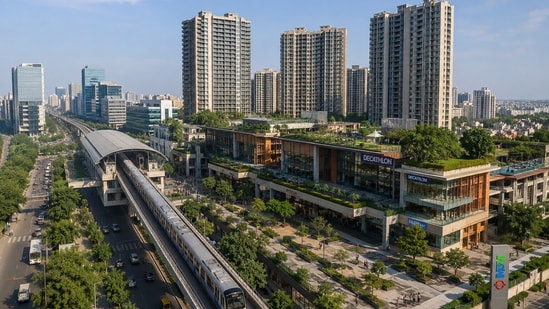
For the first time, the document explicitly defines structures of more than 100 floors as “tall buildings” and classifies them as “landmark developments”. It envisages such buildings in areas with adequate infrastructure, particularly along mass-transit corridors and in major commercial and mixed-use centres. “Tall buildings, i.e. structures having more than 100 floors, shall be designed as landmark developments that strengthen the imageability and identity of Delhi’s skyline. Their design shall respond to the surrounding urban context,” MPD-2047 states.
Also read: Delhi Master Plan 2047: 40 lakh homes planned, focus on affordable housing and vertical growth
Their design will have to account for Delhi’s historic landmarks, ceremonial avenues, heritage areas and important view corridors. “Delhi’s skyline shall develop in a planned manner while respecting the city’s historic landmarks, ceremonial avenues, heritage areas, and important view corridors,” it states.
{{/usCountry}}Their design will have to account for Delhi’s historic landmarks, ceremonial avenues, heritage areas and important view corridors. “Delhi’s skyline shall develop in a planned manner while respecting the city’s historic landmarks, ceremonial avenues, heritage areas, and important view corridors,” it states.
{{/usCountry}}Plan balances vertical growth with heritage, public spaces
The emphasis is not simply on height. The plan says their development should support “compact urban growth”, reduce urban sprawl and promote efficient use of land. It also specifies that tall buildings should use compact footprints to maximise open space at ground level, including public plazas, landscaped areas, pedestrian streets, and green infrastructure.
MPD-2047 also lays down provisions governing basements in high-rise buildings. Basements used for incidental storage, services, utilities or parking will not count towards the floor area ratio (FAR). However, basements used for activities conforming to the designated use of the premises will count towards FAR, subject to statutory clearances.
FAR is the ratio of a building’s total combined floor area across all floors to the total area of the plot it sits on.
TOD norms push high-density development around transit corridors
It envisages high-density, mixed-use development under transit-oriented development (TOD) norms within 500 metres on either side of existing and planned Metro corridors and within a 500-metre radius of nodes around RRTS, railway and high-speed rail stations.
Across other categories, the plan permits FAR of 150-200 for group housing, rising to 300 for affordable rental housing complexes. Hotels can have FAR of up to 375 on roads of 30 metres or more, while community centres have FAR of 200 and colleges/research institutions 225.
Among the highest FAR limits -- 500 -- has been provided for in-situ rehabilitation of eligible slum and JJ clusters.
Also read: Delhi master plan floats Ridge-Yamuna Park connector, cycling trail
“For in-situ rehabilitation areas we have introduced multiple incentives to provide flexibility to make them more financially attractive for private players and for PPP models. There will now be 60% remunerative component, which means that 40% of the area can be used for the in-situ rehabilitation of residents, while the rest 60% can be used for commercial or other purposes by the developer,” said DDA vice chairman N Sarvana Kumar.
Real estate sector sees investment potential in MPD-2047
Industry experts said the approval of Delhi-2047 Master Plan is an encouraging step for Delhi’s real estate market.
“What stands out is the plan’s focus on planned development supported by infrastructure, better land utilisation and a flexible approach to mixed-use development. This can create a conducive environment for developers to plan and invest in the city,” said Harsh Vardhan Bansal, president of NAREDCO Delhi.
He said MPD-2047 offered significant potential in both redevelopment and new development by encouraging renewal of older and underutilised areas while allowing planned urban expansion and new housing. “This is a positive opportunity… With better integration of housing, commercial activity, mobility and infrastructure, MPD-2047 can encourage new projects, support investment and contribute to the creation of better and more liveable neighbourhoods across Delhi,” Bansal said.
Stay updated with all top Cities including, Bengaluru, Delhi, Mumbai and more across India. Stay informed on the latest happenings in World News along with Delhi Election 2025 and Delhi Election Result 2025 Live, New Delhi Election Result Live, Kalkaji Election Result Live at Hindustan Times.
Stay updated with all top Cities including, Bengaluru, Delhi, Mumbai and more across India. Stay informed on the latest happenings in World News along with Delhi Election 2025 and Delhi Election Result 2025 Live, New Delhi Election Result Live, Kalkaji Election Result Live at Hindustan Times.