E-Paper



Three master plans have tried to shape Delhi. What worked, what didn't — and what MPD-2047 proposes
Delhi's three earlier master plans promised decongestion, housing and green cover. Here's what they achieved, as MPD-2047 heads for approval.

 Prefer HTon Google


The Delhi Development Authority (DDA) on August 12 approved the Master Plan for Delhi (MPD)-2047, and the document is now with the Union ministry of housing and urban affairs (MoHUA) for a final nod.
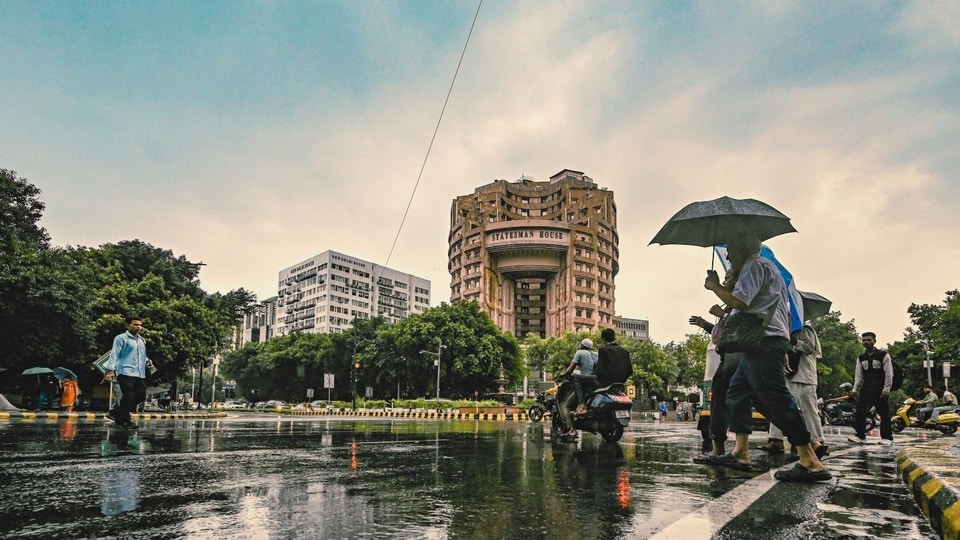
The plan projects that the capital's population will touch nearly 32 million by 2047, and sets out how the city will house, service and move an additional 10 million people over the next two decades.
A master plan is a long-term document that sets out a conceptual layout for a city's growth, tying together its buildings, people and surroundings. It typically covers population, the economy, housing, transport, community facilities and land use, and is drawn up for a 20-year horizon. In Delhi, it is prepared under the Delhi Development Act, 1957.
Before MPD-2047, Delhi has implemented three master plans. A look at how these fared:
MPD-1962: Framework and limits
The first plan was prepared by an Albert Mayer-led Ford Foundation team working with the Town Planning Organization. Its strategy was to thin densities in the old city while gradually building up New Delhi and Civil Lines, backed by large-scale land acquisition. It also proposed six ring towns — Ghaziabad, Faridabad, Gurgaon, Bahadurgarh, Loni and Narela — to absorb population and economic activity.
The framework was laid, but each of its four core objectives was only partly met.
Decongesting the old city produced substantial planned development, though congestion and informal growth persisted. The push to decentralise jobs and housing created new industrial and residential areas, but employment stayed heavily concentrated in central Delhi. The ring towns expanded, though they never quite functioned as the counter-magnets envisaged under the plan.
Also Read | Delhi growth push takes two-pronged approach
Planned affordable housing and infrastructure fell short of targets, and slums and unauthorised settlements proliferated as a result.
The plan's core weaknesses were an underestimation of population, inadequate affordable housing, weak enforcement of land-use controls and a failure to contain peripheral growth — outcomes that the DDA has attributed to Delhi's explosive population expansion and migration.
MPD-2001: Metro on ground, colonies on map
The second plan carried on the public-sector-led model, with little private participation in either shelter or infrastructure. It introduced a three-tier hierarchy of master plan, zonal plans and layout plans, treated the central city as a special area needing decentralisation, and proposed low-rise, high-density development elsewhere. It also brought in the idea of a multi-modal transport system.
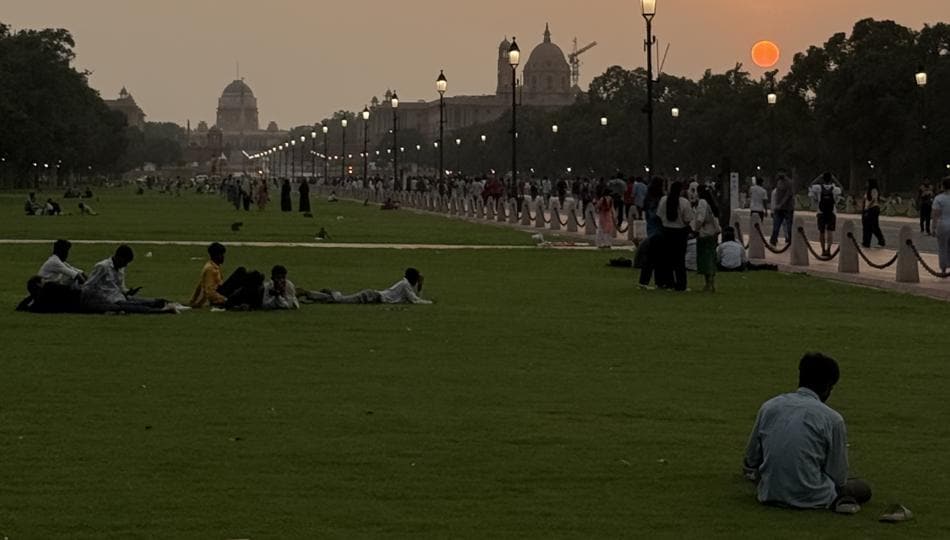
Decentralising jobs and commerce through district centres and sub-CBDs was largely implemented, though several planned central business districts (CBDs) were never completed. The transport vision — combining MRTS (mass rapid transit system), rail, a ring railway and buses — produced the Delhi Metro, the plan’s clearest success. The broader integrated system, however, remained largely on paper.
Also Read | Delhi master plan floats Ridge-Yamuna Park connector, cycling trail
Housing was among the biggest failures. DDA built at scale, but unauthorised colonies kept expanding without adequate supporting infrastructure, prompting authorities to fall back on regularisation. Environmental protection fared no better: significant stretches of the designated green belt were taken over by development, planned and unplanned, and illegal construction continued even inside green areas.
The tangible gains were planned expansion and the launch of mass rapid transit. The gaps were unauthorised housing, weakened green cover and the incomplete decentralisation of commerce.
MPD-2021: Ambition on paper, delivery lagging
The current plan introduced mixed-use zoning, allowing neighbourhood markets and commercial activity within residential areas. It framed development around the socio-economic, natural and built environment, with particular emphasis on the Ridge and the Yamuna floodplains. Two new instruments were added: a transit-oriented development (TOD) policy and land pooling, both intended to expand the housing stock.
The housing target was at least 75,000 dwelling units a year, weighted towards smaller and affordable units. Flats were built, but the scale of affordable housing and redevelopment has not matched demand, and site selection has drawn questions.
Land pooling, meant to bring large tracts of privately owned peripheral land into planned development, has not taken shape at all. The TOD policy, introduced in 2015, has been modified repeatedly to bring more stakeholders in, but has produced little on the ground.
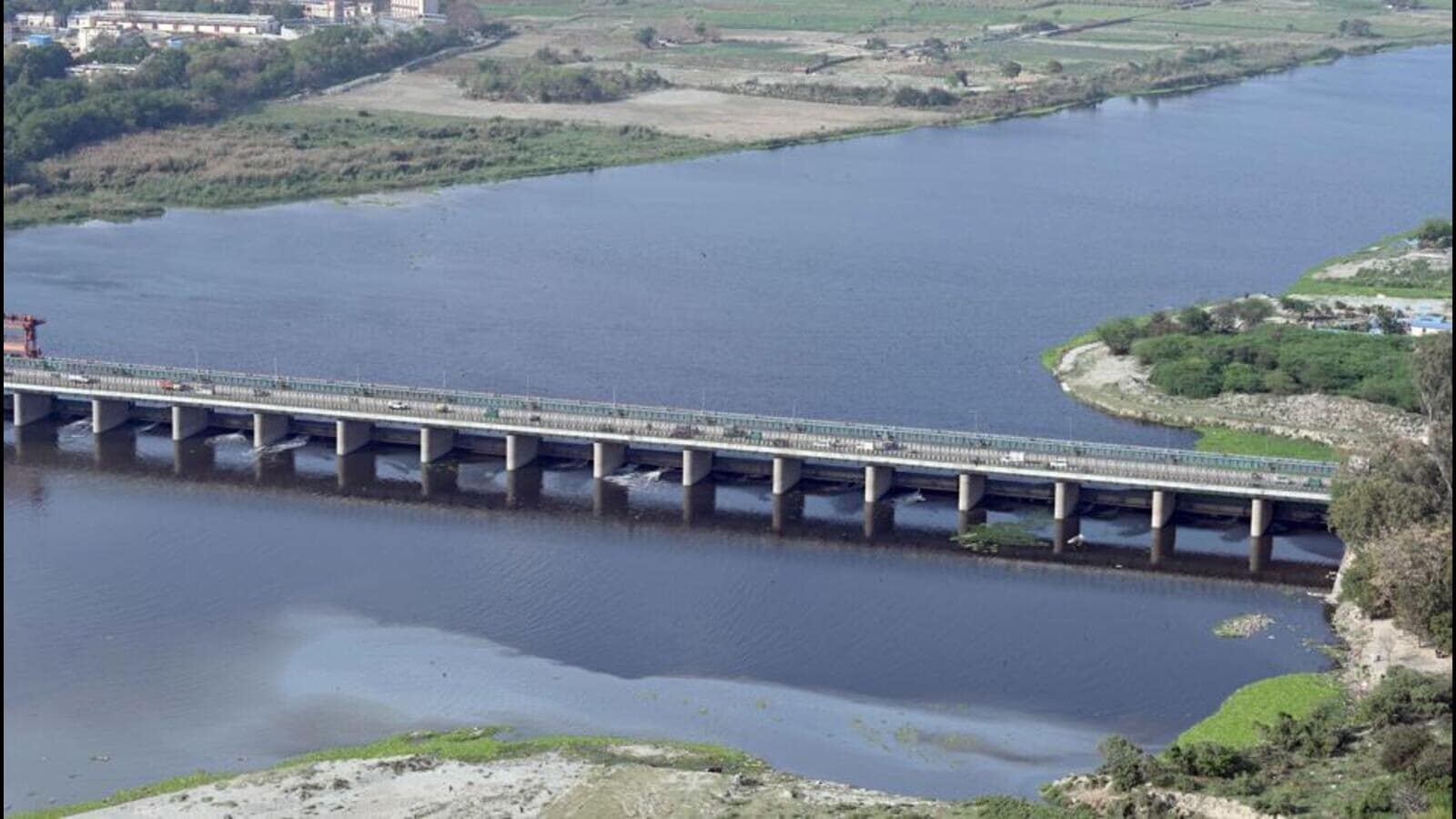
On the environment, the plan called for Ridge conservation, 15–20% of land under green and recreational uses, and comprehensive Yamuna rejuvenation covering sewage treatment, sewerage in unserved areas and treatment of drains. Green and recreational infrastructure has expanded, but the Yamuna objective remains far from complete. Mixed-use areas have been developed in part to mainstream unauthorised colonies, and carry serious parking and infrastructure problems.
The biggest unfinished business: land pooling, affordable housing, redevelopment of unauthorised areas and the Yamuna.
MPD-2047
MPD-2047 sets its horizon at a population of nearly 32 million by 2047, and estimates Delhi will need close to four million additional dwelling units to house it — largely through redeveloping ageing, under-utilised colonies at higher floor area ratios, alongside new urban extensions.
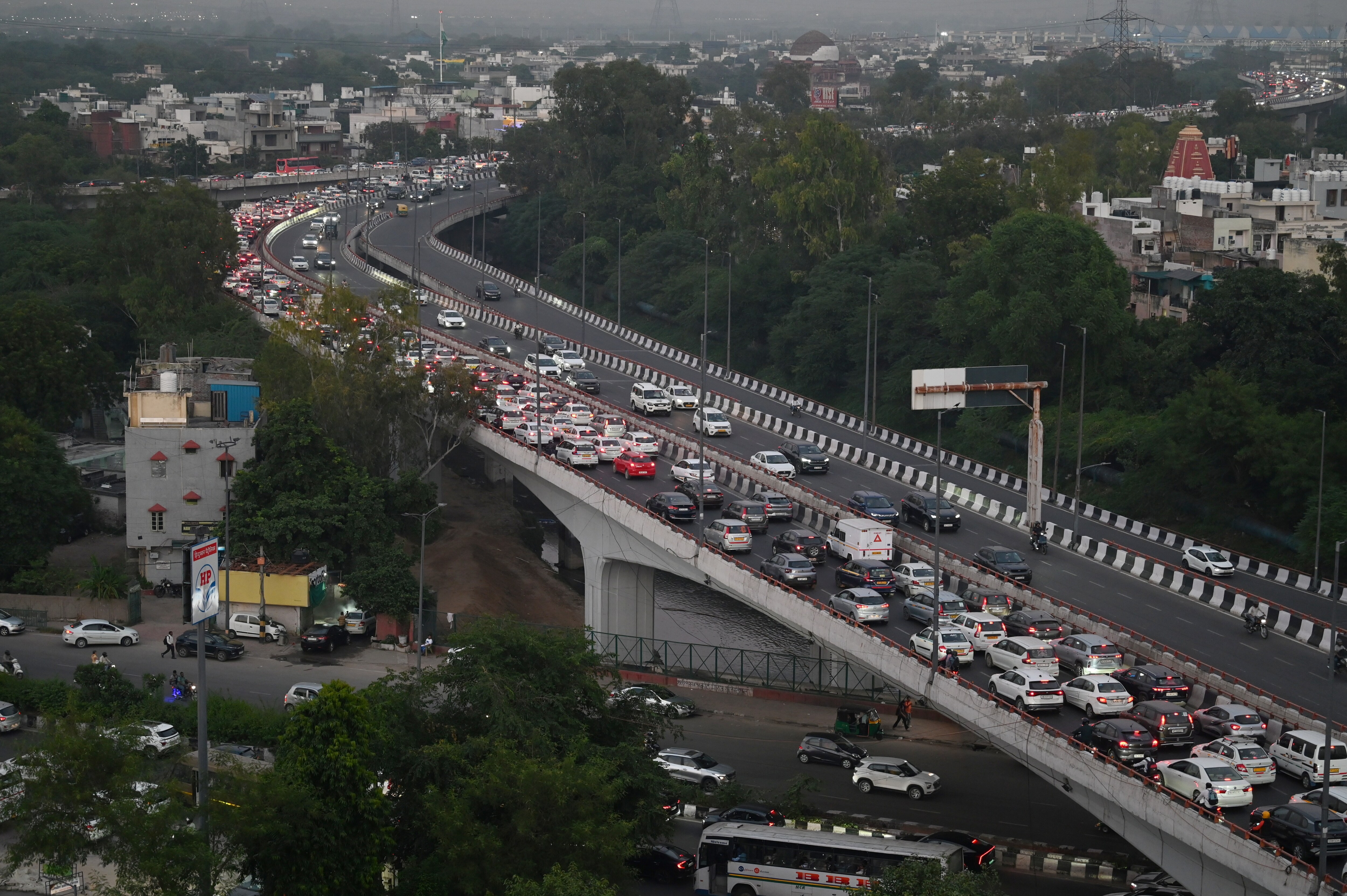
The plan ties new development to the prior availability of roads, transit, sewerage and electricity, an “infrastructure-first approach” meant to avoid the infrastructure gaps that plagued projects in Narela and Bawana.
Also Read | 32 million population, 4 million more homes: Inside Delhi's 2047 master plan
On mobility, the plan floats congestion pricing for vehicles entering high-traffic zones and dynamic, location-based parking charges to curb private vehicle use. On ecology, it proposes a 200-km Ridge-Yamuna Park Connector with a 52-km cycling network, part of a wider restoration effort spanning roughly 1,700 hectares of the Yamuna floodplain.
MPD-2047 now awaits final sign-off from MoHUA before formal notification — the step that will determine how much of this framework is implemented, given the record of the three plans before it.