E-Paper



MCD to expand Mughal-themed park near Jama Masjid
The Municipal Corporation of Delhi (MCD) plans to expand the Mughal architecture-themed heritage park near Jama Masjid, adding features such as red sandstone pavilions, a food court, and shops. The project is estimated to cost ₹2.41 crore and will be executed over the next six months. The park, which will be named after Charti Lal Goel, will serve as a cultural hub for the Walled City area and showcase the life and culture of Old Delhi through light and sound shows.


The Municipal Corporation of Delhi (MCD) has decided to expand the Mughal architecture-themed heritage park near Jama Masjid, officials aware of the matter said, adding that in the second phase of the development of the park, features such as red sandstone pavilions, a food court, and shops will be added to the esplanade.
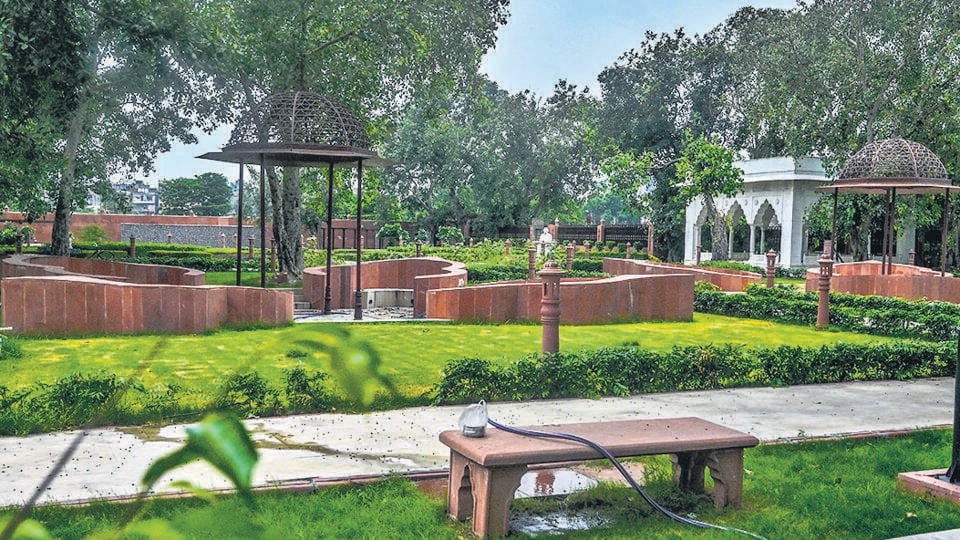
A senior MCD official said that the civic body has invited bids for the expansion of the park, and the project is likely to be executed over the next six months at an estimated cost of ₹2.41 crore.
The first phase of the heritage park, spread over an area of about 8,650sqm, was inaugurated in March 2022 by then President Ramnath Kovind. Located near Parade Ground, the park faces the Red Fort on one end and Jama Masjid on the other. It incorporates Mughal-style carvings in red stones, walkways, and a Mughal Baradari — a pavilion with 12 doors — along with public amenities and shopping counters.
A resolution to name the park after Charti Lal Goel, the first speaker of Delhi’s legislative assembly, was cleared by a general body meeting of the erstwhile north MCD in February 2022.
The park features canopies made from red sandstone, white marble and Dholpur stone, while the walls have incorporated stone jaalis. “One can find different features, including baradaris, an open-air theatre, and chhatris, among other architectural features used in Shahjahanabad,” the official said.
Officials said that with its expansion, the park will be developed as a cultural hub of the Walled City area, with food items synonymous with Old Delhi and handicraft boutiques, along with providing a platform for cultural gatherings.
“The current phase of development will incorporate the development of walls and shops along with heritage aesthetic structures adjacent to Meena Bazar. The erstwhile north MCD had developed an area of about 1.75 acres at an estimated cost of ₹7.65 crore. In the second phase, the remaining 2.25 acres will be developed. The overall estimate for second phase is ₹10 crore, but tenders only for civic issues such as boundary walls and other structures has been issued right now,” the official quoted above said.
A second official, who is with the MCD’s horticulture department, said the park can be divided into two parts. “There is a triangular and a rectangular section of the plot. The rectangular portion has the entrance plaza, a sunken sitting area, landscaped courts, a fountain, a stage, and washrooms. The second, smaller triangular section mostly comprises of an open lawn. In the future, we plan to conduct light and sound shows at this facility to feature the life and culture of walled city,” the official said.