
 E-Paper



Delhi civic body to map 100-year-old schools, colleges, railway stations: Here's why
The Municipal Corporation of Delhi will compile a database and share it with the Archaeological Survey of India.

 Prefer HTon Google


The Municipal Corporation of Delhi (MCD) will identify and document over 100-year-old railway stations, schools and colleges, senior civic officials said.
A database will be shared with the Archeological Survey of India (ASI). The exercise is limited to these three categories and will not include dispensaries, hospitals and police stations, they added.
A senior MCD official said the directions for identification has been received from the ASI. “We will accordingly issues directions to the 12 deputy commissioners to conducts surveys in their areas and earmark such buildings,” official added.
Why the survey
An ASI official that the exercise is currently focused on data collection and did not comment on whether any of these structures will be granted heritage protection.
MCD official said the exercise will also help MCD’s heritage cell to expand its database.
“The exercise will include details such as the name of the building, its age, ownership status and current condition,” official added.
Historical sites
With layered history spanning centuries, Delhi is replete with heritage structures that fall under the authority of various agencies.
Another MCD official said the urban development department of the Delhi government in February 2010 notified a list of 1,318 heritage sites, dividing them into eight zones (A to H) each and three grades based on their importance, on the advice of Heritage Conservation Committee (HCC).
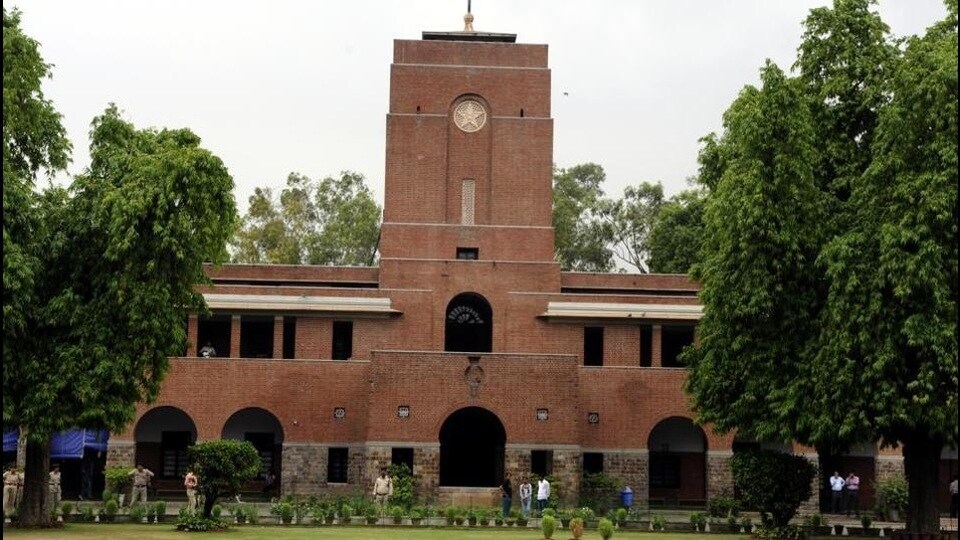
MCD official said that the survey is likely to cover sites such as St. Stephen’s College which is 145 years old, Hindu College, Zakir Hussain College, Old Delhi Railway Station, Raisina Bengali Senior Secondary School, Anglo-Arabic Senior Secondary School at Ajmeri Gate, among other places.
These are divided in three grades. According to the union ministry of housing and urban affairs’ (MoHUA) classification, heritage grade-I comprises buildings and precincts of national or historic importance, embodying excellence in architectural style, design, technology, and material use. Heritage grade-II comprises buildings and precincts of regional or local importance possessing special architectural features. Grade-III comprises buildings and precincts of importance for townscape; that evoke architectural aesthetic, or sociological interest.
Summer heritage walks announced
The MCD will also organise a series of early morning heritage walks and seminars between May and July to showcase the city’s historical evolution. Held on the first and third Saturdays each month as part of a “Summer Circuit,” the programme will cover sites such as Lal Kot, the Qutub Complex, Feroz Shah Kotla and key gates of Shahjahanabad.
Officials said e-bikes may be used for longer routes, with experts guiding participants through the history of these locations. June walks will include Humayun’s Tomb and the story of Town Hall in Chandni Chowk, while July will focus on Ashokan-era remains like rock edicts and pillars.
The initiative, approved in a recent review meeting, will be free to attend, though entry tickets at certain monuments will need to be purchased separately.


Stay updated with all top Cities including, Bengaluru, Delhi, Mumbai and more across India. Stay informed on the latest happenings in World News along with Delhi Election 2025 and Delhi Election Result 2025 Live, New Delhi Election Result Live, Kalkaji Election Result Live at Hindustan Times.


