E-Paper



G20 park with monument replicas soon in Delhi’s Karol Bagh
The 20 monuments selected include Kofuku-ji from Japan, Elephanta Caves from India, the Great Wall of China, Sansa Buddhist Mountain from Korea and others.


New Delhi The Municipal Corporation of Delhi (MCD) is planning to set up a heritage park in Karol Bagh in central Delhi that will feature replicas of monuments selected from the countries that comprise the G20 grouping, said officials aware of the matter.
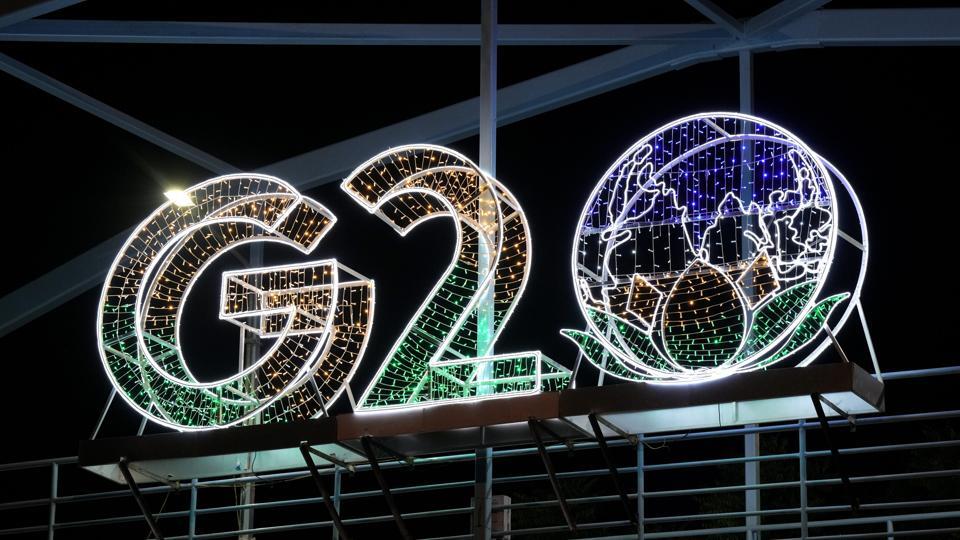
Officials said that the project is part of an attempt to commemorate the G20 Summit, which Delhi will host in the second week of September, and is expected to be completed by March next year. The planned theme park’s project report, a copy of which HT has seen, said the park will be spread over a nine-acre plot in Ajmal Khan Park in Karol Bagh.
A senior MCD official said the monuments will showcase the heritage of the G20 countries.
Also Read | Delhi Metro stations defaced with ‘Khalistan Zindabad’ graffiti ahead of G20 Summit; SFJ releases video
The 20 monuments selected include Kofuku-ji from Japan, Elephanta Caves from India, the Great Wall of China, Sansa Buddhist Mountain from Korea, the Palace of St Petersburg in Russia, Saad bin Saud Palace from Saudi Arabia, the Library of Celsus from Turkey, and the Voortrekker Monument from South Africa.

“The theme park will offer an opportunity for visitors to learn about these countries. The structures will be developed on the lines of Waste to Wonder Park, which features replicas of the Seven Wonders of the world,” said the official, who asked not to be named.
Ajmal Khan Park is a public garden spread over 24 acres in central Karol Bagh.
“We will utilise MPLAD (Members of Parliament Local Area Development Scheme) funds to build the park,” added the official. Karol Bagh comes under the New Delhi Parliamentary constituency and Meenakshi Lekhi is the MP from the area.
Also Read | ‘India has made G20 more…’: PM Modi on Mann ki Baat. Top quotes
The civic body on August 23 invited bids for private artists and companies who will develop the theme park. According to the tender document, which HT has seen, MCD will spend around just over ₹3.22 crore on the first phase of the park.
Replicas nearly 15-20 feet high will be installed in the park, said officials. The park will also feature 3D replicas of the Stonehenge from the United Kingdom, Ruinas de San Ignacio Miní from Argentina, ruins of Olympia from Greece, Palais des Papes from France, Prambanan Temple from Indonesia, Piazza del Duomo from Italy, Independence Hall from Philadelphia and Royal Exhibition Building from Australia. “Each of these will be crafted using metal scrap, old vehicles and fibre products collected from storage yards, office buildings and landfills,” the official quoted above added.
The cost of each replica is estimated to vary from ₹12,00,000 to ₹20,00,000 with the three most expensive replicas projected to be the Celsus Library, Prambanan temple and St Petersburg palace. “The monuments which need more intricate details to replicate the carving and facades tend to be more expensive,” the official added.
“Surrounded by dense residential and commercial areas, the park has a great potential for tourism development,” the official added.
Delhi has three waste-to-art themed parks — Waste to Wonder in Sarai Kale Khan, Bharat Darshan Park in Punjabi Bagh and Shaheedi Park on Bahadur Shah Zafar Marg.