E-Paper



NDMC plans revamp of Shivaji Stadium terminus in Delhi
An NDMC official said that the terminus will be a first-of-its-kind integration of commercial space in Delhi-NCR

 Prefer HTon Google


The New Delhi Municipal Council (NDMC) will initiate the redevelopment of the Shivaji Stadium bus terminus near Connaught Place, the cost of which has been pegged at ₹64 crore, and the bids for which were invited on Monday. The council will be revamp the infrastructure that will include a bus terminus as well as commercial and office complexes. The project is estimated to be completed in three years, NDMC officials aware of the matter said on Monday.
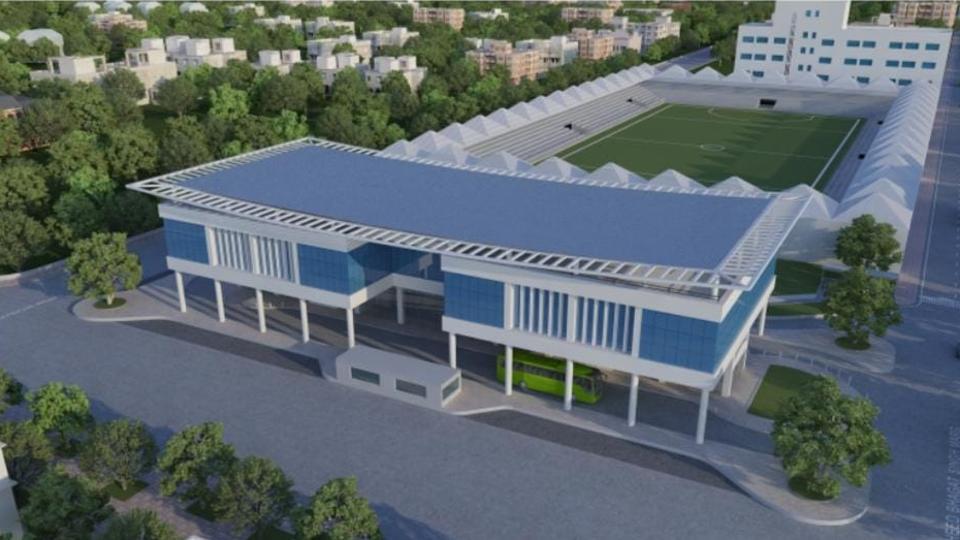
NDMC vice-chairman Satish Upadhyay said that the new facility will boast modern eco-friendly frame building of international standards with green features and will host a large underground parking area, a taxi hub and food court.
“The tenders will be opened on November 30 and work will be awarded by March next year. The department has estimated that the revamped complex will be ready by early 2027,” the vice-chairman added. The project has been in the planning stage over the last four years and the council had accorded its nod to the project on December 1, 2021.
Read Here: NDMC replaces Gurmukhi signs bearing typos, tries to find more
An NDMC official said that the terminus will be a first-of-its-kind integration of commercial space in Delhi-NCR with a large transportation facility, food zone and car parking. “The complex will have a commercial office space of around 29,671 square feet area. Our goal is to recover the initial input cost in 2-2.5 years of the project execution. The council plans to raise revenue of ₹2.4 crore per month from rentals of these commercial spaces,” the official added.
The official said that the existing parking space in the complex will be doubled. “It is a framed structure with thick glasses to allow large amount of natural light inside the complex and minimise electricity consumption. There is a provision of solar panels across the roof to sustain its power demand. Under the current arrangement, the passengers are forced to stand in an open area and we have decided to create covered waiting areas with amenities of drinking water and a cafeteria,” the official said.
NDMC will use granite for floors, wood plastic composite doors and windows, stainless steel railings, false ceiling and also construct vacuum dewatered trimix roads. “The overall plan features a new public convenience block, food zone and ticket vending area. The office space will be offered on the first and second floors,” the official added.
The redevelopment project report stated that the whole complex will be disabled friendly and the facility will have two basement levels for parking space, a ground floor for bus terminus and two upper floors for commercial space. The parking area has a space of accommodating 113 cars and will be equipped with electric charging stations, the plan added. The Shivaji stadium complex is spread over 4,235.7 sqm and the agency plans to add 5,702 sqm basement area and 2,757 sqm office space in the redeveloped complex.
An NDMC official said that the transport hub at Shivaji terminus will have seamless integration of public transport as well as bicycle sharing stations, auto-rickshaws and taxis. NDMC had also attempted a similar project in 2018-19 and the initial cost was estimated to be around ₹39 crore but no tenders were received.