E-Paper



On day of jams, Delhi Metro’s passenger journeys hit new peak of 7.109 million
The peak is likely to be down to more people choosing to commute by Metro due to restrictions at borders and within city in wake of the farmers’ protest


The Delhi Metro recorded its highest-ever single-day ridership on Tuesday, with the passenger journey count for the day crossing 7.109 million, Delhi Metro Rail Corporation (DMRC) officials said on Wednesday. Tuesday’s passenger journey count was slightly more than Monday’s count of 7.087 million, and eclipsed the previous high of 7.104 million passenger journeys on September 4, 2023, officials said.
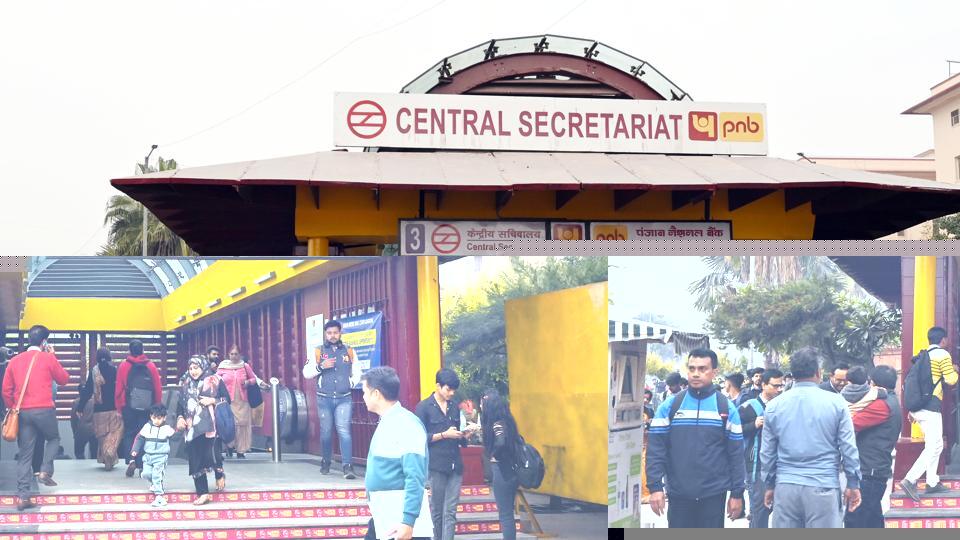
“DMRC registered its highest passenger journeys on Tuesday, February 13, with 7.1.09 million journeys across the network. This faith shown by the passengers makes DMRC a major mass transit backbone of the National Capital Region (NCR). The Delhi Metro is continuously working towards further improving the overall commuting experience of the passengers and would like to thank the passengers for their patronage and support,” said Anuj Dayal, principal executive director, corporate communications, at DMRC.
The peak in passenger journeys on Tuesday is likely to be down to more people choosing to commute by Metro in wake of restrictions at Delhi’s borders and within city limits in wake of the farmers’ protest. Visuals of slow-moving traffic near Ghazipur and Sirhaul borders, as well as in Delhi at areas such as ITO, Barakhamba Road, and Africa Avenue were widely shared on social media, which may have prompted more people to ditch plans of travelling by road.
DMRC data showed that the Yellow Line (Samaypur Badli to Millennium City Centre) was the busiest line on Tuesday, with 1.934 million passengers utilising it, followed by the Blue Line (Dwarka Sector 21 to Noida Electronic City/ Vaishali) with 1.914 million passenger journeys and the Red Line (Rithala to Shaheed Sthal) with 757,000 passenger journeys.
DMRC defines passenger journeys as the number of Metro lines used by a single passenger to complete his or her journey. So, if a passenger uses three Metro lines before exiting the network, this counts as three passenger journeys.
Till 2018, DMRC would calculate passenger ridership, that is, the total number of tickets sold and total number of smart cards used by commuters to enter and exit the network. From 2019 onwards, the corporation began to calculate passenger journeys.