
 E-Paper



‘Over 60% of Delhi’s 5.5k traffic cops suffer from hypertension’: Report
Senior officials said direct exposure to air and noise pollution, job stress and irregular sleep were some of the reasons cited for these medical conditions

 Prefer HTon Google


Nearly 60% of the 5,500 traffic police personnel in Delhi suffer from hypertension, 20% have diabetes and 10% have hearing problems, according to their medical check-up reports conducted by the Delhi Police in February this year.
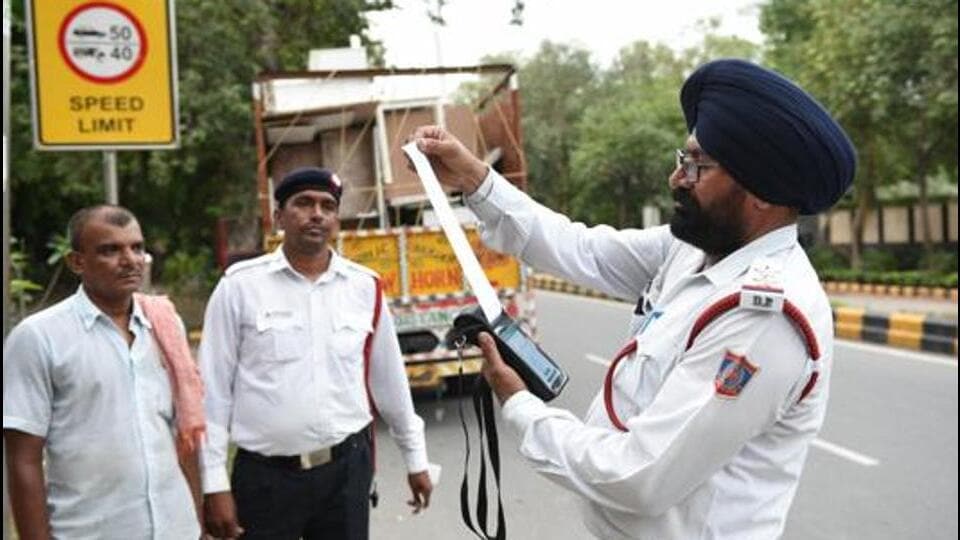
Senior officers privy to the details of the check up said direct exposure to air and noise pollution, job stress and irregular sleep were some of the reasons cited for these medical conditions.
“Even if you fix the normal blood pressure levels to 140/90 (a normal healthy adult person has a blood pressure of 120/80), nearly 2,000 of them would be hypertensive,” a senior officer privy to the check up details said.
He added that in a separate in January this year, it was revealed that over 30% of the traffic police officers in Delhi have signs of asthma, lung congestion, throat irritation, while low bone density and joint aches were also found common among them.
A former officer who held a top post in Delhi Traffic Police concurred with the findings of the check up, and said that by the time they are about to retire most traffic police officials fall prey to hypertension, diabetes and other lifestyle diseases. “Earlier, there was no proper roster for them, due to which they had to work 12-15 hours at a go. The demanding schedule and the high air pollution levels in Delhi also play a major role in aggravating the situation. However, in the last eight months, things have improved very much as the present commissioner of police has introduced the e-Chittha portal, to ensure optimal use of manpower resources. It has not only increased the efficiency and transparency in working among all in traffic police, but has ensured that the staff has sufficient time to spend with their family and take care of their health and well being,” she said asking not to be named.
Many traffic personnel whom HT spoke said fear for their safety while being deployed on road intersections was one of the major causes of stress.
Rajesh Kumar, a traffic constable posted in Najafgarh area, said on the highways, the trucks are a menace. “We have to be careful specially during the night. Flagging down a truck, which move at high speed during the night, is always a tough proposition,” he said.
According to police data, of the nearly 1500 people who have died in hit-and-run accident on city roads since January 2020, 53 were traffic police personnel.
Dinesh Kumar, a head constable from Outer Delhi, said, “Even asking a commuter to slow down or produce vehicle documents often lead to an argument. Sometimes the passengers even threaten or hit us.”
Virender Singh Chahal, special commissioner of police (traffic), agreed that hypertension and other lifestyle diseases are common among the police personnel. “Working with noisy traffic and high levels of pollution around them, the traffic police personnel have a higher chance of developing hypertension, breathing problems and lifestyle diseases such as diabetes. To reduce the risk, we regular conduct their health check-ups and their deployment is done on the basis of their health reports. People get irritated when a traffic personnel asks them to produce their documents or flags them for a violation. We will soon launch a ‘patience enhancement’ programme for the commuters, so that they should feel relaxed at the traffic signals and co-operate with the police,” he said.
Asked if those with acute health problems would be considered to be posted out of traffic unit, Chahal said he would not rule out such a possibility “in exceptional cases”. “If someone’s health is such that he or she is physically unable to continue, we will certainly consider a transfer,” he said.
Dr AK Gadpayle, medical superintendent of Sharda Medical College in Greater Noida, said traffic cops face severe mental stress due to the nature of their jobs. “Their jobs are always on the stick. Hypertension is most common among them due to irregular working hours, interaction with all sorts of people who often argue with them, and then the fear of accidents while being deployed in heavy traffic. All of this affects their mental well being, and causes hypertension and lifestyle diseases such as diabetes,” said Gadpayle who has also served as the director general of health services, government of India.
SPK Jena, professor of applied psychology in University of Delhi, said apart from job stress and pollution, the personnel deployed in traffic police develop an inferiority complex by comparing themselves with the regular police officers, thinking they represent the ‘less competent lot’ of police force. “Lot of studies have indicated that the traffic policemen, who are forced to stay out throughout the day, fall prey to several diseases, at least twice at the rate of others in professional jobs. It is a common belief that officials deployed in traffic police have lower competence levels than their counterparts in law and order and supervision duties in the police station. This inferiority complex, compounded with job stress and adverse working atmosphere, impacts their physical and mental health,” he said.


