
 E-Paper



Over half of Delhi’s pollution complaints gather dust
A review found Delhi's pollution complaint platforms ineffective, with over 224,000 unresolved complaints, highlighting poor response from key agencies.

 Prefer HTon Google


A state government review of Delhi’s public grievance platforms on pollution-related issues found that several key departments and agencies were faring poorly in addressing complaints, with over half of thempending resolution, according to reports accessed by HT.
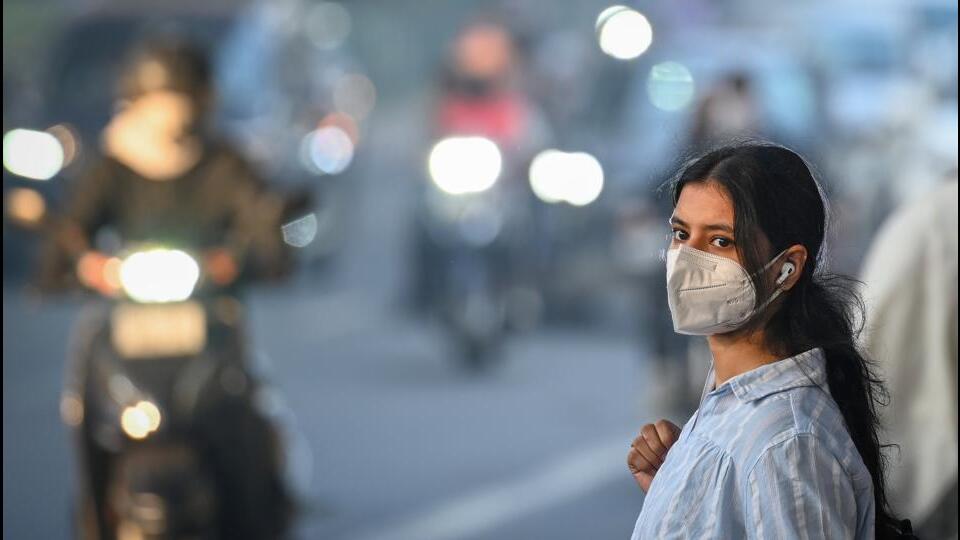
Of as many as 326,045 complaints reviewed, 224,476 remain unresolved.
The analysis, conducted by the Delhi government in mid-October, covered data from the Green Delhi App, MCD’s 311 App, the Centre’s Sameer App, and social media complaints tracked by the Commission for Air Quality Management (CAQM) for NCR and Adjoining Areas.
According to the report, the Municipal Corporation of Delhi (MCD) received the highest number of complaints across platforms.
Officials said the Chief Secretary directed all departments to ensure that pending complaints are resolved within a fixed timeline, especially in view of the deteriorating air quality across NCR in November. Departments were also instructed to appoint nodal officers for each app-based grievance system.
“Every pending complaint is a visible source of pollution whether it’s open garbage burning, dust control violation, or illegal construction debris. Most complaints over apps and social media relate to issues of waste dumping, open burning, road dust, encroachment, unauthorised and uncovered construction activities, traffic and polluting vehicles,” an environment department official said.
1. MCD 311 app
The app handles civic grievances ranging from dust management to garbage removal, the total number of registered complaints was over 314,000 as of October 7. Of these, 41,091 complaints (13%) were still pending resolution.
Among the worst performers were the Indian Railways, National Highways Authority of India (NHAI), and the Irrigation and Flood Control (I&FC) department, having respective case pendency rates of 90%, 86% and 53%, according to the report accessed by HT.
Indian Railways and NHAI did not comment on the matter.
The MCD, meanwhile, had a pendency rate of 4%, the lowest among major departments, while the Public Work Department’s (PWD’s) backlog stood at 12% and the Delhi Development Authority’s (DDA’s), at 30%.
After the I&FC department, the Delhi Urban Shelter Improvement Board (DUSIB) and the Delhi State Industrial and Infrastructure Corporation (DSIIDC) were also flagged for high backlogs of 53% and 31%, respectively. The Delhi Jal Board (DJB) also had a high pendency rate, of 25%, with a total complaint count of 15,600.
A senior government official, who did not wish to be identified, said, “The 311 App data shows that the majority of central agencies and infrastructure departments are not responding to pollution complaints with the urgency required during the smog season.”
2. Green Delhi app
This app was launched by the Delhi government in 2020 to track real-time pollution complaints. The Delhi Pollution Control Committee (DPCC) reported that a significant chunk of over 85,000 complaints remained unaddressed.
As of October 16, 2025, the MCD had 11,850 pending complaints against a total of 61,795, with a pendency rate of 19.18%. The PWD’s backlog stood slightly higher, at 20.11%, while the DDA and I&FC departments had pendency rates of 4.64% and 10.77%, respectively. The revenue department had a case pendency rate of 19.42%.
Officials said that over 11,800 of MCD’s pending complaints were already overdue--they had surpassed the time limit for redressal. “Such delays undermine the effectiveness of citizen-driven pollution monitoring platforms. All departments have been directed to expedite redressal of such grievances by the residents,” a second official said.
3. Sameer app
This app, managed by the Central Pollution Control Board (CPCB), painted a similar picture of administrative inaction. Between October 2021 and October 2025, Delhi residents filed 8,480 air pollution-related complaints on the platform. Of these, 2,981 (35%) remained unresolved.
The MCD, again, was the worst performer, having resolved only 54% of its 5,974 complaints, leaving 46% pending. The DJB also reported a 44% backlog, while the I&FC department had 39% unresolved complaints.
In contrast, the Delhi Metro Rail Corporation (DMRC) had resolved 85% of its cases, and both the New Delhi Municipal Council (NDMC) and the Delhi Cantonment Board had achieved 100% complaint resolution.
4. Social media complaints to CAQM
According to the report, 435 (30%) of 1,453 complaints tagging CAQM on social media platforms between October 2024 and October 2025 remained unresolved.
The DDA, with 92% pendency, DSIIDC, with 67% pendency, and DJB, with 89% pendency, were among the worst performers. The MCD and PWD also had respective pendency rates of 25% and 27%.
In comparison, departments, such as the Delhi Transport Department, Traffic Police, and DMRC had resolved over 90% of the complaints they received.
“The data clearly shows that civic and infrastructure bodies, which are directly responsible for pollution control like waste management, drainage, and construction dust are lagging behind. Some have not even updated their action status on CAQM’s dashboard,” another senior Delhi government official said.

Stay updated with all top Cities including, Bengaluru, Delhi, Mumbai and more across India. Stay informed on the latest happenings in World News along with Delhi Election 2025 and Delhi Election Result 2025 Live, New Delhi Election Result Live, Kalkaji Election Result Live at Hindustan Times.


