
 E-Paper



Takeaway and delivery only: From cloud kitchen to table
As the coronavirus pandemic wreaked havoc on the F&B sector, restaurant owners pivoted to focus on food delivery by establishing cloud kitchens

 Prefer HTon Google


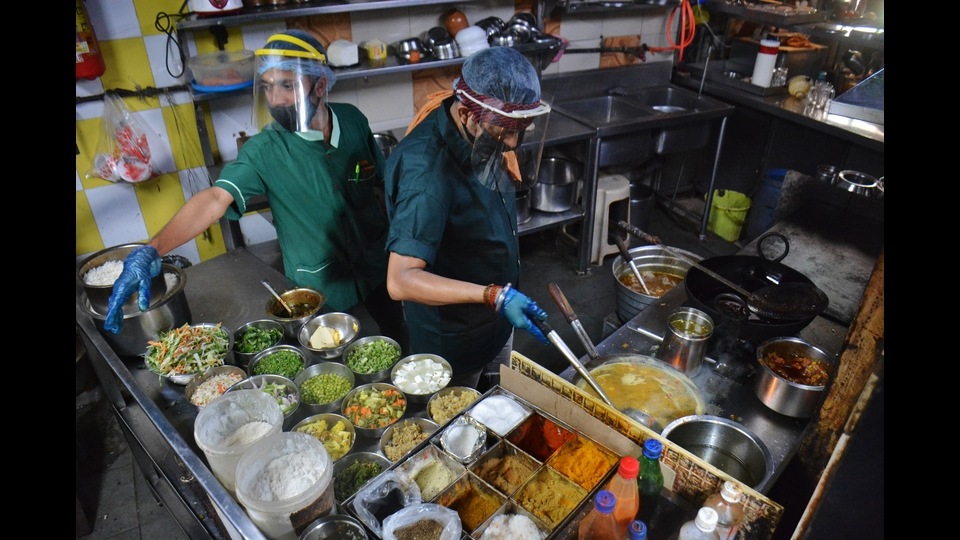
We’ve all browsed through a food delivery app, to come across brands that weren’t present before the coronavirus pandemic and are just available for delivery. Go looking for those and chances are you will never come across a physical structure of that restaurant or eatery. Call it a cloud kitchen, dark kitchen, or ghost kitchen, but the phenomenal rise of these businesses has reshaped the F&B sector in India which has been ravaged by the coronavirus pandemic. Restaurants are pivoting to focus on cloud kitchen setups which are built on food delivery rather than dine-in. The meals are prepared in these kitchens and delivered through food aggregators. According to a report by RedSeer Management Consulting, cloud kitchens are set to be a $2 billion industry in India by 2024, up from $400 million in 2019.
Zorawar Kalra, managing director at Massive Restaurants that runs chains like Farzi Café and Masala Library, launched two cloud kitchen brands - Louis Burger and Butter Delivery in the year 2021, during the pandemic. “Cloud kitchens have carved out a very strong position for themselves. They are now firmly a part of the food industry and are here to not only stay but grow. Setting up costs and overheads are less for any cloud kitchen as compared to a physical restaurant. While each has its own distinct advantages, a delivery model could fetch great returns if the product is right and marketed well,” said Kalra.
Recently, Speciality Restaurants, that runs chains such as Oh! Calcutta and Mainland China, posted a consolidated profit after tax (PAT) of ₹11.20 crore in the December quarter (Q3FY22), compared to a loss of ₹3.69 crore in the same quarter last year. The company, during the pandemic, had pivoted to shift primary focus to delivery only services of their brands. For restaurant chains transforming to a cloud kitchen was the need of the hour due to coronavirus induced lockdown.
Alok Bagga, co-founder, Yumtimes, said, “Having already run a dine in brand, which we had to shut due to the pandemic in 2020, we wanted to cater to multi-cuisine specialties, and the cloud kitchen proved to be the best and most cost-effective solution. Presently, we are operating two brands — Brooklyn Pizza Company and Mughal Trail.”
The unit economics of cloud kitchens is very lucrative, which can be much superior to offline business said Kalra. “We have seen an increase in demand for orders especially when a lockdown is implemented, however that does not mean that the offline business is going anywhere. Sales from a 300 sq ft cloud kitchen can rival that of some 4,000 sq ft restaurants, which is why we are allocating 50% of our resources to this side of the business. We are planning to launch six new brands.”
Sudeep Kapoor, founder and CEO of SPS Food Specialities that operates the Spice Lab and the Spice Wok said that, the reduced rentals surely provide a competitive advantage vis a vis a brick and mortar model . “A cloud kitchen isn’t usually located in a prime location. This means lower rentals of real estate.”
The cloud kitchen setup has given opportunities to many entrepreneurs to run virtual restaurants using shared commercial kitchen spaces on revenue sharing basis. Dipesh Sharma, founder, Mutton Curry Butter Chicken and The Enthubakers, said, “We are a zero-asset organisation and only own IPRs (intellectual property) of our brand and food. We do not own any central kitchen, cloud kitchens, logistics or storage facilities. Right from cooking, packing, ordering and delivery, we tie up with existing businesses [kitchens] and thereby outsource all our resources. This is a very scalable business model and it can be quickly expanded to multiple areas in a fraction of the time.”
Not just metro cities, but cloud kitchens have caught the fancy of restaurant owners in tier-2 cities, as well. It’s not only helping them survive during the pandemic as it’s cost effective but also gives them the opportunity to cater to a wider customer base. “Cloud kitchens are more sustainable during the lockdown.We run three brands from one kitchen, which are listed on food delivery platforms,” said Ankita Rawat, founder Narshankari Hospitality Pvt Ltd, that runs Valley Café, The Masala Project and Bomb Burgers in Dehradun, Uttarakhand.
Cloud kitchen is booming across the country, making it extremely competitive. Apart from getting loyal patrons by providing quality food, technology plays the most important role in its success. Komal Sharma, co-founder O2 Solutions, a revenue maximisation and business intelligence firm that specialises in working with cloud kitchens says, “One thing that holds the utmost importance in running a successful cloud kitchen model apart from top notch food, is the understanding of your data, which a lot of brand owners don’t pay enough attention to at times. Business analysis through these data points proves to be a key factor in understanding what is making and breaking in your brands and real time decisions can be taken to improve your operations.”
Follow for @htcity more
Author tweets at @Namyasinha


