The Supreme Court on Friday may have changed its earlier order on stray dogs this week, directing civic agencies to follow Animal Birth Control (ABC) rules and release sterilised and vaccinated dogs back into their localities, but for Delhi, the challenges remain the same. Crumbling ABC centres, staff shortages in the Municipal Corporation of Delhi (MCD), and poor waste management continue to remain a deterrent to the entire exercise, and these would have to be fixed if the latest order has to be made a success.
HT’s spot checks at seven of the Capital’s 20 ABC centres on August 12 had revealed minimal space, inadequate resources and pending payments from government agencies, underscoring the systemic shortcomings in the very infrastructure tasked with implementing the court’s directions. These facilities, run largely by NGOs, are struggling to keep pace even as the city grapples with repeated court deadlines and mounting citizen complaints.
Geeta Seshamani, vice-president of Friendicoes, an animal welfare NGO which operates three ABC units in Delhi, has long flagged the problems of untimely payments from MCD and lack of space and resources.
“We have been operating without reimbursement at all centres for the last six months. At our Defence Colony centre, around 500–550 dogs are sterilised every month, but the pressure is constant and the resources thin,” she had said.
ALSO READ | Supreme Court alters its ‘harsh’ order, allows stray dogs’ release
{{/usCountry}}ALSO READ | Supreme Court alters its ‘harsh’ order, allows stray dogs’ release
{{/usCountry}}An April 2023 report prepared by Ahimsa Fellowship project fellows advocate Shaalini Agrawal and Khushbu Sainani had already flagged several issues at these centres. It documented how the majority did not have adequate veterinary officers, that dogs were often detained for longer than required even after sterilisation, and were not being tagged before release. The report also noted poor segregation of animals, overcrowded kennels, and the continued use of loop-and-pole catchers, which can cause injuries or strangulation.
Experts said these shortcomings show why the ABC model, though legally mandated, is floundering on the ground in Delhi. “We need the supporting infrastructure to match the need to sterilise these dogs. At present, we have seen numerous shortcomings, which if not addressed, will hamper ABC implementation,” said Asher Jesudoss, an activist whose 2022 plea in the Delhi High Court led to the creation of the Delhi Animal Welfare Board.
ALSO READ | Stray dog feeding spots in Delhi a pipe dream for 16 years
The gaps are most visible in MCD’s veterinary department, which is expected to lead the stray dog control programme. According to MCD data, 277 of 649 sanctioned posts in the department are vacant, leaving a shortfall of nearly 43%. The department has been without a director for over nine months, while one of its two additional director posts also remains vacant.
Supervisory roles have been hit the hardest. 60% of veterinary officer posts are vacant, with 27 positions unfilled against a sanctioned strength of 45. Nearly half of all veterinary inspector posts are also vacant. These officials are supposed to oversee sterilisation, accompany cattle-catching vehicles, and supervise vaccination campaigns.
Operational manpower is equally thin. The department requires 64 drivers to operate vans, but only 27 are in place. Among animal catcher field staff – redesignated as Multi-Tasking Staff (Veterinary) – one-third of the posts are vacant. Even clerical staff are missing, with 52 of 78 junior secretariat assistant posts unfilled.
A senior MCD official admitted that these gaps were hitting fieldwork. “In order to capture dogs and ensure effective sterilisation and return, the manpower gaps need to be addressed,” said the official, on condition of anonymity.
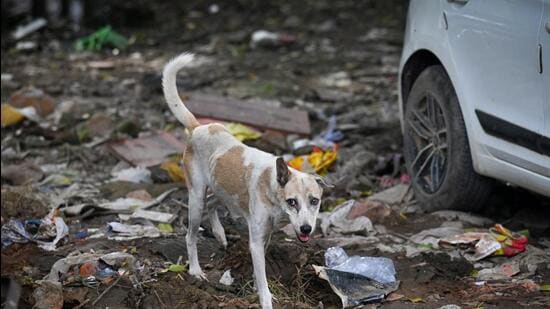
While the court has now barred street feeding and asked municipalities to create designated feeding zones, residents said the bigger issue was the Capital’s poor waste management. With thousands of dhalaos across Delhi continuing to act as feeding points, residents’ welfare associations argue that stray dog numbers will remain unchecked.
ALSO READ | Fully prepared to implement latest SC order on stray dogs: Delhi mayor
Atul Goyal, president of Urja, an umbrella body of more than 2,500 resident welfare associations (RWA) in Delhi, said until waste is managed properly, feeding points mean nothing. “Dhalaos are always a source of food for dogs. Similarly, waste and scraps thrown by restaurants at markets also continue to attract dogs. Until we address systemic gaps, we will not be able to effectively enforce these feeding points,” he said.
Shiv Mehra, president of the Maharani Bagh RWA, echoed the concern referred to dhalaos in his neighbourhood. “There is a steady supply of food waste, including bones. This gives dogs permanent food security, and their numbers increase,” he said.
Animal welfare groups also cautioned that sterilisation and feeding zones alone would not address the problem unless the city cracked down on illegal breeding and promoted adoption.
Shaurya Agarwal, advocacy associate of Peta India, urged the public to do their part – refusing to support breeders and pet stores by choosing to adopt a dog in need from the street or animal shelter. “Get companion dogs sterilised and support sterilisation efforts,” he said, adding that without public support, the task becomes even more difficult.
Experts added that sustained funding and timely reimbursements to NGOs were essential for the programme to succeed. “Delays in payments force centres to operate on credit. This affects food, medicine, and staff salaries. Without correcting these basics, no order from the Supreme Court can work on the ground,” Seshamani said.
Alokparna Sengupta, managing director, Humane World for Animals India, said the true impact of the order will depend on how dedicated civic staff is in implementing it. “Infrastructure like health centres and feeding zones need to be equipped and managed responsibly. The path forward requires collaboration, accountability, and above all, compassion.”