
 E-Paper



Thick haze envelopes New Delhi as air quality worsens; mercury dips to 12.6°C
The air quality was expected to remain “severe” through the day and on Friday amid a likely increase in emissions from stubble burning, calm wind conditions, and a drop in temperature

 Prefer HTon Google


A thick haze enveloped New Delhi on Thursday as the air quality deteriorated from the higher end of the “very poor” category on Wednesday to the “severe” category again. An Air Quality Index (AQI) of 402, which is “severe”, was recorded at 8am. It was 372, which is “very poor“, on Wednesday at 4pm.
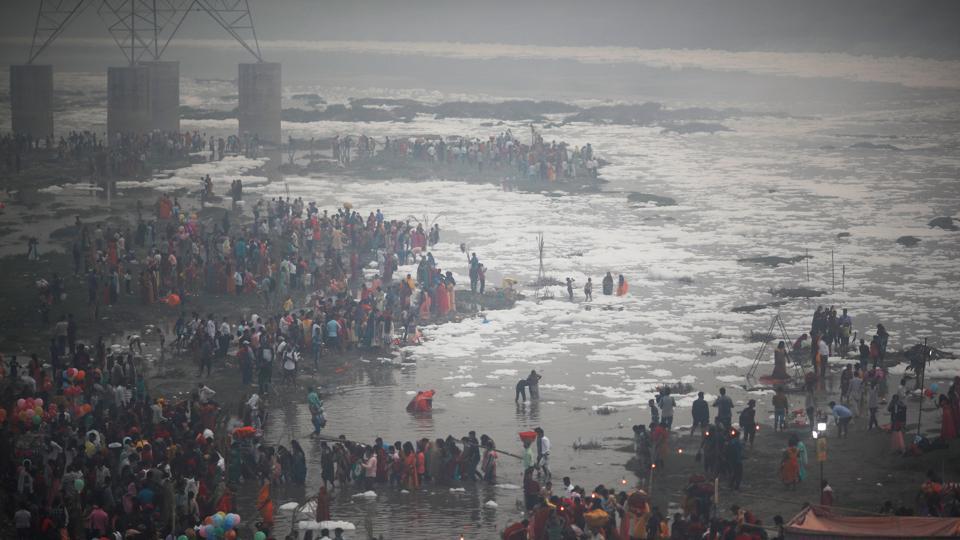
The air quality was expected to remain “severe” through the day and on Friday amid a likely increase in emissions from stubble burning, calm wind conditions as well as a drop in temperature, which can trap pollutants.
At 12.6 degrees Celsius, Thursday morning was the coldest of the season with the mercury falling below the 13-degree mark for the first time. The lowest minimum temperature at Safdarjung, Delhi’s base station, was 13.4 degrees Celsius on Wednesday. The minimum temperature is forecast to drop to 11 degrees Celsius by November 16. “Cold northwesterly winds will continue to bring down the minimum in the coming days,” said a meteorological department official.
An AQI between 201 and 300 is categorised as “poor”, between 301 and 400 “very poor” and over 400 is “severe”. At 8am, at least 21 air quality monitoring stations were in the severe range, with Anand Vihar the worst (453).
Also Read: Delhi’s Pragati Maidan to host trade fair after a year’s gap
According to the System of Air Quality and Weather Forecasting And Research (SAFAR), transport-level winds carrying stubble emissions from northwest of Delhi were expected to pick up speed from Thursday onwards for the next 48 hours.
There was a spike in farm fires in the northern plains on Wednesday – 5,317 compared to 3,476 on Tuesday. The share of farm fires in the pollution was the same on both days at 27%. This share is now expected to increase on Thursday and Friday.
Gufran Beig, founder and project director at Safar, said local wind speed, which was hovering between 8-10 km/hr, was also expected to drop. “A combination of strong transport-level winds, along with calm wind speed over Delhi is likely to see ‘severe’ air again. If the farm fires remain the same, the share of stubble burning will start increasing again from Thursday as winds from Punjab and Haryana will pick up. Meanwhile, Delhi will see calm wind conditions and this can trap these pollutants locally,” he said.
A Centre for Science and Environment (CSE) analysis on Wednesday found the current smog episode is expected to last another two days. It matches the first smog episodes of 2018 and 2020 – each of which lasted six days.
“While very high concentrations of PM2.5 have hogged attention, the levels of gases – ozone, CO or NO2 -- have also remained elevated during this smog episode,” said Avikal Somvanshi, programme manager, Urban Lab, CSE, on Wednesday. Somvanshi added that if conditions do not improve, this episode is likely to overtake the 2019 smog episode, which lasted eight days.


