
 E-Paper



Transport dept readies Dwarka ISBT plan with integrated houses and public spaces
Delhi plans a ₹4,200 cr interstate bus terminal in Dwarka, enhancing connectivity and reducing congestion while integrating residential and commercial spaces


New Delhi
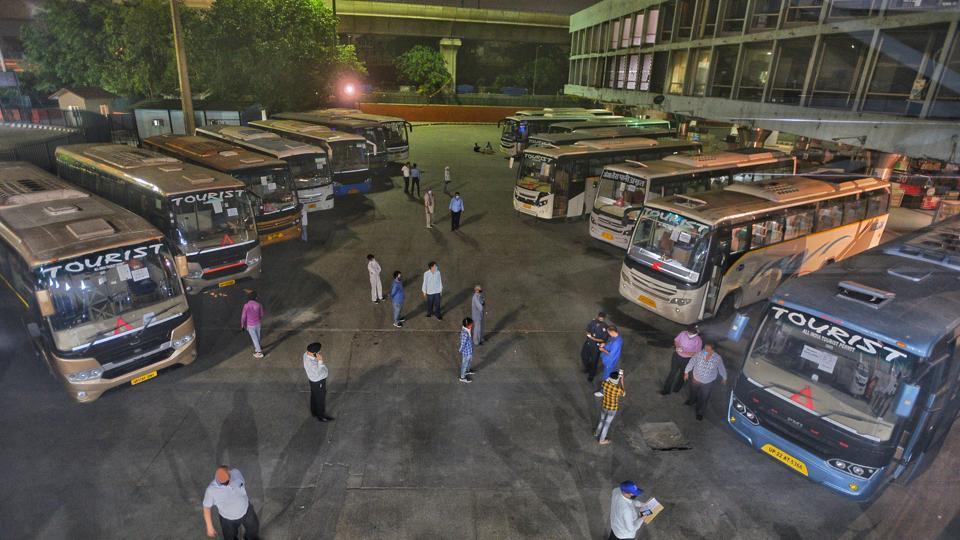
The Delhi government is planning to set up an interstate bus terminal (ISBT) in Dwarka’s Sector 22, spanning 12.88 hectares, based on principles of mixed land use and transit-oriented development (TOD) for an integrated mobility hub, senior government officials said on Thursday.
The project is estimated to cost around ₹4,200 crore, with income from bus operations alone estimated at ₹900 crore annually,besides non-fare commercial and retail operations, officials said.
“The location has been identified for its connectivity advantages, with proximity to the Dwarka Sector 21 Metro station, Bijwasan railway station and the Indira Gandhi International Airport, as well as access to major road corridors and Yashobhoomi. This new ISBT aims to decongest the existing three ISBTs that are handling more buses than their capacity as of now. This also leads to severe congestion on the roads around them, which will also be addressed if the buses are divided across locations,” transport minister Pankaj Singh said.

The plan to build an ISBT with mixed land use and TOD is a first, officials said. The proposal also aligns with the Delhi government’s plans to redevelop the ISBTs at Anand Vihar and Sarai Kale Khan on mixed land use basis, including creation of residential and commercial spaces for maximum utilisation and upgrading infrastructure to cater to demands for the next 25 years.
According to the plan shared by the government, nearly 60% of the permissible floor area ratio (FAR) will be allocated for residential development of up to six or seven floors, primarily in the form of high-density, transit-oriented housing. The residential component is expected to include affordable housing units integrated with community facilities.
As per the revised framework for TOD policy announced earlier this week, the government has mandated that at least 60% of any TOD project will include affordable housing of units spanning less than 100 square-metre area.
Around 15-20% of the FAR has been earmarked for commercial use, including retail, office and hospitality spaces of up to five floors, while public and semi-public facilities will account for roughly 10% of the total. Green spaces, landscaped areas and pedestrian pathways are also part of the plan. The ISBT will run on the remaining area.
A site area distribution chart in the proposal indicates that approximately 229,000 square metres will be used for housing, 65,000 sqm for commercial development, around 27,000 sqm for the DTC bus depot and around 50,000 sqm for public facilities. The rest of the area, around 15,000 sqm, will host passenger amenities, ticketing and bus operations. The total built-up area is proposed to be around 386,000 sqm.
Officials said the objective behind the project is to develop an ISBT that not only handles passenger traffic efficiently, but also leverages TOD principles to optimise land use and generate revenue, officials said.
“The Dwarka ISBT is being planned as a self-sustaining mobility hub. By combining transport infrastructure with residential and commercial components, we aim to reduce congestion at existing ISBTs while creating a new urban transit node in West Delhi,” minister Singh said.
The planning vision outlinedin a document submitted to the government emphasises walkability, high-density development and efficient land utilisation. The proposal also highlights the creation of active public spaces, including plazas and pedestrian-friendly zones, to enhance urban experience and accessibility.
As per the plan, the residential component is projected to generate approximately ₹3,700 crore, while commercial development could yield about ₹1,400 crore, contributing to overall project viability.
The project is currently at the planning stage, with consultants set to be appointed to prepare detailed project report and financial structuring. Officials said that once approvals are in place, the government will move towards tendering and phased execution.
The Dwarka ISBT is expected to complement the city’s existing bus terminals at Kashmere Gate, Anand Vihar and Sarai Kale Khan, which currently handle high passenger volumes. By decentralising operations and introducing a new transport hub in the west and southwest region, authorities aim to streamline interstate bus movement and improve overall connectivity.

Stay updated with all top Cities including, Bengaluru, Delhi, Mumbai and more across India. Stay informed on the latest happenings in World News along with Delhi Election 2025 and Delhi Election Result 2025 Live, New Delhi Election Result Live, Kalkaji Election Result Live at Hindustan Times.


