
 E-Paper



Yamuna may near warning level as Hathnikund discharge hits season-high
In the past 24 hours, the Yamuna’s water level has risen by over 0.50 metres and is projected to rise further in the next 48 hours, experts said


The water level of the Yamuna in Delhi may inch closer to the warning mark of 204.50 metres, after rising to 204.15 metres at 6pm on Wednesday — the highest so far this season, surpassing the previous peak of 204.14 metres recorded on August 3. The spike follows a season-high discharge of 61,729 cusecs from the Hathnikund barrage in Haryana, triggered by heavy rainfall and flooding in upstream areas.
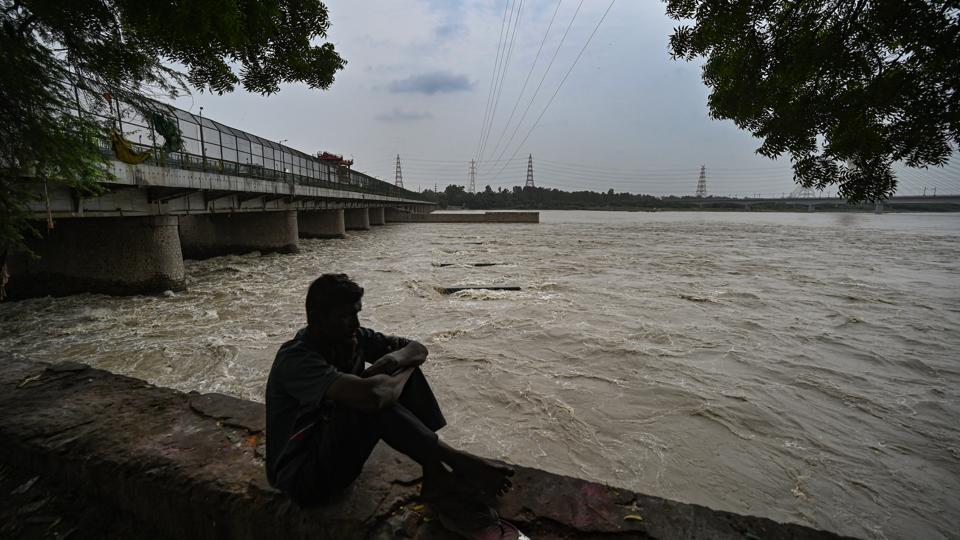
Data from the Central Water Commission (CWC) showed the discharge remained over 50,000 cusecs every hour between 4am and 8am on Wednesday and continued to flow above 40,000 cusecs thereafter. This is the highest discharge recorded from the barrage this monsoon, surpassing the 54,000 cusecs mark set on July 21.
In the past 24 hours, the Yamuna’s water level has risen by over 0.50m and is projected to rise further in the next 48 hours, experts said. On Tuesday, the water level stood at 203.61m.
“We have the season’s highest discharge at Hathnikund with this spell, which is likely to lead to low-level flooding,” said Bhim Singh Rawat of the South Asia Network on Dams, Rivers and People (SANDRP). “Discharges have been between 40,000 and 60,000 cusecs, which should push the Yamuna closer to the warning level, even crossing it possibly by Thursday.”
Rawat added that low-level floods are a natural function of the river and help cleanse it of pollution. “There is no high-level risk at the moment. CWC data shows that despite the Uttarkashi floods, there has not been any major rise in the Tons river, which eventually connects to the Yamuna,” he added.
Officials from Delhi’s irrigation and flood control (I&FC) department said the government has not yet initiated evacuations from floodplain areas but is prepared. A flood control order issued in July mandates that the first warning be triggered when discharge from Hathnikund exceeds 100,000 cusecs.
Last year, the Yamuna peaked at 204.38m on September 26, without breaching the warning mark. In contrast, 2023 saw the river surge to 208.66m on July 11 after a peak Hathnikund discharge of 359,760 cusecs, with several spells over 100,000 cusecs.
Stay updated with all top Cities including, Bengaluru, Delhi, Mumbai and more across India. Stay informed on the latest happenings in World News along with Delhi Election 2025 and Delhi Election Result 2025 Live, New Delhi Election Result Live, Kalkaji Election Result Live at Hindustan Times.


