
 E-Paper



Delhi to get 9,500 teams for door-to-door surveillance outside containment zones, contact tracing
At present, 3,000 teams are conducting such surveys only in 4,449 containment zones. Of the population to be surveyed, around 160,000 live in containment zones and 5.5 million outside them.

 Prefer HTon Google


Delhi will need at least 9,500 teams to quickly conduct door-to-door surveillance of high-risk households to prevent a further spread of the coronavirus disease (Covid-19) in the community, according to the minutes of the meeting of health ministry officials and the city’s health authorities and district authorities held on Tuesday.
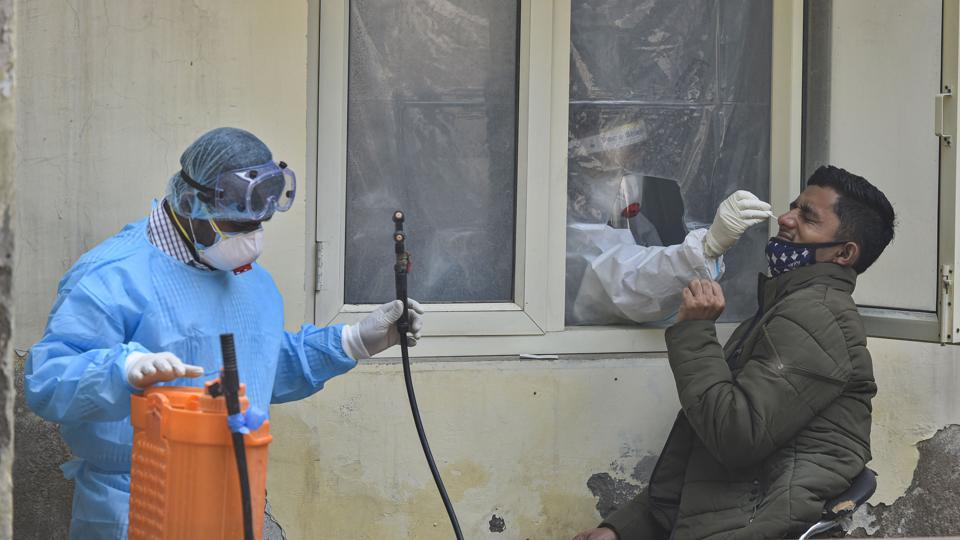
At present, 3,000 teams are conducting such surveys only in 4,449 containment zones.
Of the population to be surveyed, around 160,000 live in containment zones and 5.5 million outside them. “With the current number of teams proposed, some high-risk households identified by the districts will only be covered after seven to 10 days. This means a current suspect person will continue spreading the infection for the next 10 days till he/she is contacted by the surveillance team,” said the minutes, a copy of which is with the HT.
The target now is to cover all identified households within four to five days to quarantine and test contacts.
Also Read| Covid-19 in Delhi: Hospitalisations peak at 9,000; 88% ICU beds full
To coordinate the data received from the door-to-door surveillance, a zonal magistrate will have around 10 to 15 supervisors under him, who in turn will have 10 to 15 teams under them. Each of the teams will be given a unique ID to help capture and monitor the data.
“When we do contact tracing, we forget to quarantine them (before the test result is received). So, even though we have identified the contacts, we let them move around in the neighbourhood, markets, offices, or other public places. Now, we will not only identify the contacts but immediately quarantine or isolate them. The results of this exercise will be seen soon,” union health secretary Rajesh Bhushan said during a press briefing
Bhushan said additional manpower will be drawn from the municipal corporations, district magistrate’s offices, the disease surveillance programme as well as civil defence volunteers.
“House-to-house surveillance is ideal to detect infections early, especially those depicting mild symptoms. It is crucial to get tested,” said Dr RR Gangakhedkar, former head, epidemiology and communicable diseases, Indian Council of Medical Research.
He added, “The message that should go out loud and clear among masses is that if you suspect exposure, treat yourself as infected. Follow every single step of Covid-19 appropriate behaviour, especially at home. That includes wearing a mask, eating meals alone, staying away from the elderly family members. etc. Super spreading events are rare, what is more common is a positive person infecting their family members. Be watchful for at least seven days and get tested if there are symptoms.”
Since surveillance teams revisit households after five days or more to ensure symptomatic contacts are tested, a checklist on how to self-isolate and information about the nearest testing centres will be given in the initial meeting.
The identification of new containment zones in the city will be a dynamic process using data on clustering and case mapping done by the teams headed by officials from the National Centre for Disease Control, district surveillance officers and district magistrates.
NITI Aayog member Dr VK Paul said around 16 contacts were being traced for each positive case in Delhi. This is an improvement over two contacts that were being traced in Delhi since the outbreak began.
Also Read: North corp reserves beds for Covid patients at Hindu Rao hospital
These contacts are being traced through phone calls in Delhi. “Ideally, contact tracing should be done face to face by the surveillance teams and not just on phone,” the minutes say, adding that as an abundant precaution, the surveillance teams should check those in home isolation in their area to ensure the rules are actually being followed and check their health parameters.
According to data shared by a senior Delhi government official who requested anonymity, 50% of the people tested in a West Delhi dispensary using the less accurate rapid antigen test were found to be positive for the infection. The samples of 60% of those who tested negative were sent for a repeat RT PCR, making it a hot spot, the official said.
At present, around 60% of the active cases or those with infection in Delhi are in home isolation, as per data provided by the Delhi government.


