
 E-Paper



Power cuts, lack of PNG push Gururgam industries back to diesel gen sets
SMEs say Grap curbs hit operations as few units have PNG; high setup costs and delays force shift to older DG sets despite pollution risks.

 Prefer HTon Google


Amid the enforcement of the Graded Response Action Plan (Grap) in Delhi-NCR, small and medium-scale enterprises (SMEs) across Gurugram are facing frequent power cuts and limited access to clean energy alternatives, forcing many to rely on old diesel generators (DG sets), industrialists and union leaders said on Monday.
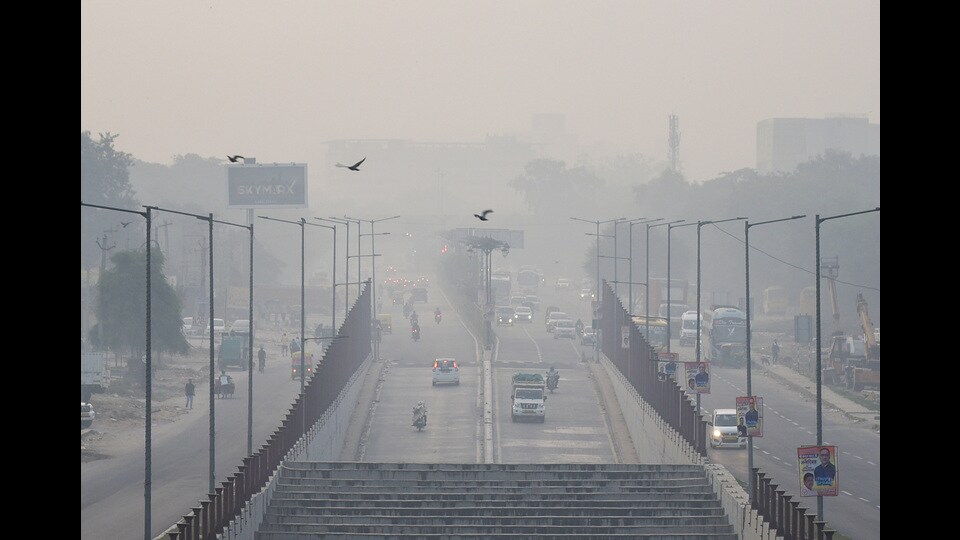
Many informal industrial sites in Kadipur, Daulatabad, Mohammedpur, Narsimpur, Basai, and Behrampur are yet to adopt the Central Pollution Control Board (CPCB)-approved Stage IV+ DG sets, which can cut emissions to extremely low levels — four grams of nitrogen oxides, ≤ 3.5 g/kWh of CO, and ≤ 0.2 g/kWh per kWh — with smoke opacity below 0.7 m-¹, comparable to Euro Stage V standards.
Industrialists from Sector 37, Manesar, and Udyog Vihar said that despite the government’s push for cleaner energy, high installation costs and delays in extending piped natural gas (PNG) connections have left them with little choice but to revert to diesel alternatives. “The authorities need to take into account local factors by speaking to multiple stakeholders before making policies. Not everyone can afford to pay ₹10 lakh for setting up a PNG connection at their factories,” said Deepak Maini, chairman of the Progressive Federation of Trade and Industry.
Maini added that PNG pipelines in authorised industrial zones such as Udyog Vihar and Sector 37 are limited to a few pockets. “Despite the government’s focus on CNG/PNG as an alternative source of energy, industry is slowly shifting towards IV+ DG sets as an affordable option for smooth operations,” he said.
PK Gupta, representative of the Sector 37 Industrial Body, said authorities respond only after Grap restrictions begin. “Instead of providing a last-minute solution, the planning for alternative energy sources should be a year-long exercise. First, we wait for a long time for PNG pipelines to reach our doorsteps, and then a clause for minimum guarantee of consumption makes it impossible to bear the annual cost,” he said.
Officials at Haryana City Gas (HCG) said that out of nearly 17,000 industrial units in Gurugram, only about 1,000 have been connected so far. “Our target is to increase volume by reaching as many units as possible in the shortest possible time. In three months, we expect to reach a daily sale of around one million standard cubic meters of gas,” said a senior HCG official, requesting anonymity. The official added that delays in approvals after contractor mobilisation and raw material procurement extend pipeline laying by three to six months.
According to official data provided by HCG, Haryana spends ₹ 8–10 lakh per kilometre to lay PNG lines — much higher than in other states where costs range from ₹200–300 per km, or even less at ₹1 per metre.
A senior official at Dakshin Haryana Bijli Vitran Nigam (DHBVN) said their emergency response systems are operational. “Our staff will remain stationed for 24 hours at complaint centres to monitor the situation. We have been carrying out maintenance work at transformers and critical lines to make them optimum,” the official said, asking not to be named. Officials also said that a few private firms delaying the work of laying underground cables for linking grids to the ring-main system (RMS) were blacklisted, and fresh tenders are being floated.
Krishan Kumar, regional officer and environment engineer at Haryana State Pollution Control Board (HSPCB)’s regional office in Gurugram, said that they have increased surveillance on usage of old DG sets in the city. “We have been carrying surprise inspection at industrial units to ensure they comply to Grap norms,” Kumar said.

Stay updated with all the Breaking News and Latest News from Mumbai. Click here for comprehensive coverage of top Cities including Bengaluru, Delhi, Hyderabad, and more across India along with Stay informed on the latest happenings in World News.


