For some Gurugram families, winter pollution is no longer something they can manage by keeping windows shut, wearing masks or avoiding outdoor activities. As air quality deteriorates each year, they pack their bags and leave the city for weeks at a time, seeking respite from the toxic air.
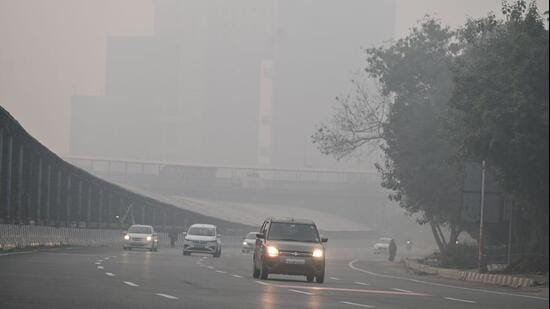
Residents, particularly those with children and family members suffering from chronic respiratory ailments, said temporary relocation during the October-February period had become a necessary precaution against recurring illnesses, hospital visits and worsening health conditions. But the decision comes at a cost, disrupting work, schooling and family routines.
Mayank Garg, a Sector 52 resident, said he has been taking his wife and two children out of Gurugram for a week or two during the winter, particularly around Diwali, since 2016.
“Every winter, all four of us would develop respiratory problems, and it was becoming a recurring cycle. We would fall ill, seek medical treatment and then face the same problems again as pollution levels worsened. I even took an internal job transfer to Pune in 2024 for two years to avoid Gurugram’s pollution, but had to return here since we have family roots here,” Garg said.
For Ishita Negi, a Sector 54 resident, the decision followed a medical emergency involving her seven-year-old son, who has asthma.
{{/usCountry}}For Ishita Negi, a Sector 54 resident, the decision followed a medical emergency involving her seven-year-old son, who has asthma.
{{/usCountry}}Two years ago, her son’s condition deteriorated during a pollution episode, requiring respiratory support. Since then, Negi has been taking him to her maternal home in Uttarakhand around Diwali every year.
“After what happened to my son, I could not take another chance. He is only seven, and I cannot put him through another such episode. We decided that it was safer to take him away from Gurugram during this period rather than wait for his condition to deteriorate again,” she said.
Ruchika Sethi, an environmentalist and resident of Nirvana Country in Sector 50, has travelled to Panaji in Goa for the second consecutive year to provide relief to her 24-year-old daughter, who has special needs and suffers from severe bronchitis and recurring respiratory ailments.
“For us, this is a matter of sustaining my child’s life. We travelled to Panjim as an experiment last year and saw a significant improvement in her health. For the first time, she went through the winter without needing nebulisation. While Panjim too has its pollution challenges, the considerably lower pollution levels compared to Gurugram made a remarkable difference to her breathing,” Sethi said.
For others, the pollution has raised doubts about their decision to settle in Gurugram.
Rajeev Aggrawal, 70, moved from Lucknow to DLF Phase 1 three years ago to spend his retirement with his son and grandson. He now regrets the move and is trying to persuade his son to return to Lucknow.
“I moved here from Lucknow to spend time with my family after my retirement, but ever since I have come here, I have faced difficulty in breathing. I have been trying to convince my son to move back to Lucknow, because the level of pollution here is poisonous,” he said.
Doctors said children, older people and those with existing respiratory conditions were particularly vulnerable to worsening air pollution.
Dr Bandana Mishra, senior consultant and head of pulmonology and respiratory medicine at Manipal Hospital, Gurugram, said pollutants such as PM2.5, PM10, nitrogen dioxide, sulphur dioxide and ground-level ozone could significantly affect lung health.
“Fine particles like PM2.5 are small enough to travel deep into the lungs and reach the air sacs, causing inflammation, airway irritation, persistent coughing and breathlessness. Prolonged exposure can reduce lung function and increase the risk of respiratory conditions such as asthma, COPD, chronic bronchitis and even lung cancer,” she said.
Mishra advised children, senior citizens and people with existing respiratory conditions to take additional precautions and seek medical attention if symptoms persisted.
Dr Manu Madan, senior consultant, respiratory and sleep medicine at Medanta Hospital, said the number of patients seeking treatment for respiratory problems typically increased by 30% to 40% after Diwali.
Gurugram chief medical officer Dr Virender Baswana said tackling air pollution required a multi-pronged approach, including reducing vehicular emissions. He advised residents to wear masks during outdoor activities, particularly given the risks to children and senior citizens.
The concerns come amid another spell of deteriorating air quality in Gurugram. On Tuesday, the city’s air quality index (AQI) stood at 323, in the ‘very poor’ category, according to the Central Pollution Control Board’s (CPCB) Sameer app at 4pm.
Air quality had deteriorated sharply following Diwali celebrations on Sunday, with the AQI rising from 288 that day to 345 on Monday. Firecracker emissions contributed to a surge in PM2.5 concentrations overnight, with the Teri Gram monitoring station recording a peak of 585 micrograms per cubic metre at 3am on Monday.
For families who have begun leaving Gurugram every winter, the annual deterioration in air quality means planning their lives around pollution levels, even if that requires spending weeks away from their homes.
Stay updated with all the Breaking News and Latest News from Mumbai. Click here for comprehensive coverage of top Cities including Bengaluru, Delhi, Hyderabad, and more across India along with Stay informed on the latest happenings in World News.
Stay updated with all the Breaking News and Latest News from Mumbai. Click here for comprehensive coverage of top Cities including Bengaluru, Delhi, Hyderabad, and more across India along with Stay informed on the latest happenings in World News.