
 E-Paper



Azan loudspeakers removed from several Bengal mosques through ‘unwritten’ orders
The mosque's imam claimed that the order to remove loudspeakers from mosques came from the police station, although no written governmental order was shown.

 Prefer HTon Google


Several mosques across West Bengal on Wednesday removed loudspeakers used for azan (call for prayers) following verbal instructions from local police stations, prominent Muslim clerics in the state said.
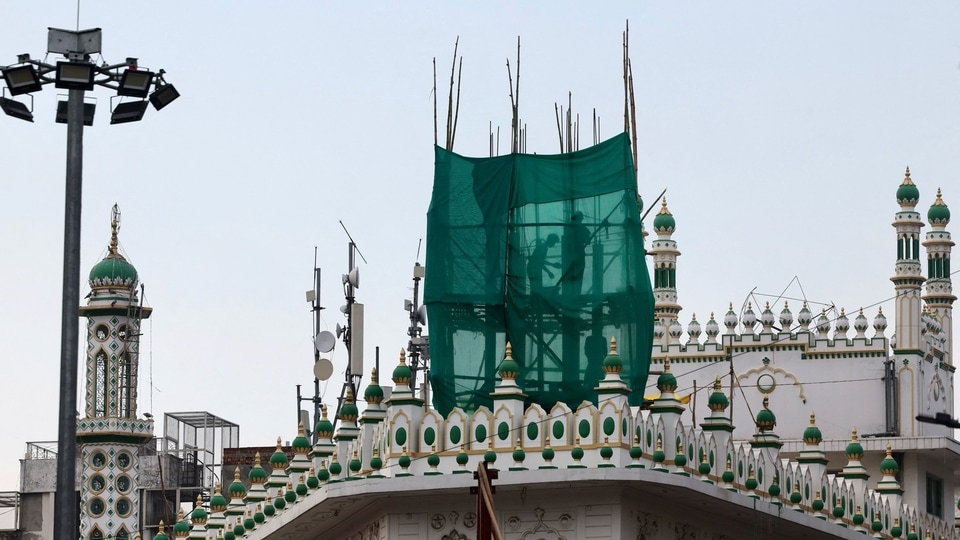
Maulana Muhammad Shafique Qasmi, the Imam of Kolkata’s Nakhoda Mosque, Bengal’s biggest, said, “There is no court order or government notification that says loudspeakers must be summarily removed from all mosques. If there were such orders, the Imams and masjid committees should have been informed by the government. Instead, masjid officials were threatened and asked to remove the loudspeakers. Isn’t this a violation of law?”
Maulana Qasmi said there were 62,000 mosques in the state according to Waqf board records, but the actual number would be much higher because many small masjids in villages were not recorded.
Also Read I Bengal STF arrests college student over links with Jaish operative Hamim Mondal
‘No written order’
Several Imams said they were told that after the Bharatiya Janata Party came to power in May, the police received instructions to ensure that loudspeakers installed at places of worship of all faiths followed the decibel restrictions set by the Calcutta high court and the Supreme Court during various hearings and enforced by the West Bengal Pollution Control Board (WBPCB).
“I could not find out who ordered the removal of loudspeakers. All I came to know is that verbal instructions came from police stations but the officers did not show any written order. This is wrong. The existing rules say the loudspeakers can be played at 65 decibels in urban localities,” Maulana Qari Fazlur Rahaman, who has been conducting the Eid prayers at Kolkata’s Red Road for years, told HT.
The BJP government earlier this year shifted the venue for the prayers to the Brigade Parade grounds.
Also Read I Sambhal violence a calculated plot to obstruct mosque survey: Panel report
Maulana Qasmi said they had approached the Centre to discuss the WBPCB guidelines when IK Gujral was the Prime Minister “We also filed a petition at the Supreme Court seeking special permission for Fajr ki Azan (pre-sunrise call for prayers), but we did not get it. The WBPCB rules prevail to this day.”
“I appeal to chief minister Suvendu Adhikari through the media to interfere in this matter and direct the police to control noise instead of harassing people by removing the loudspeakers. I want to tell the director general of the state police that this action will only create anger against the administration. We are not here to fight with the government. If there is any problem, then let us find a solution through discussion,” Maulana Qasmi said.
Cabinet ministers favour removal
The Kolkata Police and the state police have not commented on the development. Two cabinet ministers welcomed the removal of loudspeakers.
“This is necessary. No loudspeakers should be played from any place of worship, be it a masjid or a mandir. The law applies to all,” state urban development and municipal affairs minister Agnimitra Paul said.
Industry minister Tapas Roy said, “This is necessary for controlling pollution. All people must follow the rules.”
The state government’s decision to stop namaz on public roads triggered violence in Kolkata and West Burdwan district’s Asansol in May this year.
On May 15, a mob vandalised a police outpost at Jahangir Moholla in Asansol town after Friday prayers over the government’s decision. 26 people were later arrested in connection with this.
Also Read I Suvendu Adhikari defends Kolkata airport mosque removal, cites national security
Two days later, a mob clashed with police at Kolkata’s Park Circus when they were asked not to demonstrate at the busy seven-point road intersection against the decision to prohibit prayers on streets. Over 20 people were arrested for assaulting policemen and vandalising government vehicles.
On May 18, Suvendu Adhikari, who is also in charge of the home department, said: “Let it be clear to those who carried out such activities at Park Circus and other places that this was your last. We will not allow such actions again. If you do, then there won’t be a more severe home minister than me.”


