
 E-Paper



100 years on, Kakori Train Action stands out as Lucknow’s pride, symbol of unity and inspiration
A major turning point in the freedom movement, Kakori Train Action played a key role in nurturing revolutionaries and the nationalist sentiment

 Prefer HTon Google


An unforgettable and heroic chapter in the history of India’s struggle for independence, the Kakori Train Action stands out as a symbol of unity, which gave Lucknow a distinct place on the map of the freedom movement and continues to inspire the youth 100 years down the line even in the age of hashtags.
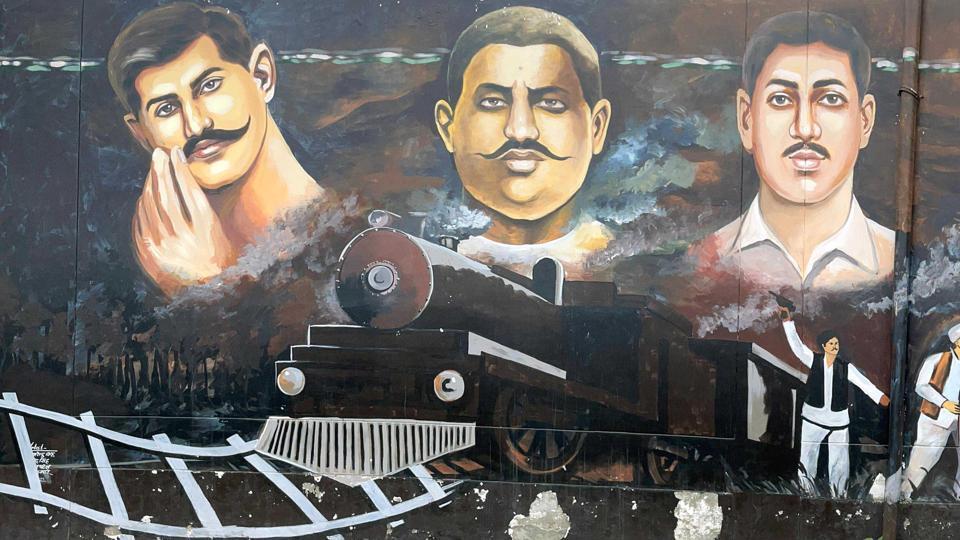
Carried out on August 9, 1925, by a group of young revolutionaries from the Hindustan Republican Association (HRA), it was not just a protest against British colonial rule, but also a symbol of courage, sacrifice, and unwavering commitment to the motherland wherein brave young men like Ram Prasad Bismil, Ashfaqullah Khan, Rajendra Lahiri and Thakur Roshan Singh risked their lives to challenge the might of the British Empire.
“The Kakori incident also gave the city of Lucknow a distinct and honourable place in the annals of the Indian freedom struggle. Kakori placed Lucknow firmly on the map of revolutionary India. From the First War of Independence in 1857 to the final push for freedom in 1947, Kakori remains a major turning point in the freedom movement. It played a consistent role in nurturing revolutionaries and the nationalist sentiment,” said Professor Ramesh Dixit, former head of the department of political science at Lucknow University.
“Youths who were once silent were now taking to the streets. Kakori made it clear: the fight was real, and it was now,” he said.
The Congress, which had been cautious post-1922, recognised the shift. By 1930, the Civil Disobedience Movement had begun. The Salt Satyagraha followed. But the flame was lit in Kakori—by four young men who chose the gallows over submission.
WHEN YOUTH BECAME REVOLUTIONARIES
Post Jalianwala Bagh in 1919, India was simmering with discontent. After the Non-Cooperation Movement in 1922, many were restless, eager to act but disillusioned by the slow pace of constitutional politics and non-violent protests.
Ram Prasad Bismil, Ashfaqullah Khan, Chandrashekhar Azad, and a group of fiery patriots mostly in their twenties entered the scene with the mission to strike at the heart of the British economy by seizing money collected through oppressive taxation. That loot was for purchasing printing presses, creating awareness, awakening the populace, telling the benefits of Independence, distributing literature, and funding revolution.
A DIRECT CHALLENGE TO BRITISH AUTHORITY
Professor Roop Rekha Varma said, “The Kakori train action was a powerful response by the youth to the atrocities committed by British rulers. In terms of identity, it stood as a direct challenge to British authority at a time when most people were not willing to think beyond the path of non-violence. There was a clash of ideologies—on one side, non-violence, and on the other, revolutionary action. Many young people were drawn to the revolutionary path and began resisting British rule in their own ways, creating obstacles for the colonial administration. Even as a supporter of non-violence, we cannot overlook or deny the significant contribution of the revolutionary movement to India’s struggle for independence.”
BISMIL COMPLETED AUTOBIOGRAPHY 3 DAYS BEFORE HE WAS HANGED: BHAGAT SINGH’S KIN
Professor Jagmohan Singh, a nephew of Sardar Bhagat Singh, said, “Ram Prasad Bismil completed his autobiography just three days before he was to be hanged. In it, he wrote that whenever people remember them, they should think of the Kakori Action as a symbol of Hindu-Muslim unity. At that time, there was a growing understanding that the root of most problems faced by Indians was British oppression. The British never wanted Indians to live with dignity. Their policies had created deep social inequality and widespread poverty. People were so deprived that even publishing revolutionary literature was a challenge. Bismil wrote that when he translated a book from Bengali to Hindi, he had to borrow ₹200 from his mother to get it published. After the Kakori train robbery, once they had access to money, he made sure to return the amount he had borrowed. The main purpose of the train action was to fund a printing press and raise awareness among the masses.” His autobiography was later translated into Punjabi by Bhagat Singh.
UNBREAKABLE BOND
Perhaps, the most profound legacy of Kakori lies in the unbreakable bond between Ram Prasad Bismil and Ashfaqullah Khan—a Hindu and a Muslim, bound not by religion but by shared patriotism.
Their friendship shattered British propaganda that aimed to divide Indians along communal lines.
The British tried to manipulate both—offering Bismil exile and telling Ashfaqullah he had no place in a “Hindu” organization. Both refused. Their loyalty was to India—not to colonial constructs of identity.
Historian Aroop Chakraborty said, “The Kakori Action sent ripples of unity across the nation. It proved that the freedom struggle was above religion—it was about the soul of India.”
“Sarfaroshi ki tamanna ab hamare dil mein hai…” (The desire for sacrifice now lives in our hearts…”) – these lyrics penned by Bismil—were a promise that still echoes through the soul of India.


