E-Paper



50 years of Emergency: A socialist who stuck to politics of JP and Lohia
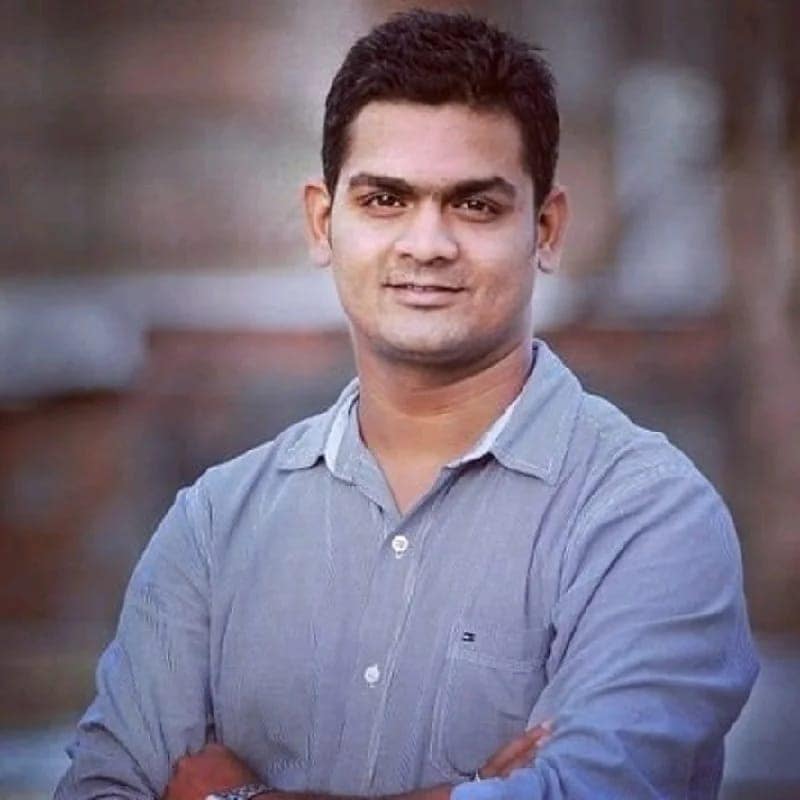
Thousands--largely politicians and students--were sent to jail across the country including Uttar Pradesh during the Emergency. Senior Samajwadi Party leader Rajendra Chaudhary was one such person


This year marks 50 years of Emergency that was set in motion by the then Indira Gandhi government on June 25, 1975, and was withdrawn on March 21, 1977. Its imposition gave Indira Gandhi to rule by decree and entailed curbing of civil-liberties to a great extent.
Thousands--largely politicians and students--were sent to jail across the country including Uttar Pradesh during the Emergency. Senior Samajwadi Party leader Rajendra Chaudhary was one such person. He recollects his activities and life in those times.
Born on January 2, 1947, Chaudhary, now 78, is one of the few leaders alive today who have worked closely with Jayaprakash Narayan, Ram Manohar Lohia and Mulayam Singh Yadav. He not just went to jail but later also introduced a law when he was a minister in Uttar Pradesh to ensure political pension for those who were jailed during the Emergency.
Recalling his active role in student politics during 1970s, he says, “I became student union president in Meerut University in 1974. My dear friend Satpal Malik was active in student politics then. I was in Samajwadi Yuvjan Sabha headed by Dr Ram Monohar Lohia. In the 1974 assembly elections there was a triple alliance between Samyukta Socialist Party, Bhartiya Kranti Dal of Chaudhary Charan Singh and Muslim Majlis by Dr Faridi. Chaudhary Charan Singh called me and Satpal Malik and gave tickets for the elections and asked us to come into mainstream politics. However, I could not win then. I eventually became the national general secretary of the youth wing of Charan Singh’s party BKD.”
“I was a youth leader back then and used to participate in protests. I went to jail for the first time in 1968 in Meerut after passing my intermediate as I participated in a Janwani Aandolan by the Samyukta Socialist Party. I am MA LLB but as a youth I had interest in student politics and after Charan Singh gave me a chance, I plunged into the mainstream politics,” Chaudhary shares.
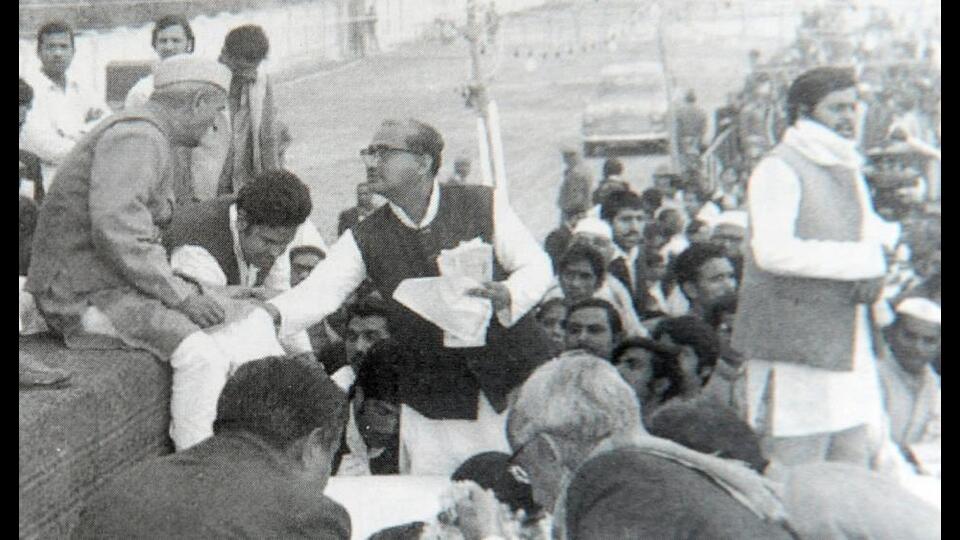
The socialist leader recalls how the Emergency was announced and how he started publishing a magazine while he was underground after which he was sent to jail, “When the Emergency was declared, I was with JP in Delhi and addressing a gathering at Ramlila Maidan. I went to Charan Singh after Ramlila Maidan meeting at UP Niwas in Delhi and later that night he was arrested,” he says.
“I started an underground magazine ‘Pratirodh’ later and after taking out six or seven issues of that magazine, I was arrested. We were lodged in Meerut jail during the Emergency and stayed there for almost seven months. The press was under censorship and no one could write or print anything against the government,” the former UP minister adds.
Sharing an incident when Chaudhary along with his pal KC Tyagi was almost caught by police, he said, “I could have been lodged in jail forever, had I been caught by police transporting the copies of my magazine ‘Pratirodh’. We used to distribute the magazine in Haryana, Delhi and parts of western Uttar Pradesh. Indira Gandhi was about to leave when I and KC Tyagi were stopped by the police but luckily our stuff was not checked.”
Chaudhary shares that the ‘Adda’ (meeting point) for his close friends like Satpal Malik, Ramashankar Singh, Sudhir Goyal, Rajkumar Jain and KC Tyagi etc was an open coffee house in Connaught Place area of Delhi, where Palika Bazar is located today.
Introduced law for pension to those jailed during Emergency
The veteran socialist leader who was a cabinet minister in the SP regime from 2012 to 2017 and held key portfolios like jail, food and civil supplies and political pension. He was the one who ensured that a pension was given to all those who went to jail during the Emergency.
Giving more details, he says, “When Akhilesh Yadav became the CM, I was given charge of food and civil supplies and jail departments. Later, I was given the political pension department also. I still remember the initiative started by Netaji (Mulayam Singh Yadav) to give pension to those who went to jail during the Emergency. He announced a ₹500 monthly pension for all those who went to jail during the Emergency.”
“When I got the charge of the political pension department, I introduced a law for giving pension to the people who went to jail during the Emergency after consulting senior officials. It took me around three months to introduce that law and it was called the UP Fighters of Democracy Honour Act 2016. Today people are getting ₹20,000 per month. We had also made provision for free travel in roadways buses and free medical facilities at government hospitals for ‘Fighters of Democracy’. Also, we made provision that such ‘Fighters of Democracy’ will be given a guard of honour and the cost of their last rites will be taken care of by the government,” Chaudhary shares.
Rajendra Chaudhary, who reached the UP assembly for the first time in 1978, served as minister of science and technology during the SP regime in the state in 2002. He has also been a cabinet minister in UP in 2013 during the SP regime led by Akhilesh Yadav. Currently, he is the chief spokesperson for the Samajwadi Party.