
 E-Paper



AMU to bury time capsule of its 100-year history on Republic Day
The five-foot-long capsule weighing 1.5 tonnes will be placed 30 feet beneath the ground and the event would be telecast online


Aligarh Muslim University (AMU) vice-chancellor Tariq Mansoor will bury a time capsule containing the history and achievements of the institution in front of the Victoria Gate on the campus as part of the centenary year celebrations on January 26.
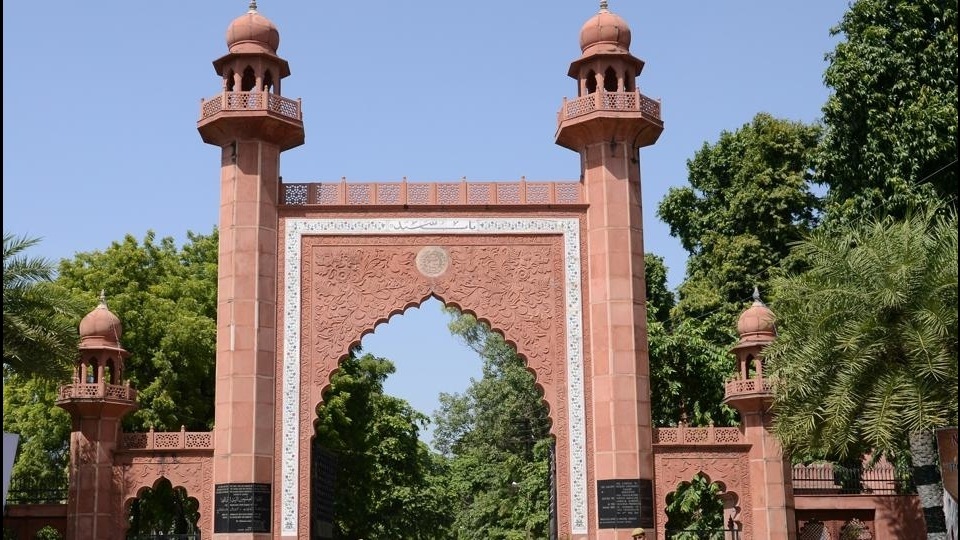
The AMU is completing 100 years of its establishment hence this decision was taken, said officials.
The five-foot-long capsule weighing 1.5 tonnes will be placed 30 feet beneath the ground and the event would be telecast online, said Dr Rahat Abrar, chairman of the content committee and spokesperson for AMU.
“The time capsule is made of highly tempered steel weighing 1.5 tonnes. To safeguard the material inside, nitrogen gas has been filled and acid resistant paper is being used to ensure the longevity of the time capsule,” he said.
Also Read: UP govt issues 1,43,929 scholarships to students
A committee was constituted to determine the content to be placed in the capsule and Abrar was made its chairman while AMU registrar Abdul Hamid was its general convenor.
“The event, part of the AMU’s centenary year celebrations, will be held online at 11am and the V-C will be the chief guest on the occasion,” stated Abrar.
“Sir Syed was in Varanasi when he thought of the university, which came into being in 1920. We have compiled the history and achievements of AMU since its beginning. Prime Minister Narendra Modi had released the stamp for AMU’s centenary celebrations on December 22, 2020,” he added.
The then Viceroy of India, Lord Edward Robert Lytton, was in Aligarh on January 8, 1877 for the foundation stone-laying ceremony of the Muhammadan Anglo Oriental (MAO) College. At that time, a similar exercise of burying a time capsule was undertaken by Sir Syed Ahmad Khan, the founder of AMU, though it was not termed as so, said Shafey Kidwai, the head of the mass communication department at AMU and another spokesperson of the university.
“The district gazette dated January 12, 1877, makes a mention of a similar exercise. It mentioned a bottle that carried details about Madarastul Uloom (a madarsa upgraded to MAO College) along with coins made of copper, gold and silver which placed in the cavity of the foundation stone,” added Kidwai.
On September 9, 1920, the then viceroy, Lord Chelmsford, had passed the bill for the upgrade of Muhammadan Anglo Oriental (MAO) College to the status of a university.


