E-Paper



Awareness campaign: People ‘educated’ to vote for OPS
This issue connects over 15 lakh families of state and central employees in UP who joined service after the new pension scheme was implemented, says a state employee

 Prefer HTon Google


It’s an informal gathering at a tea stall under a tarpaulin in the state capital around 2pm. There are no posters or banners. A group of government teachers (after working hours) is discussing 2024 Lok Sabha elections, and the topic isn’t any political party or candidates, but the OPS (old pension scheme) - an issue that relates to over 15 lakh families of state and central employees in Uttar Pradesh.
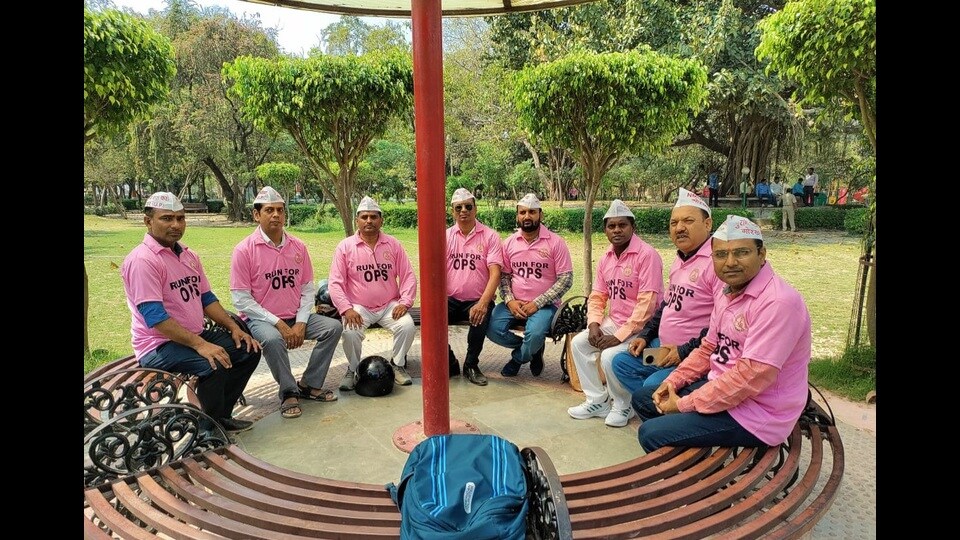
The meeting is part of the #VoteforOPS campaign that runs with close interaction among like-minded people wherein employees get together after working hours to discuss restoration of the old pension scheme and speak to people on the issue.
“This issue connects not hundreds or thousands but over 15 lakh families of state and central employees in UP who joined service after the new pension scheme was implemented,” said Vijay Bandhu, one of the state employees who has conducted hundreds of such meetings under the ‘Vote for OPS’ campaign.
Employees across government departments are trying to garner support on the issue. “Statistically, one family has at least three voters, hence at least 45 lakh voters across 80 seats relate to the issue. Also, employees who are on old pension but want their ward to join government service too support us,” said Bandhu.
“Our strategy is simple. We want the OPS issue to be taken up politically to create pressure on political parties to include it in their manifesto.
The party that takes up OPS issue gets our support and we have done this successfully in the past elections in several states,” he added.
The main grudge of those on new pension scheme (NPS) is lack of clear assessment of pension. Sample this.
Indravati joined an inter college as assistant teacher in 2007 and retired in 2020. She is getting ₹2,800 as pension.
“Had I been under the old pension scheme, my pension would have been not less than ₹20,000. In fact, ₹2,800 hardly supports me,” said Indravati, who is one among many other retired teachers demanding OPS.
Many such retired employees are now part of the #VoteforOPS campaign to motivate voters on the issue – OPS Vs NPS.
“Primary teachers posted at village level hold meetings at block level after school hours. With model code of conduct in place, we cannot take out rallies, but meetings can be done. In each village, a team of at least three is speaking to voters on the issue,” claimed Bandhu.
Ashok Kumar, general secretary of the Rajkiya Nurses Sangh, a body of government nurses in UP, said: “Some states such as Chhattisgarh implemented the old pension scheme, and we hope UP employees too get the same benefit of assured source of income for retired life.”
In NPS, the employee contributes 10% of the salary towards pension fund and the government gives 14%. Dearness allowance is not available in NPS. Pension depends on this fund, where 60% is returned to the employee and pension is fixed on market investment done via the remaining 40%, said Kumar.
RB Chaubey, a teacher who retired from the post of principal in 2019, said, “I am getting ₹4,045 as pension as my total saving sunder NPS were ₹20 lakh, and 60% of it was returned to me on retirement. I have support of pension of my wife who also was a teacher. Surviving with only my pension was difficult.”