
 E-Paper



Dairy farms in Uttar Pradesh to be moved out of residential areas in compliance with NGT guidelines
The dairy farm owners will be encouraged to set up biogas plants on their own or in partnership with entrepreneurs to produce bio CNG


Dairy farms in Uttar Pradesh will be moved out of residential areas and encouraged to set up biogas plants on their own or in partnership with entrepreneurs to produce CNG (known as bio-CNG) from bovine waste and sell the same to customers, people dealing with the issue said.
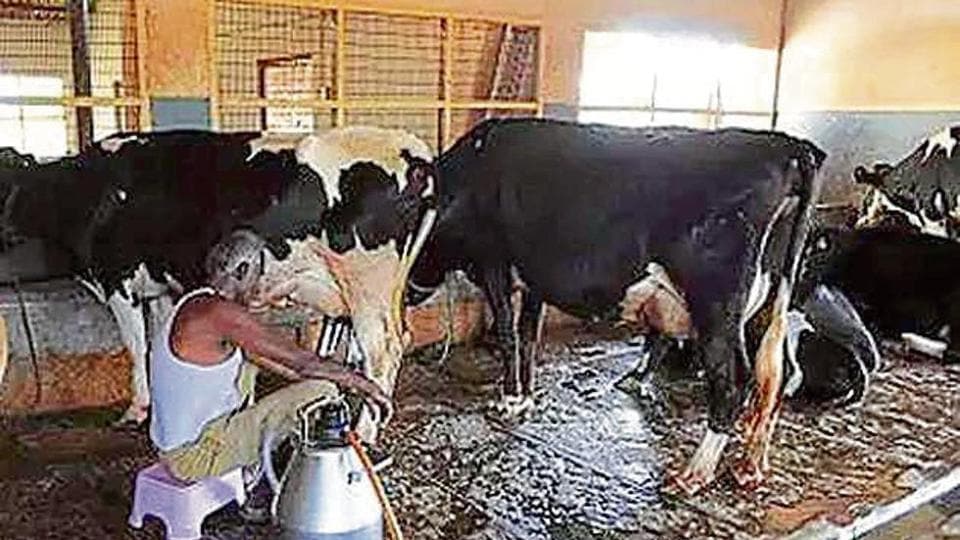
The government, according to them, is working on a new policy in this regard in keeping with the National Green Tribunal’s (NGT) recent guidelines. These guidelines seek the shifting of all the dairies out of residential areas in cities and villages with an accent on environment-friendly disposal of bovine waste—dung and urine.
“Chief secretary DS Mishra held a meeting with the officials of the animal husbandry department and the pollution control board in this regard here on Friday and asked them to present their project reports in the next meeting on March 18 after which the new government will chalk out a policy,” a senior animal husbandry department official said.
As per the preliminary discussion in the meeting, all the dairy farms with more than 15 bovine animals will be moved out of residential areas. Among them, the large ones of them will be encouraged to set up biogas/compressed biogas production plants by themselves or in association with entrepreneurs or NGOs to produce CNG from bovine dung and sell the same to locals.
“Small dairy farms will asked to set up mechanised units (to) manufacture dung wood, flower pots, vermicomposting etc,” the official said. He said all the dairy farms would also be directed to stop wastage of water.
Premises with less than 15 bovine animals will not categorised as “dairy.”
Major environmental issues of dairy farms and gaushalas (cattle shelters) are said to be related to disposal of dung and urinal wastewater. Poor handling and disposal of dung and wastewater causes water pollution and odour problem. The NGT, in July 2021, issued detailed guidelines for disposal of bovine waste.
Local bodies/corporations/SPCBs (state pollution control boards) should ensure that untreated waste is not discharged outside the premises, it said among other things.
The bovine population in UP has been put at around 5.20 crore.
“Disposal of bovine dung is the biggest challenge in dairy farms and gaushalas. However, bovine dung, if effectively utilised, can be a resource of manure and energy,” the official pointed out.
“Biogas has calorific value and other properties similar to CNG. Hence, it can be utilized as green renewable fuel as replacement of CNG in automotive, industrial and commercial,” he added.
“Now, big corporates are setting up biogas plants to produce CNG from dung ,” the official said


