E-Paper



Lack of computers, training hurdles to tech-driven education in state-run schools of UP
Addition of chapters related to computers an additional burden on teachers; coding and AI concepts look good on paper, but course will be beneficial when all schools have functional computers: Assn

 Prefer HTon Google


LUCKNOW A year after the education department introduced fundamental coding, computational thinking and artificial intelligence (AI) concepts into the curriculum of state-run junior high schools (Parishadiya Vidyalayas), teachers say imparting technology-driven education has been an uphill task, citing “lack of computers and inadequate training for them”.
The concept of technology-driven education was mooted by the State Council of Educational Research and Training (SCERT) two years ago. Topics like coding and AI were introduced in the books for science syllabus of classes 6 to 8 in over 45,000 schools last year to benefit over 50 lakh students.
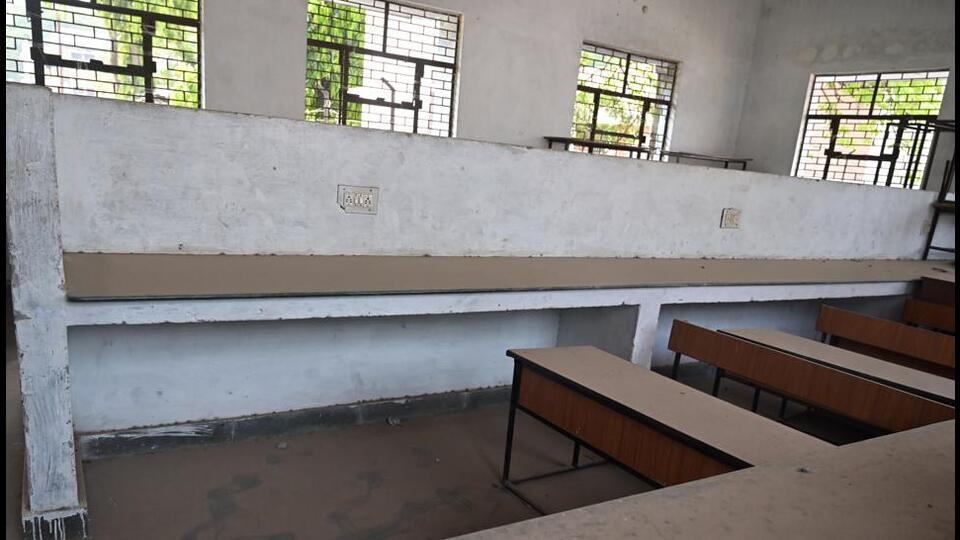
The step was aimed at bridging the gap between government-run schools and private ones. But it is proving to be a challenge for students who have hardly seen computers. Science teachers in various schools complain that they have been teaching computers without having a device at their institutions.
One of the teachers in Lucknow, who had completed his Master’s in physics, said: “Only a five-day training programme cannot provide us in-depth knowledge on core topics like coding, python and AI.”
Another teacher in Mohanlalganj lamented: “We are among several such schools, which don’t even have one computer...we were teaching students by making them imagine a computer. When students ask us about computers, we tell them that whenever they visit a bank or a railway station, they might find people working on a device that is a computer. How can we even make these children understand the usage of software...”
The training was imparted to science teachers by the SCERT in collaboration with some premier institutions. “The training is an ongoing process, and will be conducted as and when required,” said Ganesh Kumar, director, SCERT.
As per the SCERT books, students in Class 6 are studying – Computer, MS Paint, MS Word 2016, Step-thinking, Scratch, Python and Intelligence. Chapters included in Class 7 are – Computer, MS Word, MS Excel, Critical Thinking, computational thinking, Python Tokens and Artificial Intelligence. Besides, students in Class 8 are learning Networking, Cyber Security, MS Word, MS Excel, Coding using Scratch, User Input in Python and Artificial Intelligence.
Provincial president, Prathamik Shikshak Prashikshit Snatak Association UP, Vinay Kumar Singh said several government schools lack computers.
“The addition of chapters related to computers is an additional burden on teachers. When authorities ask them to teach these topics based on a five-day training, it would not have a positive impact on the learning dimensions of students. When students had to attempt questions related to these topics last year, they found it difficult because even their teachers did not have proper training on the subject. The topics might look good on paper, but the course will only be beneficial when all schools have functional computers, and at the same time, there are new appointments for trained computer teachers. This is the only way students will be digitally literate,” said Singh.
The SCERT director said additions to the syllabus have been made as per the requirement of the current times. “While all 45,000 junior high schools have computers, 28,000 of these also have interactive panels. “