
 E-Paper



Lucknow University includes excavation of Ayodhya, other ancient sites in BA curriculum
Prof Piyush Bhargava, head of the Department of Ancient Indian History and Archaeology said that Ayodhya is an ancient city in Uttar Pradesh, which finds mention in Ramayana, Mahabharata and various Puranas.


Lucknow University’s Department of Ancient Indian History and Archaeology included the excavation of Ayodhya in the fourth unit of field archaeology in the eighth paper of the fourth semester of Bachelor of Arts (BA), under the National Education Policy (NEP). Along with this, excavations of other ancient sites Bhimbetka, Kalibanga and Hastinapur have also been included.
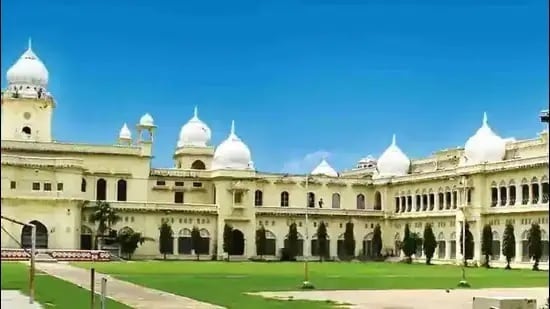
“In the field archaeology paper of ancient Indian history and archaeology, the undergraduate and postgraduate students are taught about the excavation of various important archaeological sites. This is part of the same process,” said Prof Piyush Bhargava, head of the Department of Ancient Indian History and Archaeology.
He said that Ayodhya is an ancient city in Uttar Pradesh, which finds mention in Ramayana, Mahabharata and various Puranas. According to Puranas, this city was established by Manu of the Ikshvaku dynasty. After that, Dashrath and Lord Ram ruled in their generations.
It is mentioned in later texts that Ayodhya, which was known as Kosala, was later divided into two parts – Uttara Kosala and Dakshina Kosala. Shravasti is the capital of North Kosala and Kushavati is the capital of South Kosala. It is mentioned in ancient texts that this city was situated on the banks of river Sarayu. It is also mentioned in Raghuvansh, said Prof Bhargava.
Alexander Cunningham, who is called the Father of Indian Archaeology, has said that Ayodhya is also mentioned as Saket. He got the survey of Ayodhya done in about 1862-63 and also between 1889-91. The Fuhrer had also surveyed Ayodhya. Chinese traveller Fa Hien calls it by the name of Sha-chi.
The earliest archaeological excavations in Ayodhya were carried out by Awadh Kishore Narayan of Kashi Hindu University in the session 1969-1970 and dated to the 17th century BC.
After this, between 1975 and 1985, Prof BB Lal of the Archaeological Survey of India conducted archaeological excavations at various places related to Ramayana such as Bharadwaj Ashram, Nandigram (Ayodhya), Chitrakoot and Shringverpur (Prayagraj).
In 2003, Canadian geophysicist Plot Ravi Lloyd conducted a GPR survey and reported that different structures are being detected at a depth of 0.5 m to 5.5 m.
Thereafter, in the session 2002-03 itself, Hari Manjhi and BR Mani conducted archaeological excavations on behalf of the Archaeological Survey of India.
The archaeological excavations done here yielded information about a total of 9 cultural periods. Here the oldest settlement has been received from the North Krishna Marjit period. While the most recent settlement was related to the post-Mughal period.
In the excavation, pottery, clay sculptures, stone sculptures, inscriptions, stamps and currency impressions and coins etc related to the above periods have been received from here, Prof Bhargava said.


