
 E-Paper



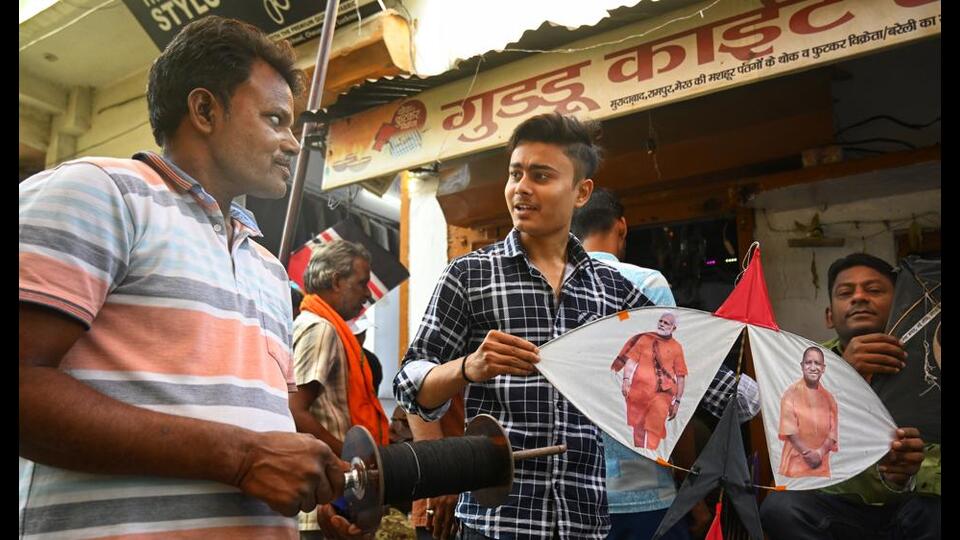
‘Modi-Yogi’ kites crown the Lucknow skyline this Jamghat
The occasion traces its roots to the Nawabi era and remains an integral part of Lucknow’s cultural identity; traditionally, kite enthusiasts gather on rooftops, open grounds and along the banks of the Gomti, turning the city’s skyline into a colourful spectacle

 Prefer HTon Google


LUCKNOW Blending contemporary political buzz with Lucknow’s famed composite culture, kites featuring Prime Minister Narendra Modi and chief minister Yogi Adityanath cast new hues across the city’s skyline during the nearly 250-year-old Jamghat festivities. While the custom ‘Modi-Yogi’ flyers redefined the visual landscape above the city, the heart of the celebration remained unchanged on the ground — with both Hindu and Muslim enthusiasts buying the trending kites in bulk and coming together on rooftops for spirited ‘pench’ duels and festive gatherings.
Jamghat traces its roots to the Nawabi era and remains an integral part of Lucknow’s cultural identity. Traditionally, kite enthusiasts gather on rooftops, open grounds and along the banks of the Gomti, turning the city’s skyline into a colourful spectacle. The participation of Muslim kite-fliers alongside Hindus has been a defining feature of the celebration.
This year, however, Modi-Yogi-themed kites added a new visual dimension to the festivities on Tuesday (to be continued on Wednesday also). Kite-makers said the designs witnessed considerable demand, with thousands being produced against special orders.
Guru Dutt, a kite-maker and owner of Guddu Kite Centre, said his unit had manufactured more than 4,000 kites carrying pictures of Modi and Yogi on special orders from customers belonging to both communities.
“These kites have been ordered by Hindu as well as Muslim kite-fliers. Their demand has been considerable. We have also received an order from an NGO for kites promoting the green cause campaign,” he said.
The changing imagery reflects how Jamghat has evolved over the years, with kites increasingly being used to display political messages, patriotic themes and social campaigns. The festival’s traditional character, however, continues to revolve around community participation rather than religious boundaries.
Lucknow Kite Association secretary Amarnath Kaul said the spirit of togetherness remained central to Jamghat despite restrictions on kite-flying in open spaces following the high court’s directions against the use of Chinese manjha, which poses a threat to people and birds.
“Beyond the political symbolism, Jamghat’s defining feature remains its inclusive character. This year, despite the restrictions, I have invited kite-fliers for lunch at my house. Children from the neighbourhood have also been invited to fly kites,” he said.
For kite enthusiasts like Irfan, a resident of Chowk, the occasion is as much about preserving an old Lucknow tradition as it is about the excitement of ‘pench’ (kite duels), exchanging festive greetings and gathering with friends and neighbours.
Fuzail, another kite flier, said: “The festival illustrates how centuries-old cultural practice continues to accommodate contemporary political and social expressions. You can see kite-fliers from different communities sharing the same rooftops and competing in the same skies; Jamghat retains its distinctive place in Lucknow’s tradition of communal harmony.”


