
 E-Paper



New architecture replacing old Mughal style in mosques in Prayagraj
The new architecture of mosques has less open spaces and its design of arch is conical to the earlier arch of the Mughal era, which was more round in shape with a pointed end


New Arabic style architecture is now more visible in the newly constructed as well as renovated mosques in Prayagraj and its adjoining cities. The new architecture has replaced the old Mughal and Indo-Islamic architecture that has been used for centuries for building mosques in India and was quite popular among the masses. The mosques constructed after the Mughal era and also those constructed barely a few decades back were according to old architecture and design.
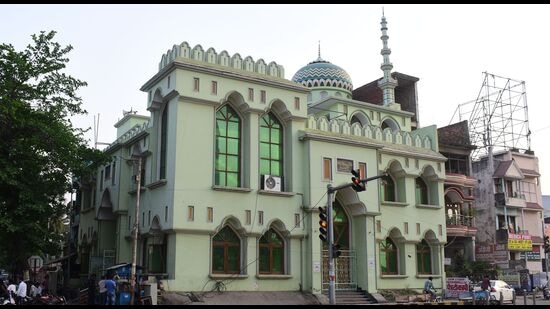
However, in recent years, the architecture and design of mosques have undergone a massive change. They are now following the architecture that is common in Saudi Arabia and other countries in the Middle East. Although the basic structure of the mosque has remained the same, the design of domes, arched doors and windows and ventilators have now changed. The new architecture of mosques has less open spaces, and its design of arch is conical to the earlier arch of the Mughal era, which was more round in shape with a pointed end. The use of coloured glass, marble and tiles along with sober pillars with no designs is now found in mosques that are being constructed in recent years. The new design of mosques has a single dome and a minaret. The Abu Bakr mosque, Masjid Umar in Kareli and a few other mosques have been built inspired by this new architecture. Each and every corner of the premises has been used with no open spaces.
Prof of History at Ishwar Sharam Degree College, Jameel Ahmad, says that mosques built by Mughals primarily have three domes with at least two minarets. The dome in the middle used to be large, while the two on either side were smaller in size. The mosque had a large courtyard with space for trees and plants. A tank in the middle of the courtyard for ablution is still seen in large old mosques. However, in smaller mosques, wells were dug for getting water.
Even in the smaller mosques, which were built a few decades earlier, there were open spaces that are now absent in the new structures, he added.
It is worth mentioning that Hari Masjid at Civil Lines, which was reconstructed some years back, had an open space beside a well in its premises for water. The mosque has now been given a new shape with the double-storeyed building having just one dome and a minaret. In contrast, the Akbari Mosque at Daraganj, Shahi Masjid at Bahadurganj, Jama Masjid Chowk and other old mosques at Ahiapur, Rasulpur and other areas in the old city are built according to the old Mughal style of architecture.
Prof Heramb Chaturvedi of the Medieval History department said architecture changes with the passage of time and as per requirements. Weather, security and facilities play a major role in the change in architecture. There were two phases of Indo-Islamic architecture in which many designs of the arch, arcade, beam etc were used. The artisans used to make local designs with Islamic concepts. The paucity of space is also one of the reasons for changes in architecture, he added.
PHOTO: Akbari Mosque at Daraganj is an example of an old Mughal era style, while Hari Masjid, in Civil Lines, is an example of the new style in use these days. HT
Hari Masjid in Civil Lines of Prayagraj is an example of the new style in use these days.


