
 E-Paper



‘One Nation, One Election’: NDA supports plan at JPC meet, Oppn against move
The BJP-led National Democratic Alliance (NDA) supported the ‘One Nation, One Election’ initiative in the meeting with the Joint Parliamentary Committee (JPC) while the opposition parties— the Samajwadi Party and the Congress—opposed the move

 Prefer HTon Google


The BJP-led National Democratic Alliance (NDA) supported the ‘One Nation, One Election’ initiative in the meeting with the Joint Parliamentary Committee (JPC) while the opposition parties— the Samajwadi Party and the Congress—opposed the move.
The BJP delegation comprising deputy CM Keshav Prasad Maurya, and ministers Suresh Khanna, Surya Pratap Shahi, Jaiveer Singh, Dharampal Singh and AK Sharma told the JPC that the proposed plan aims to synchronise elections for the Lok Sabha, state legislative assemblies and local bodies.
Khanna said: “The state government presented detailed arguments in favour of the ‘One Nation, One Election’ before the committee. The implementation of the proposed system will significantly save time, money, and administrative resources spent on frequent elections. Furthermore, human resources used in the electoral process can be utilised for more effective and productive work.”
The frequent enforcement of the Model Code of Conduct will also reduce the impact on development projects and administrative decisions. This will enable governments to work with greater consistency and effectiveness on public welfare schemes and development projects, he said.
A better and practical system should be adopted in the national interest. The Uttar Pradesh government’s position on this issue has been clearly presented to the committee and this system will further strengthen the country’s democratic system, Khanna added.
Energy minister AK Sharma said: “It is a visionary initiative of PM Narendra Modi and should be implemented expeditiously in the national interest. Frequent elections hamper the pace of development; simultaneous elections will provide new impetus to the country’s progress. It will reduce election expenditure and accelerate development work.”
Lal Bihari Yadav, SP leader and LoP in the legislative council, said the party opposed the initiative terming it against the democracy. “Regional parties contest election on local issues whereas national parties raise national issues. The Lok Sabha and assembly polls should be held separately. The ruling party is trying to misguide people stating that it will check burden on the state exchequer. The SP made it clear to the JPC that we are against the One Nation, One Election proposal,” he said.
UP Congress president Ajay Rai said, the independent political identities of states, regional leadership, and local mandates would be relegated to the background. In practice, Indian parliamentary democracy would shift towards a highly centralised, presidential-style political system—a move contrary to the original federal vision of the Constitution’s framers, he said.
Arguments such as reducing electoral expenditure, administrative convenience, or ensuring policy stability do not justify such a sweeping constitutional amendment. The Constitution is not a document of administrative convenience. Rather, it is a charter of democratic freedom and popular sovereignty. Proposed Article 82A (5) would fundamentally alter the constitutional nature of the Election Commission as well,” he said.
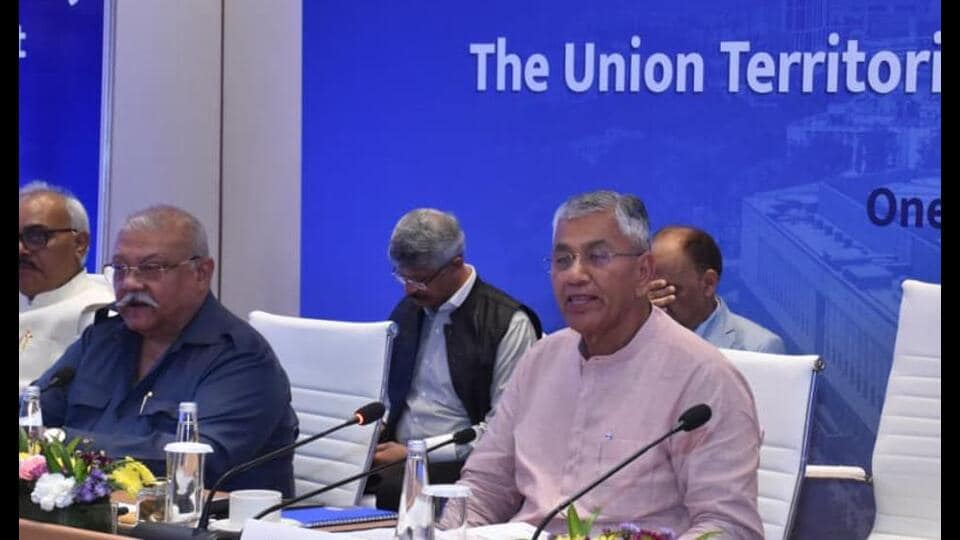
The JPC also interacted with the representatives of the BSP, RLD, AAP, CPI(M) and the Apna Dal (S). The discussions covered the issues relating to the desirability of the electoral reforms, necessity of ‘One Nation One Election’, and plausible effects of powers being bestowed upon Election Commission on basic structure, federal structure and requisite safeguards within the ‘One Nation, One Election’ framework so that the legal as well as socio political balance may be maintained.
Later the JPC interacted with the representatives of various trade organisations including EXIM Bank, NABFID, ministry of MSME, CII, ASOCHAM, Indo-American Chamber of Commerce, Dalit Chamber of Commerce and Aadarsh Vyapyar Mandal among others.
The members of the trade organisations drew the JPC’s attention towards the impact of election on migrant labourers, industry, economy and various strata of society. The committee sought clarifications and requested all trade bodies to come up with the studies and give empirical data so that JPC can arrive at logical conclusions.


