
 E-Paper



Move from testing memory to testing understanding
Leaked papers and the desperation of millions are symptoms of an education system that has prioritised rote learning over cognitive development for decades.

 Prefer HTon Google


Close on the heels of Dharmendra Pradhan resigning as the Union education minister — after student protests over NEET and CBSE irregularities — the Centre constituted a high-power task force chaired by Infosys co-founder Nandan Nilekani, to overhaul the country’s education system. While deploying advanced technology and tightening logistics are essential steps, we risk missing the wood for the trees.
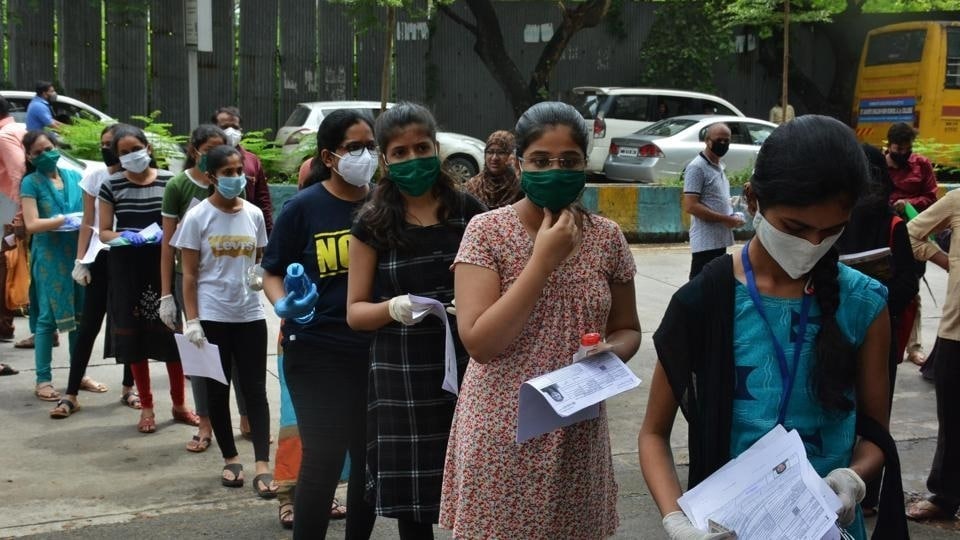
The ongoing crisis is not a sudden failure of administration, but the inevitable outcome of a fundamentally broken architecture. Leaked papers, compromised marking systems, and the desperation of millions are symptoms of an education system that has prioritised rote memorisation over cognitive development for decades.
Also read | Evolved procurement key to defence drones' utility
Tactical interventions such as elite committees, harsher punitive provisions, and bureaucratic shuffling only address the perimeter, not the core. To address the latter, the political class must confront deep-seated resistance and overhaul how we assess our children.
System rewards accurate retrieval of textbook information
From primary school to secondary board exams, our system rewards the accurate retrieval of textbook information rather than the application of concepts. What has changed over the years — at a glacial pace — is the acceptance that this is the problem. But our exams or our classroom pedagogy have not changed in tandem.
Also read | Legislation needs debate, not blind determination
A significant percentage of students in our country struggle to acquire foundational literacy and numeracy. Even in our elite private schools, when we assess for deep understanding, our students perform below the international average. There is a belief that challenging course material and exams are unfair to those who are socially or economically challenged; this has led to the system “compensating” by lowering the cognitive demands of exams, setting in motion a cycle that teaches less and expects less.
Also read | Disability rights and India’s heat emergency
This pedagogical gap is directly linked to the desperation that fuels exam syndicates and paper leaks. When an assessment system fails to cultivate genuine problem-solving abilities, students are left entirely dependent on a narrow bottleneck of competitive exams. Furthermore, because the exams test memory rather than cognitive agility, possessing the question paper beforehand guarantees success. If our exams were designed to evaluate complex reasoning — utilising Item Response Theory and pedagogical research on what concepts students find more and less difficult — even a leaked paper would be of little use to a student who lacks the underlying conceptual framework.
While moving NEET to a multi-stage, computer-based testing format is an obvious recommendation, to truly resolve this crisis, the newly formed task force and policymakers must look beyond cybersecurity and logistics. We need the following structural reforms.
Transforming board examinations
Our board exams must move away from being memory tests. We need a definitive shift toward assessments where questions are designed to test understanding. Today, a student can achieve exceptionally high scores simply by memorising past papers and textbook answers. Until we design exams where a student must genuinely understand the material to pass, the incentive to cheat or rely on coaching factories will remain insurmountable. We must also benchmark ourselves for improvement by participating in international assessments such as PISA.
Implementing multi-tiered assessment architectures: The logistical challenge of securely testing millions of anxious candidates simultaneously puts the entire system under serious strain. A universally accessible, basic qualifying examination can evaluate foundational competencies. Only those who clear this benchmark should proceed to advanced, high-stakes competitive exams. This would meaningfully reduce the administrative burden on testing agencies and diffuse the anxiety that currently defines our exam season.
Leveraging large-scale learning data: We must deploy large-scale learning data tools to track student comprehension long before they reach Class 12 or university entrances. By rigorously evaluating item response parameters and diagnostic metrics throughout a student’s lifecycle, we can identify and remedy learning gaps early.
Rejecting rushed implementations: We have seen major systemic changes, such as the CUET, implemented with haste. Meaningful assessment reform is a complex scientific endeavour that requires extensive operational strategy, pilot testing, and rigorous evaluation of parameters. Rushing these changes risks failure and could further erode public trust.
The anger of our youth is entirely understandable. They deserve a system that sets them up to succeed.
A secure exam that tests the wrong things is still only a partial fix. True reform will require expending significant political capital to work through the resistance that any deep change inevitably meets.


