
 E-Paper



Centralised education policy can’t deliver true reforms
National testing frameworks, model curricula, and conditional funding increasingly determine what is taught, how admissions are conducted, and more.

 Prefer HTon Google


Dr BR Ambedkar once said. “Examination is something quite different from education, but in the name of raising the standard of education, they are making the examinations so impossible and so severe that the backward communities which have hitherto not had the chance of entering the portals of the university are absolutely kept out.”
The progressive shrinking of states’ space in education policy did not begin yesterday. It began with the National Policy on Education of 1968, adopted by the Union Government in the wake of the Kothari Commission, which formalised the three-language formula. Even before that policy took full shape, CN Annadurai, then the Tamil Nadu chief minister, spearheaded a historic resolution in the assembly in January 1968, rejecting the three-language formula and affirming a two-language policy (Tamil and English). That resolution was the institutional expression of a people’s determination to protect linguistic identity and educational opportunity. Tamil Nadu has adhered to this policy, delivering high literacy and strong higher-education outcomes.
However, the constitutional reordering effected by the 42nd Amendment — which transferred education from the State List to the Concurrent List — denuded the states’ legislative competence. The exclusive domain of the States became a shared field, which the Union increasingly dominated. This set the stage for successive national frameworks that have steadily eroded the autonomy of States to shape education according to their realities.
The National Education Policy 2020 has revived the same pressure under a new guise. Its three-language formula, however flexible it claims to be on paper, is experienced in non-Hindi-speaking states as an instrument of linguistic imposition. When national boards and funding mechanisms push three languages as the default, states that stand by their two-language policy are portrayed as obstructionist. Uniformity is preferred over genuine federal accommodation.
The NEET controversy exposes the same centralising logic. Tamil Nadu’s public health system long depended on medical graduates selected through a transparent, state-controlled process that prioritised local needs and social justice, while also fulfilling its constitutional mandate of maintaining public health. Tamil Nadu took the litigation route to keep NEET away since its inception (through regulations promulgated by the Medical Council of India); only in 2016 did the Union government make NEET compulsory nationwide, from 2017.
A single national entrance examination, conducted in a format that privileges coaching-centre culture and urban advantage, has systematically disadvantaged rural and underprivileged students. The Tamil Nadu assembly has twice passed legislation seeking exemption from NEET. The delay in presidential assent and the Union’s refusal to amend the National Medical Commission Act demonstrate that while states may legislate, the Union retains an effective veto. The Tamil Nadu government, in fact, had to file a suit before the Supreme Court challenging the withholding of assent by the President of the state’s NEET Exemption Bill. A private member’s Bill in the Rajya Sabha to make NEET optional for states, introduced by me, awaits meaningful consideration.
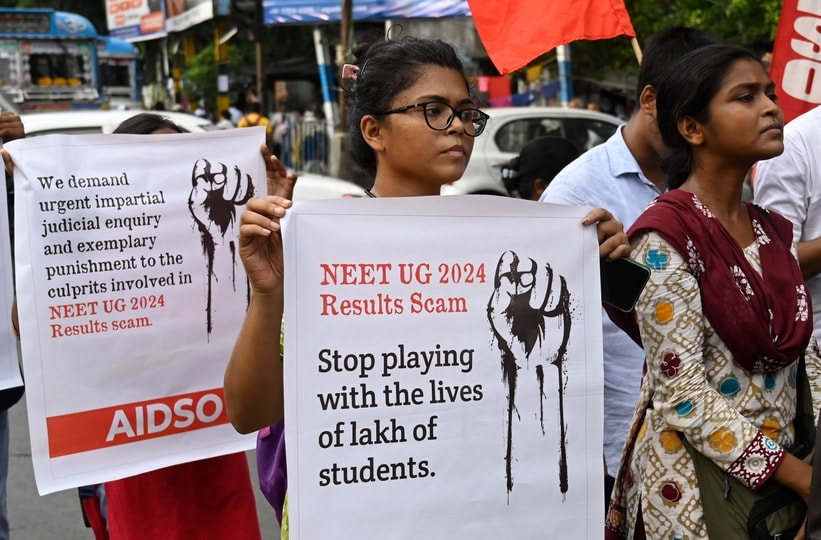
The protests at Jantar Mantar in New Delhi and across the country brought the failures of the national examination system into sharp public focus. The agitation saw young people demand accountability and systemic reform. It underscored not just public anger but also systemic weaknesses and a crisis of confidence in centralised testing, which is not confined to one region.
These developments form part of a larger pattern. National testing frameworks, model curricula, and conditional funding increasingly determine what is taught, how admissions are conducted, and which languages are privileged. Cooperative federalism is reduced to after-the-fact consultation. When states assert their constitutional space, they are accused of parochialism. When the Union centralises, it is celebrated as national integration. This asymmetry is unsustainable.
Education policy that ignores regional language, local knowledge systems and state-specific equity concerns produces alienation. If the space for policy-making by states continues to shrink, even with so-called reforms, we risk a homogenised system that serves neither excellence nor equity. The Union must respect the legislative and executive competence of states in the concurrent domain. National frameworks must remain guiding, not binding. Tamil Nadu will continue to defend its two-language policy and its right to determine medical admissions, not out of defiance, but out of fidelity to the constitutional promise of a diverse Union and the prospect of real reforms. The space for states in education policymaking must be restored and protected. Anything less diminishes the future of our children.
P Wilson is a senior advocate and member of Rajya Sabha. The views expressed are personal
(This piece is part of this fortnight's debate "Fixing exams: Does this need systemic or constitutional reforms?" The opposing side of the debate can be accessed here.)


