
 E-Paper



Fighting climate change starts with water conservation, explain activists
On its final day, the conclave hosted a panel discussion on “translating climate-change aspirations into localised and people-oriented actions” with private citizens and climate activists.

 Prefer HTon Google


After becoming the pradhan of Semariya Jagannath Wasi, a hamlet in Chitrakoot, in 2015, restoring the two dried-out ponds in her village was her priority. Divya Tripathi accomplished the objective within just a month by mobilising the local workforce and rerouting panchayat funds towards bettering the water supply and availability in the area.
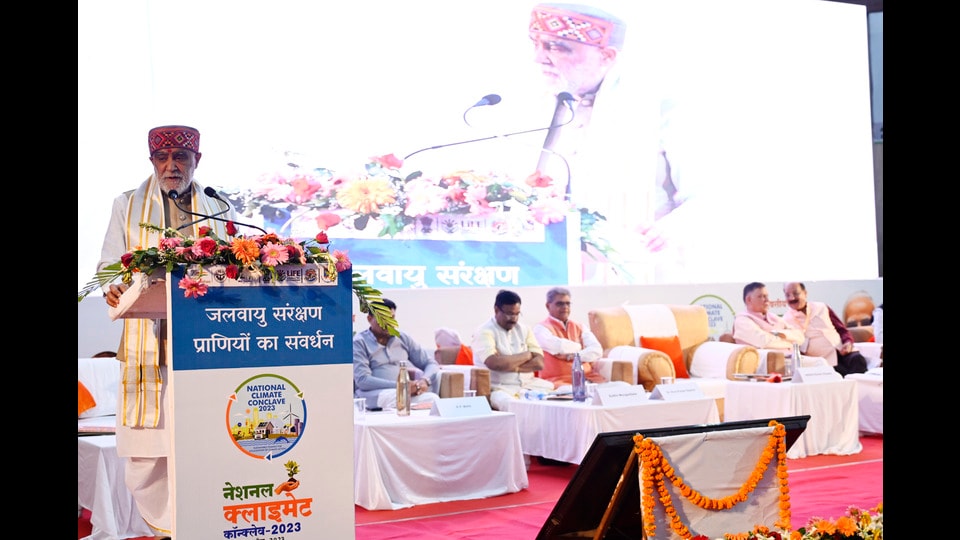
Sharing her story at the National Climate Conclave-2023 here on Tuesday, Tripathi said: “When I was elected the pradhan in 2015, the state of the ponds in my village was despicable. Moreover, only 25 out of the 75 handpumps in and around the village were pumping out water. To ensure minimal wastage of water, I dug up the ground around the pumps so that the water spilling goes back into the earth.”
Here, she requested the people in the Chitrakoot village who owned borewells to help fill the ponds. She assured them that the electricity charges would be reimbursed to them by her. She also appealed to them to plant trees on birthdays.
“Climate action begins with water conservation. If water levels in the ground are adequate, we will be able to afford clean drinking water and better prepare ourselves and our future generations for the many impacts of climate change.”
On its final day, the conclave hosted a panel discussion on “translating climate-change aspirations into localised and people-oriented actions” with private citizens and climate activists.
The session was chaired by Devesh Chaturvedi, the additional chief secretary of the department of agriculture. It had dignitaries such as Padma Shri Uma Shankar Pandey (the ‘water warrior’ from Banda), ‘Pondman’ Ramveer Tanwar, Tinni Sawhney (the director of programmes at Aga Khan Foundation) and others.
Uma Shankar Pandey, in his short address, said “when one speaks of climate, then all roads to progress lead through water conversation”. Pandey’s model of water harvesting has been implemented in nearly 500 locations in Bundelkhand, and his fame continues to grow exponentially.
Tanwar cited a NITI Aayog report to warn the gathering that 40 per cent of Indians may find it difficult to access safe drinking water by 2030.
Spiritual leader Chidanand Saraswati, who joined the discussion virtually, shared his thoughts on climate preservation and the urgency to reduce the rising pollution levels.
Climate change impacting tourism: U’khand forest minister
Ministers in the Uttar Pradesh and Uttarakhand state governments on Tuesday acknowledged the impact of climate change on a variety of sectors, one of which is tourism.
Addressing the gathering on the concluding day of the National Climate Conclave here, Uttarakhand forest minister Subodh Uniyal said to negate the impact of the global phenomenon, which has been impacting tourism, the Himalayan state undertook climate budgeting and became the first state in the country to assess the impact of climate change in its state environment report. The state has also prepared an air action plan, and 34 per cent of farming was being done through organic practices that are regulated under an Act, he added.
U.P. forest minister Arun Kumar Saxena said 135 crore saplings were planted in the last six years and this year the state would be taking up the task of planting another 35 crore saplings. U.P legislative assembly speaker Satish Mahana also spoke on the occasion


