
 E-Paper



How the world’s first official airmail service began from Prayagraj on Feb 18 in 1911
A look at how the world’s first official airmail flight from Prayagraj evolved into a high-volume network

 Prefer HTon Google


Lucknow: On February 18, 1911, a fragile aircraft lifted off from the banks of the Yamuna in Prayagraj (then Allahabad) carrying 6,500 letters, a modest consignment that scripted aviation and postal history. Piloted by French aviator Henri Pequet, the aircraft flew 15km to Naini in 13 minutes, marking the world’s first official airmail service. These 13 minutes shrunk the world and India became ‘Ground Zero’ of global airmail on that day.
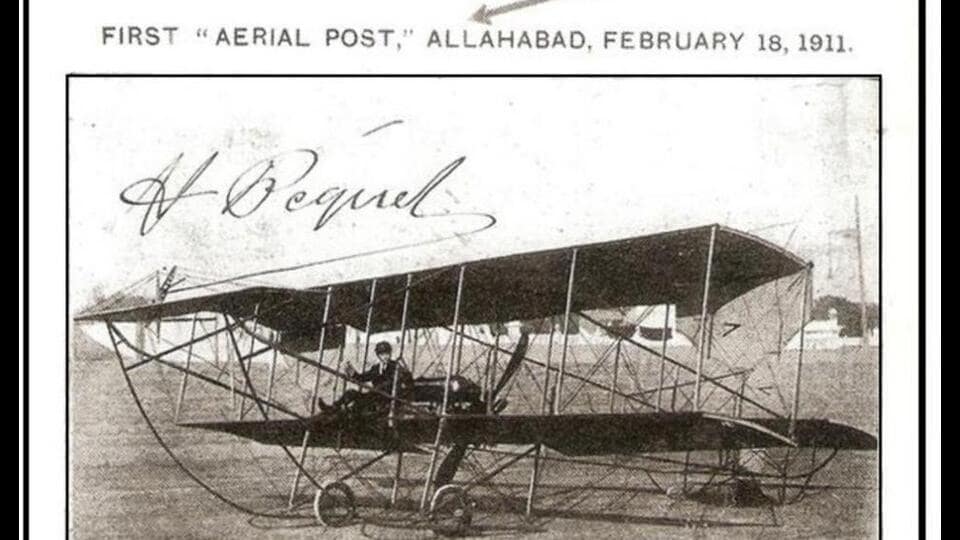
What began as an experimental flight during an exhibition has since transformed into a robust, high-volume air logistics system connecting cities across India and overseas after 115 years.
“Today, around 20,000 mail bags are dispatched every month by air from the Lucknow Headquarters Region, a 20% increase from nearly 16,000 bags last year. Each bag carries an average of five to 10 parcels, translating into lakhs of consignments flying out monthly,” said postmaster general Sunil Kumar Rai.
According to the department of post, the surge is not limited to airmail. Overall mail bookings in the region, which covers Lucknow, Barabanki, Ayodhya, Rae Bareli, Sitapur and Ambedkar Nagar, have jumped 40% year-on-year. In January alone, nearly 11 lakh articles were booked, compared to 6.5 lakh in January last year.
Rai attributed the rise to improved service efficiency and the continued popularity of Speed Post and registered mail, particularly for official and commercial communication.
“In 1911, 6,500 letters symbolised technological daring. The aircraft, rudimentary by modern standards, carried sacks of mail over a short stretch of riverbank terrain. The flight took just minutes but established the feasibility of airborne postal delivery. In 2011, the similar scene was recreated to mark its centenary,” said Rai who was back then posted in Prayagraj.
“In 2026, 20,000 bags a month represent institutional scale routine, scheduled and systematised air dispatches integrated with national and international logistics networks,” he added.
From a single experimental flight over 15 km to thousands of bags flying across continents every month, the journey reflects not only the evolution of aviation but also the enduring relevance of physical mail in a digital era.
The department will hold a ‘Dak Seva Samadhan Diwas’ at the General Post Office in Lucknow on February 20, where senior officials will hear public grievances.


