E-Paper



UPSRTC to bring 2,500 off-road buses back into operation
The move follows PM, CM’s appeal to people to increasingly use public transport; UPSRTC also plans e-bus rollout in Noida; rural operations to be fast-tracked

 Prefer HTon Google


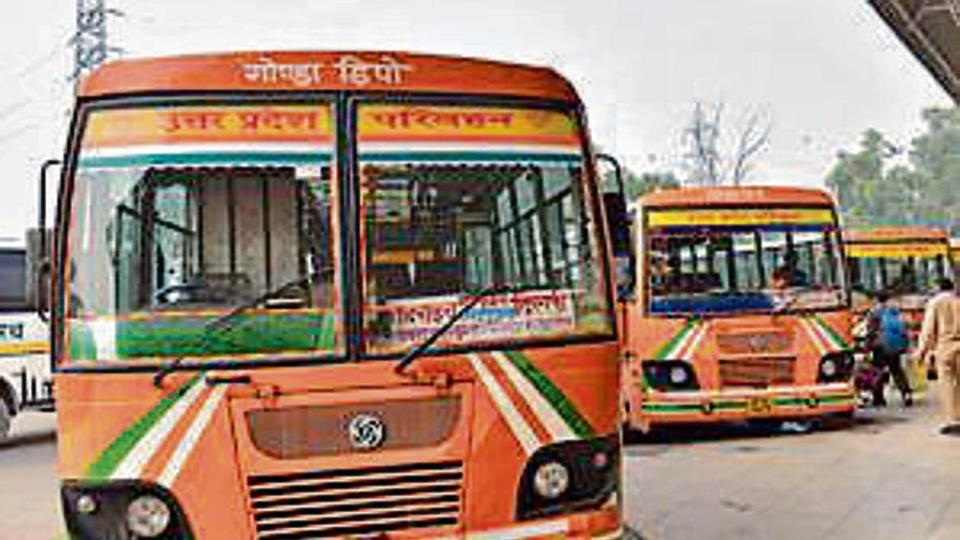
Anticipating a rise in passenger traffic following Prime Minister Narendra Modi and chief minister Yogi Adityanath’s appeal to people to increasingly use public transport, the Uttar Pradesh State Road Transport Corporation (UPSRTC) has decided to bring nearly 2,500 off-road buses back into operation, apart from expediting other decisions.
Officials in the know of things said UPSRTC managing director Prabhu Narain Singh on Thursday held a meeting on how to deal with the passenger demand, which is expected to increase after the PM and CM’s appeal.
“Currently, UPSRTC’s fleet comprises over 14,000 buses of which nearly 2500 are off roads. Now, it has been decided to bring all these buses back into operation, besides taking other measures in line with the CM’s instructions for making public transport more popular,” a senior UPSRTC official, who was part of the discussion, told HT.
The corporation is preparing to roll out 100 electric buses in the Noida region after signing an MoU with the Noida Authority for viability gap funding support. Half a dozen routes (expandable to eight) have been identified for this purpose interconnecting Noida, Greater Noida, UPYEIDA and Jewar.
“We will soon sign an MoU in this regard with the Noida Authority, which will compensate for the viability gap expected to be around ₹20 per km, the actual cost being ₹130 per km,” the official said.
The move is also being seen as an attempt by Uttar Pradesh to strengthen its presence in the NCR’s fast-expanding electric public transport sector. People familiar with the matter said UPSRTC earlier operated CNG buses in Noida, but the Delhi government has already deployed around 1,000 electric buses across Delhi and NCR, leaving Uttar Pradesh with virtually no electric bus presence in the region so far.
Officials said the proposed electric bus operations in Noida were expected to improve regional connectivity and modernise the corporation’s fleet in line with the Centre’s push for cleaner and more efficient public transport systems.
UPSRTC is also expediting operations by applying for permits on over 1500 newly formulated routes across the state. The corporation will operate its buses parallel to those of private operators on these new routes.
Also, with a view to improving connectivity between villages and blocks, as well as district headquarters, under a new scheme already cleared by the Cabinet recently, the corporation has decided to fast-track operations.
“We have already received over 900 applications from the operators willing to operate rural buses. We have decided to dispose of these applications quickly for early operations,” the official said.
According to officials, UPSRTC buses already ferry around 18 to 20 lakh passengers daily across Uttar Pradesh, with women estimated to account for nearly 33% of the total ridership on government-run buses.