
 E-Paper



After monsoon withdrawal, PM2.5 levels shot up by 320% in six weeks
The concentration of PM2.5 - Mumbai’s most widely prevalent air pollutant - shot up four times within six weeks after monsoon withdrawal, official data shows


The concentration of PM2.5 - Mumbai’s most widely prevalent air pollutant - shot up four times within six weeks, official data shows.
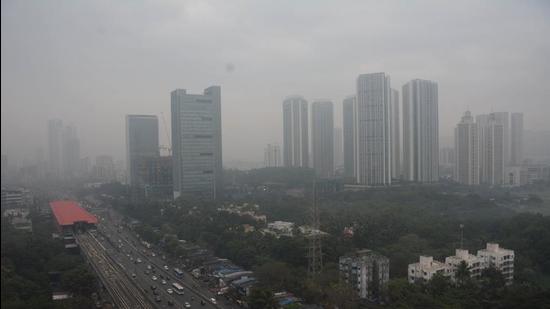
In the week ending October 7, when sporadic showers were still occurring over the city, air quality monitors registered an average daily PM2.5 concentration of 27.5ug/m3 (micrograms per cubic metre of air), taken as an average of the preceding week.
By November 1, this quantum had increased to 61ug/m3, rising further to 89.4ug/m3 on November 15. That is an increase of 320% from the first week of October.
Most of the city’s PM2.5 load, as demonstrated by multiple studies, comes from anthropogenic sources including road dust, construction and demolition activities and vehicular emissions.
The ‘safe’ threshold for PM2.5 concentration, as stipulated in the National Ambient Air Quality Standards (NAAQS), is 60ug/m3 per day. As per the World Health Organisation, the daily safe limit is 15ug/m3. Experts attributed the pollution spike to an accumulation of particulate matter in the city’s air, which is a typical phenomenon at this point in its pollution cycle.
PM2.5 refers to tiny, airborne particles less than 2.5 micrometres in diameter or about thirty times less than the width of a human hair. These particles can be inhaled by humans on exposure, leading to a range of adverse health impacts, from respiratory distress, cardiovascular disease and accelerated organ degeneration on prolonged exposure.
HT examined daily PM2.5 data for a period of 120 days between August 1 and November 15 this year, and found a significant upward spike in the daily average quantum of these pollutants soon after October 7, as the influence of the southwest monsoon began to recede from the city. The official date of monsoon withdrawal this year was October 14.
The data examined was obtained from a network of 20 continuous ambient air quality monitoring stations (CAAQMS) operated across Mumbai by the Maharashtra Pollution Control Board and the System of Air Quality and Weather Forecasting And Research (SAFAR), and is publicly available via a Central Pollution Control Board dashboard. Only one station, in Malad, did not provide actionable data and was not considered in HT’s analysis.
“In the first week of October, PM pollution remained quite low because of post-monsoon showers, which were washing these particles out of the air. Wind speeds were also high which helped to disperse them,” said Gufran Beig, Project Director, SAFAR. As the withdrawal date of the southwest monsoon began to approach, not only did sporadic showers stop, but wind speeds also slowed down to less than 10kmph in most parts of the city. “Whereas during the monsoon, the winds can travel with speeds well over 20kmph,” Beig explained.
“To add to this, the temperature also began to drop, because the air became less humid as the monsoon withdrew. Warm air rises, and with it, pollutants also settle higher in the atmosphere. But when air is cooled, it reduces the height of the ‘inversion layer’, which is the part of the atmosphere where temperature stops decreasing with height. This in turn reduces the ‘mixing height’ of airborne pollutants and settles them much closer to the earth’s surface, so much so that the air around us can start turning hazy,” Beig said.
Several studies have highlighted the severe impact that exposure to PM2.5 can have on human beings. In September this year, an annually updated index known as the Air Quality Life Index (AQLI) by the University of Chicago’s Energy Policy Institute (EPIC), estimated that exposure to PM2.5 in Mumbai is reducing the average life expectancy in Mumbai by as much as 3.7 years.
In a statement released at the time, researchers at EPIC noted, “Particulate pollution is no longer a feature of the Indo-Gangetic plains alone... (and) has increased so much in the states of Maharashtra and Madhya Pradesh. For example, the average person in those states is now losing an additional 2.5 to 2.9 years of life expectancy, relative to early 2000s,” it said.
Dr Piyush Goel, a pulmonologist with a leading chain of private hospitals in Asia, explained that PM2.5 particles are minute enough to enter the alveoli in human lungs, where the exchange of respiratory gases takes place. “When this alien material, which comes from vehicles, construction and many other sources, enters the alveoli, the body begins to secrete mediating enzymes which cause destruction of lung tissue,” he said. These particles can even be tiny enough to pass through the alveoli and enter the bloodstream, from where they get deposited in other organs, making them degenerate.
“On the whole, inhalation of PM2.5 leads to a gradual degeneration of various parts of the body, which results in accelerated ageing. This may be one reason why we’re seeing younger people with chronic obstructive pulmonary disorder (COPD), heart attacks and similar ailments which were earlier majorly seen in older age groups,” Dr Goel said.
Dr VM Motghare, Joint Director (air quality) at the Maharashtra Pollution Control Board, did not respond to requests for comment on Wednesday.
Stay updated with all the Breaking News and Latest News from Mumbai. Click here for comprehensive coverage of top Cities including Bengaluru, Delhi, Hyderabad, and more across India along with Stay informed on the latest happenings in World News.


