
 E-Paper



Animal lovers gear up to protest HC order on feeding stray animals
Animal activists told HT that the order had given fuel to housing societies in their crusade against stray animal feeders.

 Prefer HTon Google


Mumbai: Around a week ago, the WhatsApp group of a housing society in Malad was abuzz with messages exhorting a house owner to evict his tenants for “illegal” activities. The society members put so much pressure on the man that he was ready to comply until another society member pointed out that feeding stray animals within or outside the building compound was not illegal.
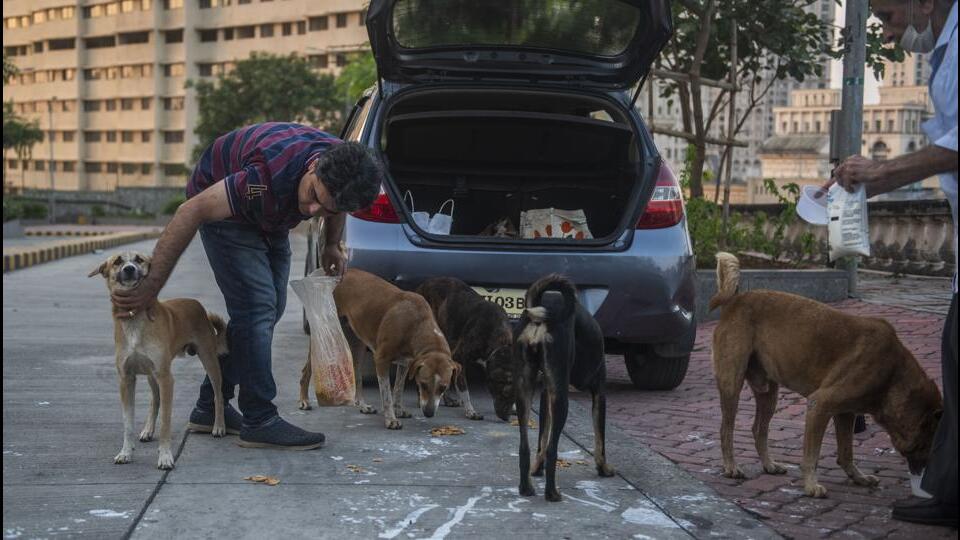
The incident happened soon after the Nagpur bench of the Bombay high court issued an order on October 21 against feeding stray animals in public . The order, passed by a division bench of Justice Sunil B Shukre and Justice Anil Pansare, stated that no resident of Nagpur and surrounding areas could feed stray dogs in public places—if they wanted to, they had to first adopt the dog or put it in a dog shelter and then continue with the feeding. The court directed the Nagpur municipal commissioner to ensure that the order was carried out.
Several Mumbai citizens are geared to register a silent protest against the court order on Sunday at Shivaji Park in Dadar. Indeed, a bunch of lawyers is already planning on approaching a higher bench of the Bombay high court.
Animal activists told HT that the order had given fuel to housing societies in their crusade against stray animal feeders. Fizzah Shah, president of NGO ‘In Defense of Animals’ averred that it was in conflict with the Indian Constitution. “Article 51 exhorts citizens ‘to protect and improve the natural environment and to have compassion for living creatures’,” she pointed out. “Never since the British rule, when culling animals was commonplace, has any court in India passed a judgement that supports such cruelty towards animals.”
Meet Ashar, Manager of Cruelty Response Projects at PETA India, said that the law was on the side of feeders. “Any attempt to interfere with or harass persons who choose to feed community dogs is tantamount to criminal intimidation, which is an offence under Section 503 of the Indian Penal Code,” he said. Ashar is also against the court’s diktat to relocate strays. “Dogs are territorial in nature and hence cannot simply be moved to the feeder’s residence or elsewhere for feeding,” he said.
Residential societies, on their part, have a problem with the unsanitary condition that society premises are left in after the feeding is done. “Cleanliness has to be maintained, and owners and feeders need to scoop the poop of the animals they take care of,” said Madhu Poplai, secretary of the Pali Hill Residents’ Association. Poplai added that even in cases where societies had created dedicated areas for feeding, feeders were irresponsible. “They don’t restrict the animals to those areas, neither do they clean up afterwards,” she said. “The society then has to foot the bill for this.”
The antagonists also cite the personal inconvenience they suffer because of the dog menace, as many Mumbai residents call it. “As a hardworking person who travels over an hour each way for work, I don’t wish to be kept awake by barking dogs in the society compound every night,” said Navi Mumbai-based social worker Deepak Singh. Singh said that he supported the creation of shelter homes where all stray animals can be rehabilitated.
Animal Welfare Board of India-appointed animal welfare officer Mitesh Jain believes that the civic bodies shirking their responsibilities is at the root of this problem. “They are supposed to run animal sterilisation programmes to control the animal population in a humane manner as per a Supreme Court judgement of 2001,” he said. “Since this does not happen, more stray animals are on the street, which often results in territorial aggression.” Jain added that in the absence of government support or facilities, animal lovers were often forced to shell out money from their own pocket for sterilisation and other tasks.
The Brihanmumbai Municipal Corporation (BMC), however, denied Jain’s allegation and said that its sterilisation programme has been effective. Since its inception in 1994 up to September 2022, the civic body has conducted 3,86,347 sterilisations. According to the 2014 Dog Census report of the civic body, there were a total of 95,172 dogs in Mumbai, of which 69,239 dogs had been sterilised.


