
 E-Paper



Citizens up in arms over BMC’s draft open space adoption policy
Activists in Mumbai have submitted objections to the city's proposed adoption policy of open spaces, which would allow private parties to adopt certain spaces for up to five years. They argue that the policy lacks justification and that the government should instead outsource maintenance to NGOs. The policy would apply to recreational grounds and playgrounds, but not gardens. The deadline for submitting objections and suggestions to the policy is October 10.


Mumbai: Activists opposing the proposed adoption policy of open spaces in Mumbai met senior civic officials on Friday and submitted written objections to the BMC’s proposed draft adoption policy.
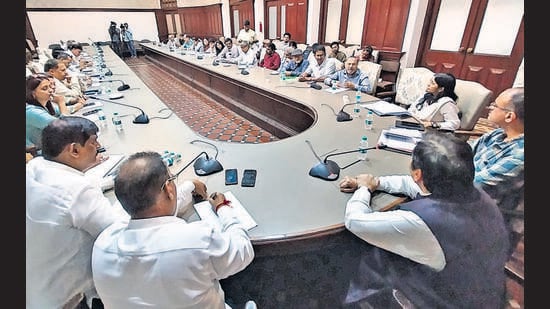
Former central information commissioner Shailesh Gandhi, RTI activist Anil Galgali, Bhaskar Prabhu, Sharad Wagle and Ashok Doshi met deputy commissioner Kishore Gandhi and garden superintendent Jitendra Pardeshi. Guardian minister Mangal Prabhat Lodha also held a meeting on Friday to discuss grievances raised by activists, as most have objected to the new policy that will allow private parties to adopt certain open spaces for 11 months, three years or five years.
In a written statement, it was mentioned that the objections to the concept of giving open spaces to private parties were sent to civic chief Iqbal Singh Chahal in May 2023. Activists opined that in the current draft proposal, the BMC, which is eager to give open plots to private parties, does not give any reason for the purpose.
The delegation pointed out that Devendra Fadnavis, during his tenure as chief minister, had ordered the withdrawal of all open space plots given on a caretaker or adoption basis about eight years ago. Despite this, it said, the BMC was unable to take back those plots from many.
The statement states that once legal rights are established, the corporation or the state government cannot normally recover the land. “The state government is able to take the land of citizens, but unable to take back its own land,” said Shailesh Gandhi. “Even now, there are some large illegal encroachers on public spaces that were given on a long-term ‘adoption’ or ‘caretaker’ basis. Those plots have been hijacked and the state government cannot get them back.”
The delegation alleged that the civic body now appeared to be reviving the earlier policy by modifying it a little. “Can’t the BMC, with a budget of over ₹50,000 crore, spend ₹400 crore for maintenance and upkeep?” demanded activists.
A simpler solution, according to the delegation, was to outsource maintenance. “In such a case, no legal rights are created or vested in the private party,” said Shailesh Gandhi. “If an organisation really wants to be of service, it will gladly maintain the open spaces without ulterior motives. This can also be done by NGOs. Please do not create a situation in which the poorest people lose their valuable assets.”
Hearing the many objections and suggestions, Kishore Gandhi clarified that the policy would be restricted to recreational grounds (404) and playgrounds (346)—the gardens (359) were exempt. On a select few of these, he said, state-of-the-art sports facilities would be built by private players. The fee would be decided by the BMC, and so would the online booking system. No construction, except for a watchman’s cabin and toilets, would be allowed. “The BMC can’t maintain all of these at the standards they require,” he said.
Citizens have till October 10 to submit their objections and suggestions to the policy, after which a decision will be taken.

Stay updated with all the Breaking News and Latest News from Mumbai. Click here for comprehensive coverage of top Cities including Bengaluru, Delhi, Hyderabad, and more across India along with Stay informed on the latest happenings in World News.


