
 E-Paper



‘Cycle track around Powai Lake flouts DCR’
The Brihanmumbai Municipal Corporation’s (BMC) clarification on the Powai Lake cycle track dispute issued earlier this week has come under fire from environmentalists who have pointed out that the project contravenes the BMC’s own development control regulations (DCR).


The Brihanmumbai Municipal Corporation’s (BMC) clarification on the Powai Lake cycle track dispute issued earlier this week has come under fire from environmentalists who have pointed out that the project contravenes the BMC’s own development control regulations (DCR).
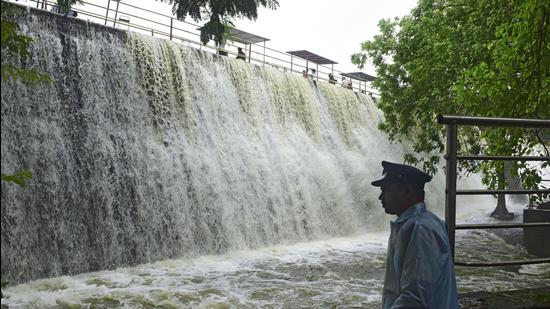
The BMC had said: “Statutorily, Powai Lake reservoir is demarcated as a Natural Area (NA) in the Development Plan for Greater Mumbai (2034). The repairs, remodeling and extension works around Powai Lake are in line with part VII of Regulation 3.7 of the DPR”. It states that board walks, trekking facilities, public sanitary conveniences for visitors and sewage pumping stations are permissible within eco-sensitive areas with requisite permissions, which the MCGM has obtained from the Mumbai Heritage Conservation Committee (MHCC) which is the Apex Statutory State Body of Government of Maharashtra, and MHCC has accorded its approval.
Environmentalists have pointed to a provision in the BMC’s development plan which bars any construction work in close proximity of the lake. “The BMC has said a lot in their own press release, but they haven’t said anything about the fact that BMC’s own DCR does not allow ‘any construction whatsover’ in the 100m zone of the periphery of Powai Lake. Only the south part of the lake has a promenade sanctioned in the DP Plan. The rest of the periphery does not have any such development sanctioned,” said environmentalist Zoru Bhatena.
Others campaigning to have the project revoked have expressed concern that work to construct the cycle track has been going on in full swing, despite the MCGM’s assurance that an expert committee will first evaluate the project and suggest mitigation measures to protect the area’s ecology and wildlife, which includes several Indian marsh crocodiles, a species protected under the Wildlife Protection Act (1972).
The BMC earlier this week instated “a committee, comprising environmental experts... to discuss the site development and carry out any mitigation measures required to not just alleviate, but also enhance the Lake and its surroundings.” The committee is working on a detailed project analysis to handhold MCGM for sustainable construction during and after the project. The committee includes leading professionals in the field of environmental science, aquatic ecologies, herpetology, and a hydraulics expert with the MCGM.
“There is no sign yet of the committee’s report, and there has been no news of any site visits by the committee to ascertain the ground situation,” said Amrita Bhattacharjee, another environmentalist who has been following the issue.
The BMC, however, said that the committee has “deliberated in detail the environmental issues of Powai Lake, assessed various technologies and upon weighing their respective pros and cons, considers the gabion wall technology as the most adaptable method of construction, one which will be least intrusive to the natural environment of the lake.”
HT reached out to committee members Dr Rakesh Kumar of NEERI and Dr Deepak Apte, formerly of the Bombay Natural History Society, for a comment on their deliberations but did not receive a response.
Stay updated with all the Breaking News and Latest News from Mumbai. Click here for comprehensive coverage of top Cities including Bengaluru, Delhi, Hyderabad, and more across India along with Stay informed on the latest happenings in World News.


