
 E-Paper



Gram panchayats across Maharashtra get a shot of fresh blood as youngsters win elections
When 22-year-old Sandhya Sonawane decided to contest the gram panchayat polls from Naigaon, Ahmednagar, many ridiculed her for the decision


When 22-year-old Sandhya Sonawane decided to contest the gram panchayat polls from Naigaon, Ahmednagar, many ridiculed her for the decision. A law graduate, Sonawane works as the Pune region president of a leading student wing. “Many questioned my decision of going back to my village to contest the local body polls, and said that I was leaving behind my prospects in the city, but I knew what I was doing. It was a difficult fight being a woman and a scheduled caste candidate fighting from a constituency with a high non-reserved population. But I am happy I did it. I now wish to work on improving the schools and roads here,” said Sonawane, who won the elections with a lead of 123 votes.
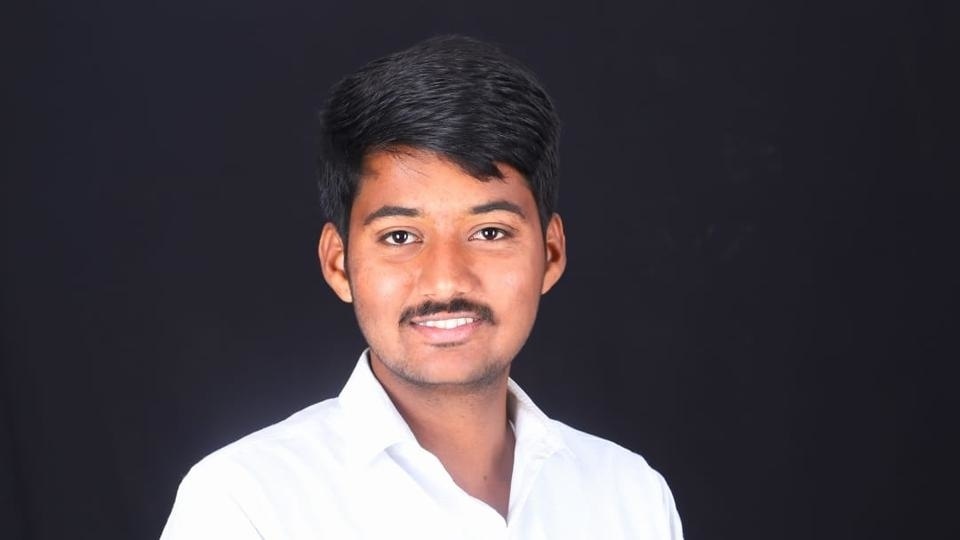
This year, a large number of young men and women contested and won the elections to local bodies recently held in more than 14,000 gram panchayats across the state. Like Sonawane, many young men and women, most of whom had no political background, contested the polls from their respective villages and emerged victorious as results were announced on Monday.
Possibly the youngest among all the candidates, Ruturaj Deshmukh, a 21-year-old science graduate, won the election from Ghatne village in Mohol, Solapur. Deshmukh, whose parents are farmers, said that the urge to address local issues pushed him to contest the polls. “I want to address the electricity issues in my village. We have frequent load shedding here, and most nights, there is no light. I want to provide an alternative of solar electricity to address this issue,” he added. Having cleared his law entrance, he wishes to pursue his LLB and work for the village at the same time.
Kishor More, 28, who runs a small transport business in Koparkhairane, won the election from Chikhlewadi, Kumbhargaon in Satara, with a lead of 115 votes. “I was always interested in social work. Being a member of the local body will allow me to make direct interventions to solve local issues. For years, politicians have used elections only to their advantage. I want to change that and work for people by addressing basic issues,” he added.
Sanjay Bhoiwar, a 33-year-old local painting contractor from Antapur, Nanded, also won the election with a lead of 124 votes. “I come from the Matang community and have no political backing; hence this victory is important for me. I want to work for the betterment of my village,” he said.
The young class of elected local officials is made up of a mix of those who live in villages and others who especially moved back to their hometowns, setting aside their education and work in cities. Akash Dounde, a postgraduate from Savitribai Phule Pune University, won the elections from his village Somthane Nalawade in Pathardi, Ahmednagar, with a lead of 120 votes. Both his parents worked as cane cutters, and for him, contesting the elections was a big challenge. “I did not have the money, nor the same resources as my opponents from big parties did. I told my voters that all I could promise them was good work if elected, and it worked. Active politics is crucial to bring about a real change and I am hoping to do just that,” he said.
Vivek Ghotale, a Pune-based political analyst and researcher, said that multiple factors are responsible for the increasing participation of youngsters in local body polls. “One reason is that gram panchayats get direct funds under provisions of the 14th finance commission which makes elections more competitive. And this time, due to Covid-19 and the resultant lockdown, a large number of youngsters had gone to their villages, which might have led to more participation. Whatever the reason, it is good to see that a young leadership is emerging to challenge the status quo,” he said.
While some candidates were backed by political parties, many also took the plunge independently. Ali Malegaonkar, 29, who works as an assistant professor at a college in Pune, had put up an entire panel for the elections in his village Markhel in Nanded. “We were getting a good response as our candidates were chosen by the people themselves. We did not distribute liquor or money and only spoke about addressing issues. Ahead of the polls, however, some of them were poached by leading parties and we had to look for last-minute replacements. Despite that, many of our candidates lost only by a small margin,” he added.
Stay updated with all the Breaking News and Latest News from Mumbai. Click here for comprehensive coverage of top Cities including Bengaluru, Delhi, Hyderabad, and more across India along with Stay informed on the latest happenings in World News.


