
 E-Paper



HC upholds constitutional validity of anti-terror law UAPA, dismisses petition against its misuse
The petitioner, Anil Baburao Baile, had challenged the anti-terror law in the context of the Elgar Parishad case

 Prefer HTon Google


MUMBAI: The Bombay high court on Thursday upheld the constitutional validity of the Unlawful Activities (Prevention) Act (UAPA). Stating that the law sat rightly with the Constitution of India, the court dismissed the petition which sought to declare the enactment unconstitutional.
“The UAPA in its present form is constitutionally valid, therefore, the challenge to its vires fails, and the petition is dismissed,” stated the division bench of Justices Ajey Gadkari and Dr Neela Gokhale.
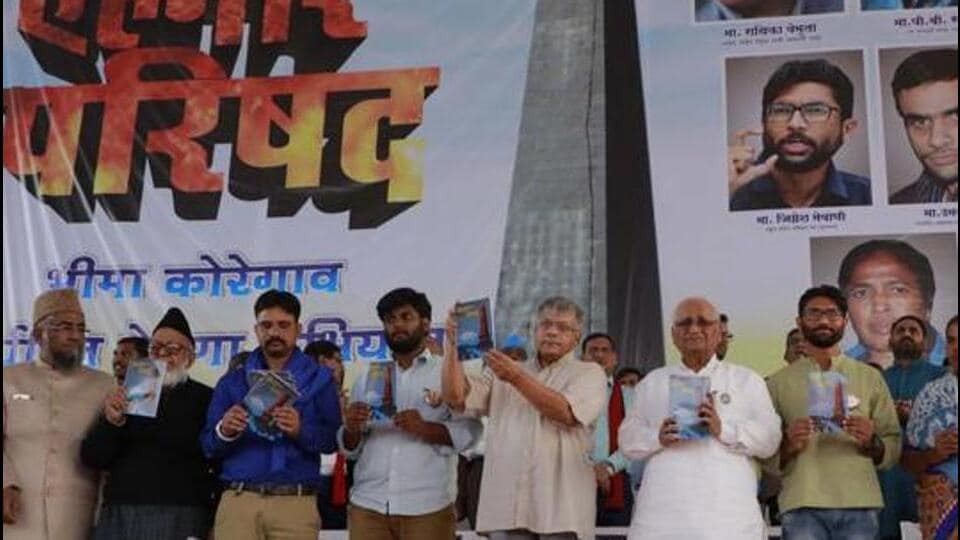
The petitioner, Anil Baburao Baile, had challenged the anti-terror law in the context of the Elgar Parishad case. On January 1, 2018, he went to the site of the Bhima Koregaon memorial commemorating the battle in which soldiers of the Mahar regiment died. An event organised by the Elgar Parishad to commemorate 200 years of the battle had been organised there as well as another one by a Hindutvavadi body. A scuffle broke out there, in which a passerby was killed.
After the case was transferred to the National Investigation Agency (NIA), Baile was sent a notice on July 10, 2020, which invoked the provisions of UAPA against him. He was grilled with questions related to the Elgar Parishad.
In his petition filed through advocates Prakash Ambedkar, Nikhil Kamble and Hitendra Gandhi, Baile stated that he was a regular visitor to Bhima-Koregaon on January 1 every year. However, he was allegedly pushed by the NIA to give details of the Elgar Parishad functions, despite having no knowledge. “The officer threatened to arrest the petitioner and charge him under UAPA and Section 124A of the IPC, which pertains to sedition, which would declare him a terrorist,” the petition said.
Subsequently, Baile approached the Bombay high court to quash the notice issued by the NIA, and challenged the validity of the UAPA and Section 124A of the lPC. Highlighting the need to decide what amounted to “unlawful activities” and whether he could be called a terrorist, he further questioned if sedition has a place in the sovereign republic nation.
Baile also pointed out that UAPA was against the principle and spirit of the Constitution. “Nowhere does the Constitution authorise blanket power to the executive body in deciding, nor is Parliament granted blanket power to declare an organisation as unlawful except if it violates the principle of Article 15 and 17 and the preamble of the Constitution,” his petition stated.
Baile highlighted that the amendment introduced in UAPA in view of the resolution adopted by the United Nations (UN) Security Council on September 28, 2001, required all member states to take measures to combat international terrorism. “While the UN criminalises any action in support of international terrorism, this amendment has gone beyond the mandate of the resolution and the Constitution by declaring that Indian citizens can be charged and called terrorists,” the petition added.
Baile contended that at times, such judgments and acts were likely to be misused. Hence an examination and re-examination was necessary on the ground that internal sovereignty and integrity was the responsibility of the citizen and not of the government.

Stay updated with all the Breaking News and Latest News from Mumbai. Click here for comprehensive coverage of top Cities including Bengaluru, Delhi, Hyderabad, and more across India along with Stay informed on the latest happenings in World News.


